
Stroke Diagnostic and Therapeutic Market: Key Decisions
for Healthcare Businesses
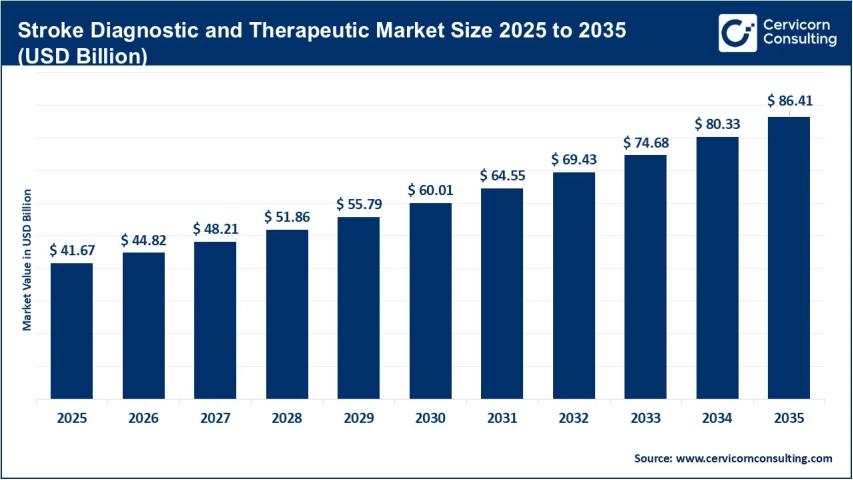
The global stroke
diagnostic and therapeutic market was valued at USD 41.67 billion in
2025 and is projected to reach USD 86.41 billion by 2035, growing at a CAGR of
approximately 7.6%.
Demand for stroke diagnosis and treatment is influenced by
the growing disease burden, access to advanced imaging, availability of
specialized stroke care and the need for timely intervention. For healthcare
providers and medical technology companies, investment decisions depend on
clinical requirements, infrastructure costs and patient access.
What Does the Global Stroke Burden Indicate?
According to the World Stroke Organization's 2025 Global
Stroke Fact Sheet, approximately 11.9 million new strokes occurred worldwide
in 2021, while 93.8 million people were living with a history of stroke.
The estimated annual global economic cost exceeded USD 890 billion.
These figures highlight the importance of prevention, early
diagnosis, acute treatment and rehabilitation. However, disease burden does not
translate directly into demand for expensive diagnostic equipment or therapies;
access to healthcare, affordability and local treatment capacity also influence
utilization.
Where Should Healthcare Providers Prioritize Investment?
Hospitals and healthcare networks need to evaluate access to
CT and MRI imaging, stroke units, emergency treatment pathways and
rehabilitation services. Advanced treatments such as mechanical thrombectomy
require appropriate clinical expertise, equipment and coordinated emergency
care.
Investment decisions should consider patient volumes,
referral patterns, staffing, equipment utilization and the time required to
establish effective stroke services. In areas with limited specialist access,
improving emergency referral and diagnostic pathways may be more immediately
relevant than purchasing additional advanced equipment.
What Are Governments Doing to Strengthen Stroke Care?
In May 2026, the World Health Assembly adopted its first
resolution specifically addressing stroke, calling for stronger prevention,
acute care, rehabilitation and health-system readiness. The initiative reflects
the need to improve access to evidence-based stroke services globally.
For healthcare businesses, this policy direction reinforces
the importance of evaluating diagnostic capacity, specialist training and
continuity of care. It does not represent a direct funding commitment for
individual medical device manufacturers or hospitals.
What Should Medical Technology Companies Consider?
Manufacturers of imaging systems, neurovascular devices and
stroke-related diagnostic technologies should evaluate clinical requirements,
regulatory approval, purchasing budgets and the capacity of hospitals to use
their products effectively.
Companies should also consider differences between
healthcare systems. A technology suitable for a well-equipped tertiary hospital
may face adoption barriers in facilities with limited budgets, trained
personnel or emergency infrastructure.
How Should Investments Be Evaluated?
Healthcare providers should assess the total cost of
equipment acquisition, installation, maintenance, staffing and training
alongside expected clinical utilization. Relevant operational indicators
include time to imaging, time to treatment, equipment availability, patient
throughput and access to rehabilitation.
These measures should be interpreted alongside clinical
outcomes and established care standards rather than treated as substitutes for
them.
Conclusion
The stroke diagnostic and therapeutic market is shaped by
disease burden, clinical advances and differences in access to specialized
care. For healthcare providers and medical technology companies, investment
decisions should reflect local patient needs, infrastructure readiness,
affordability and the ability to deliver timely, evidence-based treatment.
Explore the Full Market Report: https://www.cervicornconsulting.com/sample/2983