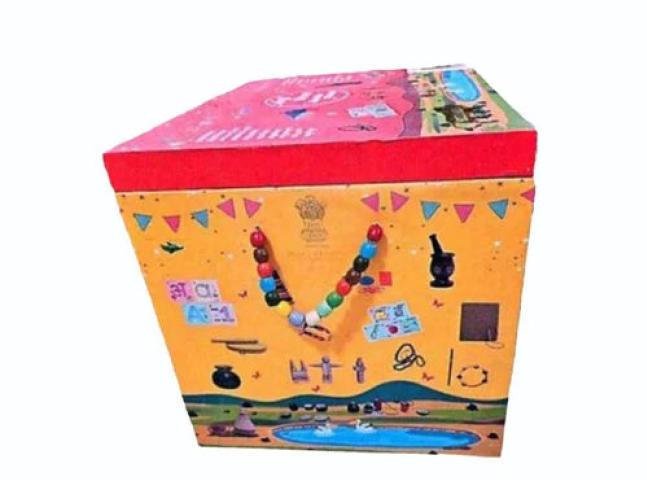
Government and institutional procurement requires more than finding a product that looks suitable online. When a Jadui Pitara Box is being sourced for a tender, school distribution programme or large educational project, the buyer has to consider specification accuracy, production capacity, documentation, pricing stability and delivery execution.
For tender bidders and procurement companies, these factors directly affect whether the final supply can be completed on time and according to the requirement.
Start With the Tender Specification, Not the Supplier List
The first step is to read the requirement carefully. A buyer should identify the expected number of kits, required components, material preferences, packaging conditions, delivery locations and any documentation that must accompany the order.
This is important because two suppliers may both offer a Jadui Pitara kit but quote against different assumptions. If the component list is not standardised before quotations are compared, the cheapest offer may not actually match the tender requirement.
Ask for an Item-Wise Kit Specification
A serious institutional buyer should not rely only on a product image or short description. Request an item-wise component list and clarify which parts are fixed and which can be customised.
If the tender requires a specific number of learning materials, each component should be mapped before the commercial order is finalised. This creates a shared reference for the buyer and supplier and reduces the risk of disagreement later.
Verify Large-Order Supply Capability
A supplier that can dispatch ten kits may not automatically be ready to supply one thousand. Procurement teams should discuss realistic production and dispatch capacity.
Useful questions include: How much lead time is needed? Can the order be produced in batches? Is phased dispatch possible? Can the same specification be maintained across the complete quantity? What quality checks are used before packing?
These are more useful questions than simply asking whether a supplier can “handle bulk orders.”
Documentation Should Be Discussed Early
Tender and institutional buyers may require quotations, invoices, company details, product specifications, packing details or other procurement documents. Requirements vary from project to project, so buyers should provide the documentation checklist before the order is confirmed.
A supplier should only claim documents or approvals that it can genuinely provide. Clear documentation protects both sides and helps the tender bidder avoid last-minute compliance issues.
For more detailed procurement considerations, buyers can review Meroxio Toys' guide for government tender and bulk Jadui Pitara sourcing:
Recommended resource: government tender and bulk Jadui Pitara sourcing
Compare Total Commercial Risk, Not Only Unit Price
Price is important in tender work, but it should be compared against the same specification. A lower unit price may reflect fewer components, different materials, simpler packaging or different logistics.
Procurement teams should compare the complete commercial package: product configuration, quantity, taxes, packaging, delivery schedule, destination, documentation and replacement terms where applicable.
This produces a more realistic view of cost and execution risk.
Plan Delivery Around the Project, Not After Production
Large educational orders often have fixed timelines. Schools may be waiting for the kits, a distribution programme may have a launch date, or a tender may have contractual delivery milestones.
The delivery plan should therefore be discussed before production begins. Buyers should confirm whether the order will go to one warehouse or multiple locations and whether phased dispatch is needed.
Why a Quote-Based Product Page Is Useful for Tender Buyers
For large institutional purchases, a standard retail checkout often does not capture enough information. Quantity, specifications, custom requirements and delivery conditions need to be discussed first.
Meroxio Toys provides a quotation-based product page where buyers can review the Jadui Pitara Box for government tender and institutional supply:
Recommended resource: Jadui Pitara Box for government tender and institutional supply
This type of page is more useful to procurement teams when it is used as the starting point for a specification-led enquiry rather than as a simple retail purchase.
A Practical Tender-Buyer Checklist
Before finalising a supplier, confirm the component list, required quantity, sample or reference specification where needed, expected production timeline, packing method, delivery locations, commercial documents and quotation validity.
When these points are agreed in writing, the procurement process becomes easier to manage and the risk of last-minute surprises is reduced.
Frequently Asked Questions
What information should a government tender buyer send first?
Share the tender specification, quantity, required components, delivery destination, expected timeline and documentation requirements.
Should tender buyers compare suppliers only on price?
No. Price should be compared only after confirming that each supplier is quoting against the same product specification and delivery conditions.
Can a Jadui Pitara order be delivered in phases?
This depends on supplier capability and the project requirement. Buyers should discuss phased production and dispatch before confirming the order.
Why is a component list important?
It creates a clear reference for what every kit should contain and helps prevent specification mismatch across a large order.
How can procurement teams contact Meroxio Toys?
Phone: +91 6396997273. Email: info@meroxio.com. Address: E-215, Sector 63, Noida, Uttar Pradesh 201301.