India Green Building Materials Market Outlook
According to latest research report by IMARC Group, the
report titled "India Green Building Materials Market Size, Share, Trends
and Forecast by Application and Region, 2026–2034" comprises a
comprehensive analysis of the Indian market, covering its size, growth trends,
key drivers, regional insights, and other critical metrics defining the
country's sustainable construction materials ecosystem.
How Big is the Green Building Materials Market in India?
The India
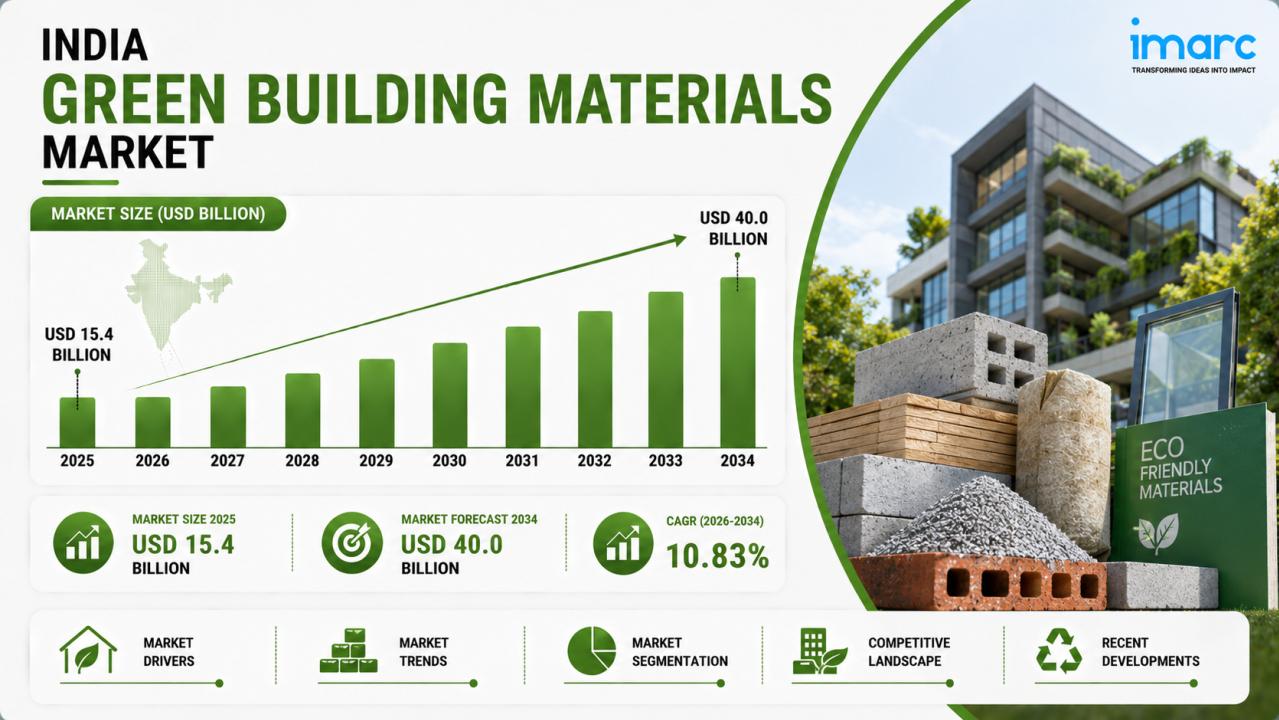
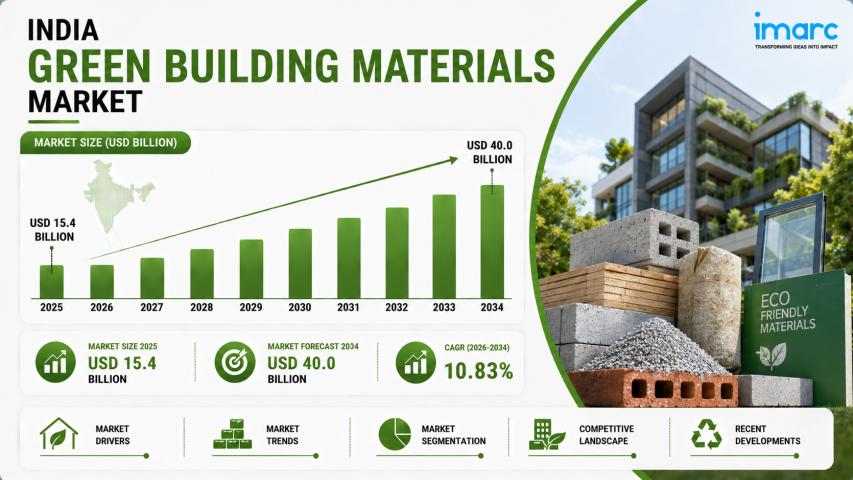
green building materials market size increased from USD 15.4
Billion in 2025 to USD 17.6 Billion in 2026 and is projected to
reach USD 40.0 Billion by 2034, exhibiting a CAGR of 10.83%
during 2026–2034. The market is witnessing significant growth, driven by
widespread adoption of energy-efficient and sustainable construction materials
and escalating demand for recycled and locally sourced building materials.
Emerging Trends in the India Green Building Materials
Market:
- Increased
Adoption of Energy-Efficient and Sustainable Construction Materials:
The India green building materials market is witnessing a
spike in demand for energy-efficient and sustainable construction materials,
primarily due to increasing environmental concerns and government initiatives
promoting eco-friendly infrastructure. Developers and architects are
increasingly using insulated concrete forms (ICFs), autoclaved aerated concrete
(AAC) blocks, and high-performance glass to achieve energy-efficient design in
both residential and commercial buildings. These materials effectively cut down
energy consumption through thermal insulation, reducing heat gain and
minimizing the need for artificial cooling and heating systems. The focus on
green certifications such as Indian Green Building Council (IGBC) and
Leadership in Energy and Environmental Design (LEED) is generating more urgency
concerning the adoption of sustainable materials. According to industry
reports, as of September 30, 2024, 95% of assets rated by Crisil Ratings are
green-certified, with nearly 100% of office REIT stocks also achieving green
certification.
- Rising
Demand for Recycled and Locally Sourced Building Materials:
The Indian green building materials market is witnessing
rising demand for recycled and locally sourced materials as sustainability
takes center stage in the construction industry. Builders and developers are
prioritizing materials with low environmental impact, such as recycled
concrete, reclaimed wood, and fly ash-based bricks, to minimize resource
depletion and reduce carbon footprints. The circular economy approach is
gaining traction, with industry players repurposing demolition waste and
incorporating industrial by-products into new construction materials.
Government policies and incentives supporting waste reduction and resource
efficiency are further driving this trend, with the National Building Code of
India (NBC) and state-level sustainability guidelines encouraging the use of
alternative and recycled materials in construction projects. India's booming
construction market, building 300,000+ units annually, consumes 33% of
electricity, highlighting vast potential for innovative materials and
sustainable technologies integration.
➤ Request Sample Report with
Datasheet – TOC, Charts & Key Insights: https://www.imarcgroup.com/india-green-building-materials-market/requestsample
Growth Factors Driving the India Green Building Materials
Market:
- Increasing
Demand for Sustainable Construction:
The Indian construction sector is projected to reach a value
of $1 trillion in future, driven by a growing emphasis on sustainability. The
demand for green building materials is fueled by the need to reduce carbon
footprints, with the Indian government targeting a 33-35% reduction in
emissions by 2030. This shift is supported by the increasing number of green
building projects across the country, reflecting a robust market for
eco-friendly materials. As urbanization continues to accelerate, the demand for
sustainable construction solutions is expected to rise significantly, with
developers seeking to comply with environmental regulations and meet consumer
expectations for eco-friendly buildings through investment in innovative
products like phase change materials (PCMs), low-emission paints, and recycled
steel.
- Government
Initiatives and Incentives:
The Indian government has implemented various initiatives to
promote green building practices, including the Energy Conservation Building
Code (ECBC) and the Green Rating for Integrated Habitat Assessment (GRIHA).
These initiatives are expected to enhance market growth as they provide
financial support and regulatory frameworks that encourage the use of
eco-friendly materials. The National Green Building Code also establishes
requirements for sustainable development, requiring the use of environmentally
friendly materials to meet certification requirements. Growing green
procurement practices and consumer preference for environmentally responsible
housing solutions are contributing to market expansion, with government
policies and incentives supporting waste reduction and resource efficiency
further driving this trend across residential, commercial, and institutional
projects.
- Technological
Advancements in Building Materials:
Innovations in building materials, such as the development
of energy-efficient insulation and sustainable concrete alternatives, are
driving the green building materials market. These advancements not only
improve energy efficiency but also reduce waste, aligning with the growing
demand for sustainable construction practices. The adoption of prefabrication
and modular building techniques is further supporting the use of
energy-efficient materials, while digital technologies like Building
Information Modeling (BIM) are enabling precise material selection and resource
management. Advancements in smart construction technologies, including
prefabrication and modular building techniques, are supporting the use of
energy-efficient materials, and as consumer awareness regarding sustainable
living increases and stringent environmental regulations take effect, the
demand for energy-efficient green building materials is expected to witness
sustained growth in India.
Industry Value Chain Analysis:
- Raw
Material Sourcing: Suppliers provide sustainable inputs including fly
ash, recycled aggregates, agricultural residues, bamboo, and certified
wood, with growing emphasis on locally sourced materials to reduce
transportation emissions and support circular economy principles.
- Manufacturing
and Processing: Producers manufacture green building materials
including AAC blocks, recycled steel, low-carbon cement, eco-friendly
bricks, and insulation products, with increasing adoption of
energy-efficient production methods and sustainable manufacturing
practices.
- Certification
and Standards Compliance: Materials undergo certification processes
including IGBC, GRIHA, and LEED compliance verification, with growing
emphasis on embodied carbon transparency and green finance eligibility.
- Distribution
and Procurement: Products reach developers and contractors through
dealer networks, digital procurement platforms, and direct manufacturer
relationships, with improving access to verified green materials across
tier-2 and tier-3 cities.
- Application
and End-Use: Materials are deployed across residential, commercial,
industrial, and government building projects, with growing adoption in
affordable housing schemes where thermally efficient materials deliver
long-term cost benefits.
Market Segmentation Analysis
The report covers the following segments:
By Application
The market is categorized into insulation, roofing, framing,
interior finishing, exterior siding, and others. Insulation represents a
critical application segment driven by the need to reduce heat gain and energy
consumption in buildings across India's diverse climatic zones. Roofing
applications benefit from the growing use of reflective and cool roof materials
that reduce cooling loads. Framing applications increasingly utilize
sustainable timber alternatives and recycled steel. Interior finishing encompasses
low-emission paints, sustainable flooring, and eco-friendly wall materials.
Exterior siding applications include recycled cladding materials and
sustainable facade solutions that improve building envelope performance.
By Region
The report covers North India, South India, East India, and
West India, reflecting diverse regional construction activity, climate-driven
material requirements, and varying levels of green building adoption across the
country.
Competitive Landscape & Key Player Positioning:
Covering an in-depth analysis of the competitive landscape,
market structure, key player positioning, competitive dashboards, top winning
strategies, and detailed profiles of all major industry participants you will
gain access to all these exclusive insights within the full research report.
Latest Recent Developments in the India Green Building
Materials Market:
- Navrattan
Group Announces Plans to Launch Eco-Friendly "Green Cement"
(April 2024): Navrattan Group, a notable construction company in
India, announced its plans to launch an eco-friendly "Green
Cement" to the market. This comes in response to the growing demand
for eco-friendly construction materials in the country.
- Echon
Announces Expansion Plans in India (July 2024): Echon announced its
expansion plans in India by increasing domestic distribution. It aims to
revolutionize the construction landscape in India by introducing
cutting-edge and eco-friendly building materials.
Customization Note: If you require any specific
information not covered within this report's scope, we will provide it as part
of the customization.
Frequently Asked Questions (FAQs)
Q1. What is the current size of India's green building
materials market?
India's green building materials market size increased from USD
15.4 Billion in 2025 to USD 17.6 Billion in 2026.
Q2. What is the CAGR for India's green building materials
market (2026-2034)?
The green building materials market in India is projected to
reach USD 40.0 Billion by 2034, exhibiting a growth rate (CAGR) of 10.83%
during 2026-2034.
Q3. What are the key application segments in India's
green building materials market?
The market covers insulation, roofing, framing, interior
finishing, exterior siding, and others.
Q4. What are the major regions covered in India's green
building materials market?
The report covers North India, South India, East India, and
West India.
Q5. What are the key factors driving the India green
building materials market?
Increasing demand for energy-efficient and sustainable construction materials, along with government initiatives and stricter environmental regulations, are key drivers. The adoption of recycled and locally sourced building materials is also contributing to growth, alongside technological advancements in building materials and growing focus on green certifications.