A guideway that gets scratched by one stray metal chip can cost you days of downtime. A hydraulic rod that collects dust can chew through a seal within months. Most plant managers know this, yet when it’s time to buy covers, the decision often comes down to whoever sends the lowest quote.
That’s usually where the trouble starts.
A good bellows cover manufacturer does far more than stitch or mould a flexible sleeve. They help you protect machinery that costs lakhs, sometimes crores. Here are six signs of a reliable supplier that most buyers don’t notice until something goes wrong.
1. They Ask Questions Before Sending a Quote
Be wary of a supplier who quotes within five minutes of your first message, without asking a single question.
A reliable bellows cover manufacturer will want to know:
- What machine or equipment is the cover going on?
- What is the stroke length, and how fast does the axis move?
- What will hit the cover: coolant, oil, hot chips, weld spatter, dust, or washdown water?
- What is the operating temperature?
- Is the cover for a horizontal, vertical, or inclined axis?
These questions aren’t a delay tactic. A cover for a vertical axis, for example, needs to be designed differently from one lying flat on a slideway, because gravity pulls the folds in a different direction. If nobody asks, nobody has thought about it.
2. They Give Honest Material Advice
Material choice decides how long a cover lasts. Rubber, nylon-based fabrics, PVC-coated fabrics, and silicone each behave differently around oil, heat, and chemicals.
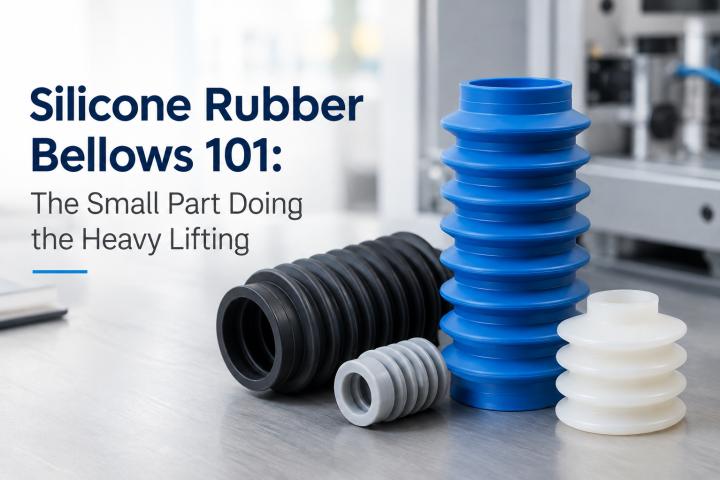
A rubber bellow cover works well where you need flexibility, sealing, and resistance to moisture, vibration, and weather. Silicone suits higher temperatures or hygiene-sensitive uses. Heavy chip-throwing operations may need something tougher still.
The sign to look for is honesty. A trustworthy supplier will sometimes tell you, “That material won’t survive your coolant,” even when it means recommending something less expensive or something different from what you asked for. If every question gets the answer “yes, no problem,” keep looking.
3. They Understand the Difference Between Cover Types
Not all covers do the same job, and buyers often use the terms loosely. A knowledgeable manufacturer can explain the differences clearly:
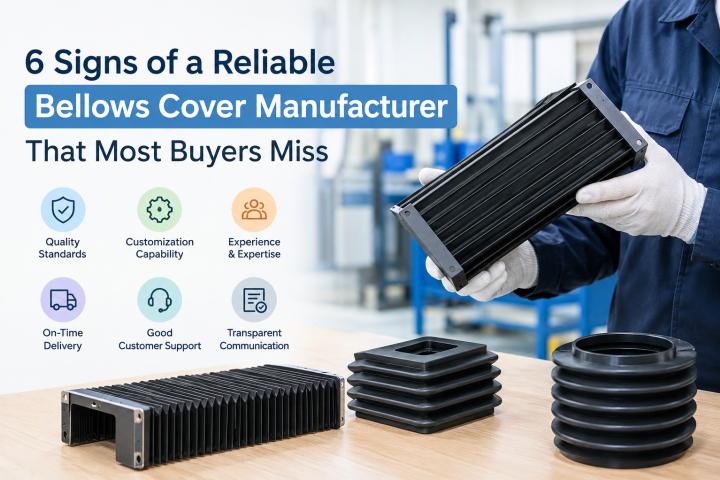
- Bellows way covers protect machine slideways and linear guides from chips, dust, and coolant. They expand and collapse with the machine’s movement, which is why fold design and compression ratio matter so much.
- A cylinder bellow cover wraps around hydraulic or pneumatic cylinder rods, shielding the polished surface and seals from grit and contamination.
- Protective bellows covers in general serve a wider range of applications, from lead screws to robotic joints to ball screws.
Ask a supplier to explain which one fits your setup and why. A short, specific answer is a good sign. A vague one isn’t.
4. They Welcome Small Orders, Samples, and Custom Sizes
Here’s a mistake many buyers make: ordering a full batch before checking if the design actually works on the machine.
A reliable bellows cover manufacturer is comfortable with prototypes and low minimum order quantities. Every machine has its own quirks, such as an odd bracket, a tight clearance, or an unusual stroke. A single trial piece can reveal problems that no drawing will show.
Also check whether the supplier handles the whole journey: design, tooling, and production under one roof. When these steps are split across different vendors, delays and blame games follow. When one team handles everything, problems are fixed faster.
5. They Test Their Products and Keep You Updated
Ask one simple question: “How do you inspect your covers before dispatch?”
You want to hear about actual checks, such as dimensional inspection, fit and flexibility checks, and testing against the operating conditions. “We check everything” isn’t an answer.
Communication matters just as much. Custom work involves several stages, and silence between them is stressful. A dependable supplier shares regular progress updates on design, tooling, production, and dispatch dates, so you never have to chase anyone. If a supplier is hard to reach before you’ve paid, imagine reaching them after.
6. They Have Proven Experience Across Industries
A cover that survives in a clean packaging line may fail within weeks in a steel plant. Experience across different environments teaches a manufacturer what really goes wrong in the field.
Look for a supplier who can talk about real applications in industrial machinery, automotive, marine, aerospace, construction, medical, or electronics. Ask for examples of similar jobs. Someone who has solved your kind of problem before will spot risks you haven’t thought of yet.
Also look at what happens after delivery. Do they help with replacements, modifications, or repeat orders? A one-time sale and a long-term partner are very different things.
A Quick Checklist Before You Order
- Did they ask about your machine, medium, and temperature?
- Did they explain material options honestly?
- Can they clearly separate way covers, cylinder covers, and other protective bellows covers?
- Are samples and small quantities possible?
- Do they test before dispatch?
- Will you get regular updates?
- Can they show experience in your industry?
If you can tick at least five of these, you’re probably talking to the right people.
Where Custom Rubber Bellows Fits In
If you’re looking for a partner that ticks many of these boxes, Custom Rubber Bellows is worth a look. The company specialises in custom moulded rubber bellows and has completed over 1,150 projects for more than 475 clients, serving industries like industrial machinery, automotive, marine, aerospace, construction, medical, and electronics.
A few things stand out:
- End-to-end support: design, tooling, testing, and production are handled together, so there’s no juggling between vendors.
- Low MOQ: you can start with a prototype or a small batch before committing to full-scale production.
- Material selection guidance and product testing are part of the service, not an afterthought.
- Weekly project updates keep you informed from design to dispatch.
- Wide range of shapes and types, including cylinder, circular, square, and rectangular bellows, plus dust protection bellows and accordion bellows covers.
You can explore their bellows cover range or their cylinder bellows options to see whether they match your application.
Frequently Asked Questions (FAQs)
1. What does a bellows cover manufacturer do?
A bellows cover manufacturer designs and produces flexible, accordion->
2. What are protective bellows covers used for?
Protective bellows covers shield sensitive components such as guideways, lead screws, ball screws, cylinder rods, and robotic joints. They keep out dust and debris, reduce wear on seals and sliding surfaces, and help machines run smoothly for longer with fewer breakdowns.
3. What is the difference between bellows way covers and a cylinder bellow cover?
Bellows way covers are fitted over machine slideways and linear guides, mainly in machine tools, to block chips and coolant. A cylinder bellow cover wraps around the rod of a hydraulic or pneumatic cylinder to protect the polished surface and seals from grit and contamination. The purpose is similar, but the shape, size, and design are different.
4. When should I choose a rubber bellow cover?
A rubber bellow cover is a good choice when you need flexibility, sealing, and resistance to moisture, vibration, and weather. It suits many industrial, automotive, and marine uses. For very high temperatures, heavy chip loads, or specific chemicals, a different material (such as silicone or a reinforced fabric) may work better. Always share your operating conditions with the manufacturer before deciding.
5. What information should I give a manufacturer for a custom bellows cover?
Share these details to get an accurate quote and a proper fit:
- Machine or equipment type
- Closed (compressed) length and extended length, or stroke length
- Shape and dimensions (round, square, rectangular, etc.)
- Mounting and end-flange details
- Operating temperature
- What the cover will be exposed to (oil, coolant, chips, chemicals, outdoor weather)
- Orientation of the axis (horizontal, vertical, or inclined)
A drawing or photos of the machine help even more.
6. Can I order a small quantity or a single prototype?
It depends on the supplier. Some manufacturers insist on large minimum orders, while others support prototypes and small batches. Custom Rubber Bellows, for example, states that it offers low MOQ, so you can test a design on your machine before going for full production.
7. How do I know if a bellows cover manufacturer is reliable?
Look for a few clear signs: they ask detailed questions about your application, give honest material advice, explain the different cover types clearly, test products before dispatch, share regular project updates, and have proven experience in your industry. Requesting a sample first is also a good way to judge quality.
8. How long does a bellows cover last?
There is no single answer, because lifespan depends on the material, the working environment, temperature, stroke speed, and how well the cover fits. A properly selected and correctly installed cover will generally last much longer than a wrongly chosen one. Regular inspection for cracks, tears, or stiffness helps you replace it before it damages the machine.
9. How can I tell that my machine needs a new bellows cover?
Watch for visible cracks, holes, or stiff and torn folds, chips or dust reaching the guideway, oil or coolant leaking through, and unusual noise or rough movement of the axis. If you notice any of these, replace the cover early, since delay can lead to far costlier repairs.
Final Thoughts
The cheapest cover is rarely the cheapest in the long run. A poorly fitted or wrongly chosen cover can damage guideways, shorten seal life, and bring production to a halt, which costs far more than the cover ever did.
Take your time choosing a bellows cover manufacturer. Ask detailed questions, request a sample, and pay attention to how they respond. The right partner won’t just sell you a product. They’ll help you protect your machine for years.