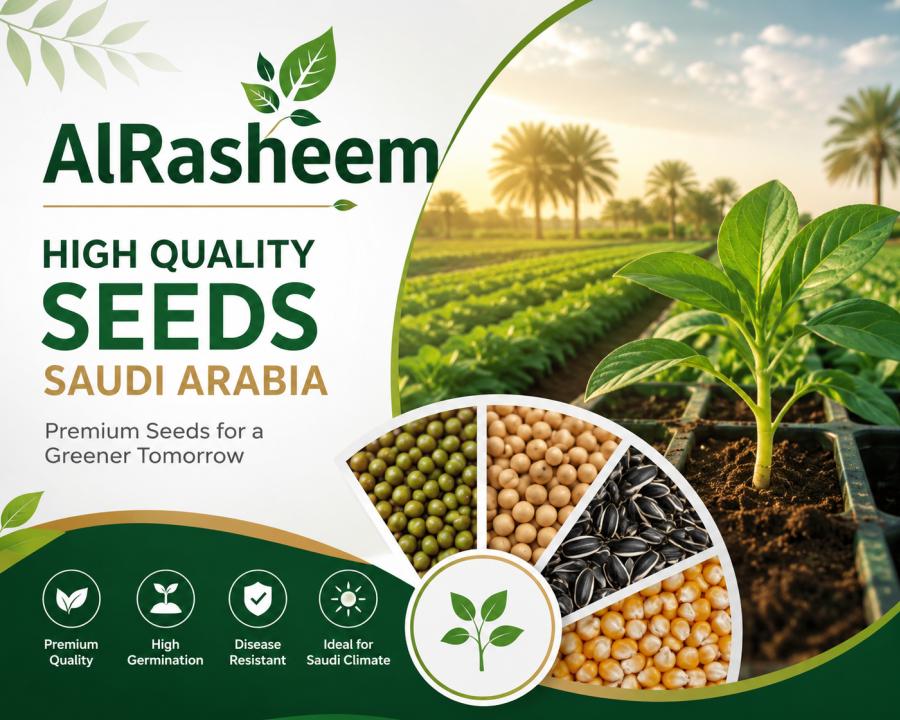
Agriculture plays an important role in supporting food security and sustainable development in Saudi Arabia. With increasing demand for fresh produce and efficient farming practices, farmers are looking for dependable agricultural inputs that deliver consistent results. Choosing the right seeds is one of the most important steps toward achieving healthy plant growth, better crop yields, and efficient resource utilization. Finding High Quality Seeds Saudi Arabia is therefore essential for commercial farmers, greenhouse operators, agricultural businesses, and home gardeners.
Understanding the Importance of High-Quality Seeds
Seeds are the foundation of successful crop production. Even with good soil preparation, proper irrigation, and effective crop management, poor-quality seeds can lead to uneven germination, weak seedlings, and reduced productivity.
High-quality seeds generally offer good germination rates, genetic purity, uniform growth, and suitability for the intended growing conditions. Selecting reliable seeds can help farmers establish healthier crops and make better use of their water, fertilizers, labour, and land.
In Saudi Arabia, where high temperatures, limited rainfall, and water conservation are important agricultural considerations, choosing appropriate seed varieties is particularly valuable.
1. Contact Established Agricultural Seed Suppliers
One of the best ways to source dependable seeds is through established agricultural suppliers with experience in the Saudi Arabian market. Professional suppliers can help farmers identify varieties suited to their crops, growing environments, and production objectives.
When searching for High Quality Seeds Saudi Arabia, look for suppliers that provide clear product information, technical guidance, and reliable customer support. A reputable supplier should be able to explain the recommended growing conditions, sowing requirements, expected maturity period, and storage instructions for each seed variety.
Farmers should also check whether the supplier provides appropriate documentation and follows applicable Saudi agricultural import, registration, and distribution requirements.
2. Explore Specialized Agricultural Companies
Specialized agricultural companies offer a range of farming products, including vegetable seeds, field crop seeds, fertilizers, plant nutrients, irrigation equipment, and crop protection solutions. Purchasing from an established agricultural company can make it easier to find compatible products for an entire growing cycle.
For example, AlRasheem Agricultural Company is an option to explore when researching agricultural solutions in Saudi Arabia. Before purchasing, customers should confirm the availability of the required seed variety, its specifications, and its suitability for their farming conditions.
Working with an experienced supplier can also help farmers make informed decisions about seed selection and crop planning.
3. Choose Seeds Suitable for Saudi Arabia's Climate
Saudi Arabia has diverse agricultural conditions, ranging from hot and dry inland regions to coastal areas with different humidity levels. Not every seed variety performs equally well in every location.
Before purchasing seeds, consider the following factors:
Heat tolerance: Select varieties that can tolerate the expected temperatures during the growing season.
Water requirements: Consider varieties appropriate for the farm's irrigation system and available water resources.
Growing season: Check sowing dates, days to maturity, and seasonal suitability.
Soil conditions: Choose seeds compatible with the farm's soil characteristics and cultivation methods.
Production goals: Determine whether the crop is intended for commercial sale, livestock feed, greenhouse production, or household use.
Consulting an agricultural specialist can help you identify suitable varieties and avoid unnecessary expenses.
4. Check Germination Rates and Seed Quality
Before purchasing, examine the seed packaging and available technical documentation. Important details include the germination percentage, seed lot number, production or testing information, expiry or validity details where applicable, and recommended storage conditions.
Certified or officially tested seeds can provide additional confidence when the certification is valid and relevant to the particular product. However, certification requirements may differ according to the crop and applicable regulations.
Avoid purchasing seeds in damaged, unlabelled, or poorly stored packaging. Exposure to excessive heat and moisture can reduce seed viability, particularly when storage conditions are unsuitable.
For larger agricultural projects, ask the supplier whether a current germination test report or other relevant quality documentation is available.
5. Compare Prices Without Compromising Quality
Price is an important consideration, especially for farms purchasing seeds in large quantities. However, choosing the cheapest option does not always provide the best value.
Compare seed varieties based on germination performance, purity, suitability, packaging size, supplier reputation, and technical support. A slightly more expensive seed variety may offer better value if it establishes a more uniform crop and performs well under the intended growing conditions.
Farmers should also ask about bulk purchasing options, delivery arrangements, return policies, and storage recommendations before placing large orders.
6. Consider Trusted Suppliers for Long-Term Farming Needs
Building a relationship with a dependable agricultural supplier can simplify future purchasing decisions. A reliable supplier should provide accurate product descriptions, transparent communication, and guidance when farmers encounter questions about seed selection or cultivation.
When evaluating suppliers of High Quality Seeds Saudi Arabia, consider their experience, available product range, responsiveness, and ability to support your agricultural requirements over time.
It is also useful to keep records of seed varieties, lot numbers, sowing dates, germination results, and crop performance. These records can help farmers compare results and make better purchasing decisions in subsequent seasons.
Conclusion
Finding reliable seeds is an essential step toward productive and sustainable agriculture in Saudi Arabia. By choosing established suppliers, checking seed quality, comparing product specifications, and selecting varieties suited to local growing conditions, farmers can make more informed agricultural investments.
Whether you manage a commercial farm, operate a greenhouse, or cultivate crops on a smaller scale, prioritizing quality and supplier reliability can support healthier crops and more efficient farming practices.
If you are searching for High Quality Seeds Saudi Arabia, research established agricultural companies, request relevant quality documentation, and consult experienced suppliers before purchasing. A well-informed seed selection strategy can help you build a stronger foundation for successful crop production and long-term agricultural growth.
Reference Link(OriginallyPosted):https://alrasheem.substack.com/p/where-to-find-reliable-high-quality