What's the Cheapest Way to Take Card Payments?
Accepting cards is essential for most businesses, but it is rarely free. Every sale carries a fee, and across a year those fees can add up to a meaningful share of your profit. The good news is that the cost is not fixed. How much you pay depends on the pricing model you choose, how customers pay, and how well you manage a few simple habits.
This guide explains where card fees come from and the practical steps that bring them down.
Where Card Fees Come From
Every card payment includes three layers of cost:
- Interchange: a fee set by the card networks and paid to the customer's card-issuing bank. It is usually the largest part of the cost.
- Network assessments: small fees charged by the card networks.
- Processor markup: what your provider adds on top for its service.
You cannot avoid interchange or network fees. What you can control is the markup, the pricing model, and the type of transactions you process. Premium rewards cards cost more to accept because the interchange helps fund the rewards. Online and keyed-in payments also carry higher interchange than in-person tap or chip payments, because they are riskier.
1. Choose the Right Pricing Model
The pricing model is the biggest lever you have. Providers generally use four types.
| Model | How it works | Best for |
|---|---|---|
| Flat rate | One blended percentage plus a fixed fee, such as 2.9% + 30¢ | Small or new businesses, low volume |
| Interchange-plus | Actual interchange plus a fixed markup | Steady, growing volume |
| Tiered | Transactions grouped into buckets with different rates | Rarely the cheapest or clearest |
| Subscription | Flat monthly fee, with transactions at near-cost | Higher, predictable volume |
A common rule of thumb is that flat-rate pricing works well at low volumes, since it is simple and has few extra fees. As monthly card volume grows, interchange-plus usually becomes cheaper because you stop paying a blended markup on low-cost cards such as debit. Typical small-business deals charge interchange plus a markup of a few tenths of a percent, plus a few cents per transaction, though your quote will depend on your risk profile and volume.
Tiered pricing is often the least transparent, so ask for a clear breakdown if a provider quotes it.
2. Compare Quotes From Several Providers
Rates vary widely, and the headline number rarely tells the whole story. Compare at least three quotes using the same sample volume and average ticket. Browse a directory of payment processing companies to build your shortlist, then ask each one for written pricing that includes:
- Processing rate or markup
- Monthly, gateway, and statement fees
- Chargeback fees
- PCI compliance fees
- Early-termination fees and contract length
- Hardware costs
A processor with a low rate but high monthly and incidental fees can cost more than a slightly higher rate with none.
3. Take Payments Card-Present Where You Can
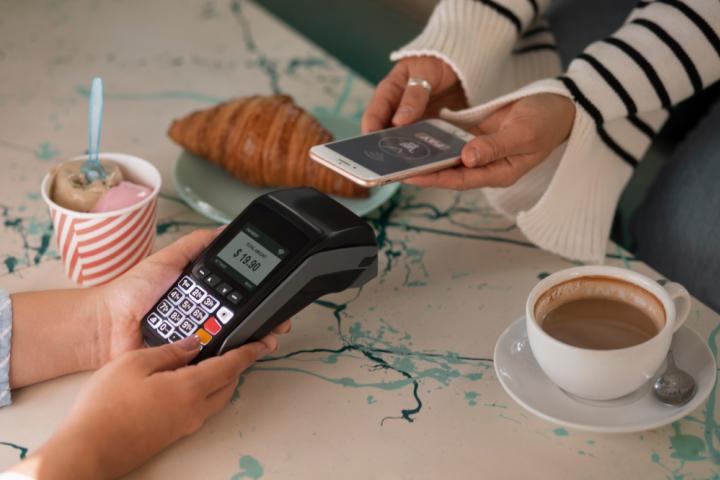
In-person tap, chip, and swipe payments generally carry lower interchange than keyed-in or online transactions. If you sell face to face, encourage tap payments and avoid manual card entry unless there is no alternative. For online sellers, use tools such as address and security code checks, which can help keep your rates in a lower category and reduce fraud.
4. Offer Bank Payments for Large or Recurring Invoices
For larger invoices, especially in B2B sales, bank transfers can cost far less than cards because they avoid interchange entirely. In the US, ACH payments are a common choice. Elsewhere, similar account-to-account methods exist. For a business with a few large payments each month, even a small share of customers switching can save a lot.
Be aware that bank payments can take longer to settle and may carry their own return or failure fees, so compare the full cost.
5. Consider Surcharging or Cash Discounts, Carefully
Some businesses recover card costs by adding a surcharge to credit card payments or by offering a discount for cash or bank transfer. Both can reduce what you absorb, but the rules are strict:
- Local law may limit or prohibit surcharging in some regions.
- Card network rules usually cap the amount and require advance notice to customers.
- Your processor agreement must allow it.
- Debit cards are commonly excluded from surcharging.
Many businesses find that building the cost into their prices is simpler and avoids customer friction. If you do surcharge, confirm what applies in your location before you start.
6. Reduce Disputes and Fraud
Chargebacks add fees, take staff time, and can push your rates up if your dispute ratio climbs. Clear billing descriptors, fast refund handling, good product descriptions, and fraud screening all help. Lower dispute rates also give you better leverage when negotiating with providers.
7. Review Your Rates Regularly
Pricing that suited you at launch may be too expensive once you grow. Review your statements at least once a year. If your monthly volume has risen, ask your provider to move you to better terms or get fresh quotes from others. Many businesses overpay simply because they never revisit an old contract.
Mistakes That Make Card Payments Cost More
- Judging only by the headline rate. Monthly, PCI, and incidental fees can outweigh a low rate.
- Staying on flat-rate pricing after volume grows. You may be overpaying on low-cost cards.
- Signing long contracts with heavy termination fees. They limit your ability to switch.
- Using manual card entry as the default. It carries higher interchange and more fraud risk.
- Ignoring statements. Errors, new fees, and rate creep often go unnoticed.
Quick Checklist
- Calculate your monthly card volume and average ticket.
- Check which pricing model you are on today.
- Request written quotes from at least three providers.
- Compare total monthly cost, not just the rate.
- Push tap and chip payments, and offer bank payments for large invoices.
- Check surcharging rules before using them.
- Review your pricing every year.
Conclusion
The cheapest way to take card payments is rarely a single trick. It is a combination: choose a pricing model that matches your volume, compare total cost across several providers, process payments in person where possible, offer lower-cost methods for big invoices, and keep disputes low. Small changes add up to real savings. For more guidance on picking a provider, see this guide on how to choose a payment gateway for your online store.