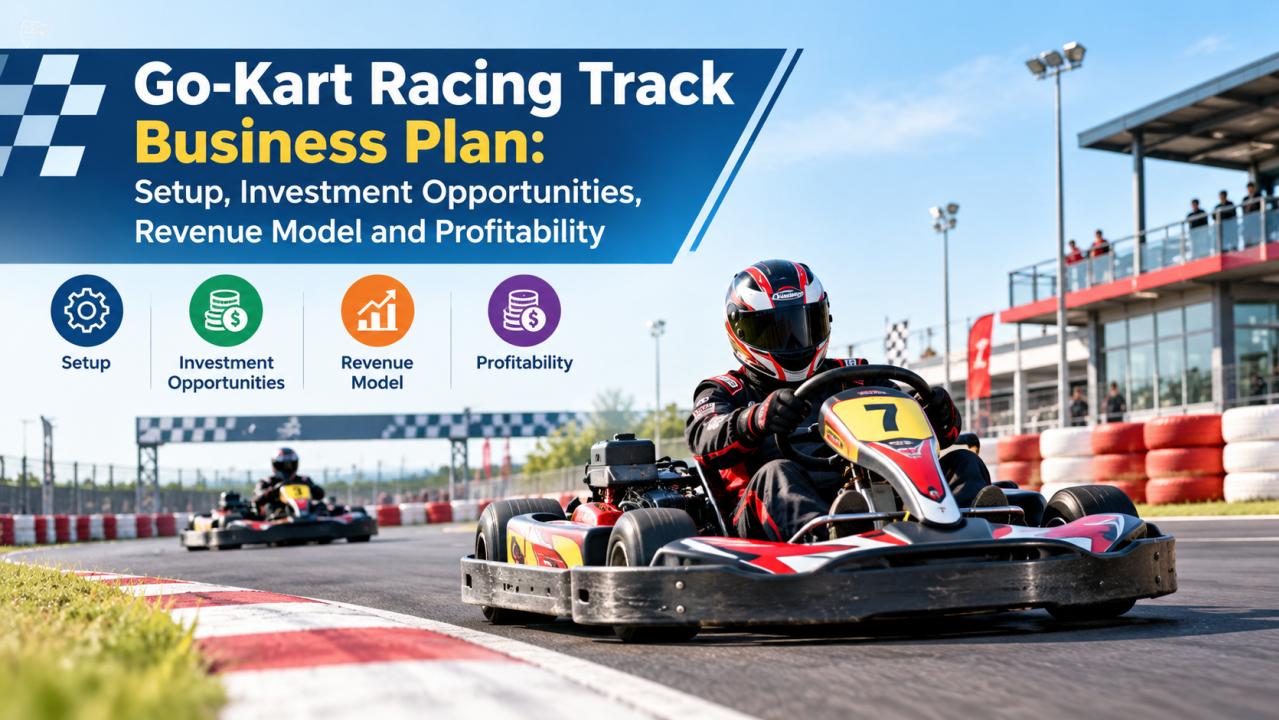
IMARC Group’s “Go-Kart Racing Track Business Plan and Project Report 2026: Industry Trends, Business Setup, Revenue Model, Investment Opportunities, Income, Expenses, and Profitability” provides a complete roadmap for setting up a go-kart racing track facility. The report covers market trends, investment opportunities, revenue models, and financial forecasts, which makes it a useful resource for entrepreneurs, consultants, and investors. Whether you are evaluating a new venture or streamlining an existing one, it analyzes the factors behind success, from business formation to profitability over time.
What is a Go-Kart Racing Track?
A Go-Kart Racing Track refers to a purpose-built recreational facility where customers drive small, open-wheeled karts around a designed circuit for entertainment, competition, and skill development. It covers the entire customer experience lifecycle: booking and registration, safety briefing and waiver management, driver equipment issue, kart allocation, race session management, lap timing and results tracking, and post-race hospitality and feedback collection.
These facilities require specialized expertise in track design and layout, kart fleet maintenance, safety management, customer service, event coordination, and hospitality operations. Operations rely on equipment and systems such as electric or petrol karts, lap timing and transponder systems, safety barriers and track surfacing, helmets and protective gear, fueling or charging infrastructure, and online booking and point-of-sale platforms to ensure rider safety, fair competition, and a consistent experience.
The business depends on close coordination among track marshals, kart technicians, front desk and customer service staff, event managers, and facility management. Together they deliver an exciting and safe racing experience for casual visitors, corporate groups, and competitive drivers alike.
Demand for organized, safe recreational motorsport has grown significantly as consumers look for experience-based entertainment, group activities, and family leisure options. Technologies such as electric kart fleets, real-time lap timing and live leaderboards, mobile booking, and immersive racing features are improving the customer experience, lowering operating costs, and helping facilities attract a wider audience.
What is Driving the Go-Kart Racing Track Market?
The global go-kart racing track market is driven by rising consumer spending on experiential entertainment, growing interest in motorsports, and increasing demand for group and social activities. The expansion of family entertainment centers, tourism and leisure destinations, and corporate team-building programs is creating steady demand for track-based recreation and well-managed racing venues.
The shift toward electric go-karts, driven by lower noise, reduced emissions, and the ability to operate indoors, is opening up urban and mall-based locations. Strategic partnerships with event organizers, corporate clients, schools, and tourism operators are expanding customer reach and booking volumes.
Technological innovation is also improving the guest experience and operating efficiency. This includes digital lap timing, online booking and dynamic pricing, and data-driven fleet maintenance.
Key business strategies include investing in modern, safe kart fleets, designing engaging track layouts for varied skill levels, and expanding into leagues, corporate events, and birthday and group packages. Companies are also focusing on customer experience through rigorous safety standards, trained staff, food and beverage offerings, and loyalty programs. Together, these strategies are driving visitor numbers, repeat business, and market expansion in go-kart racing worldwide.
Request for a Sample Report: https://www.imarcgroup.com/go-kart-racing-track-business-plan-project-report/requestsample
Report Coverage
The Go-Kart Racing Track Business Plan and Project Report includes the following areas of focus:
- Business Model & Operations Plan
- Technical Feasibility
- Financial Feasibility
- Market Analysis
- Marketing & Sales Strategy
- Risk Assessment & Mitigation
- Licensing & Certification Requirements
The report covers all aspects of the business, from market trends and risk mitigation to regulatory requirements and customer acquisition strategies for individual, group, and corporate segments.
Key Elements of Go-Kart Racing Track Business Setup
Business Model & Operations Plan
A solid business model is crucial to a successful venture. The report covers:
- Service Overview: A breakdown of open public race sessions, junior and kids’ kart experiences, endurance and grand prix racing events, corporate team-building and group packages, birthday and party bookings, racing leagues and championships, driver training and coaching programs, indoor electric kart racing, and food, beverage, and merchandise offerings.
- Service Workflow: How each stage is managed: online and walk-in booking, registration and waiver completion, safety briefing and equipment issue, kart allocation and grid setup, race session management, lap timing and results display, and post-race hospitality and feedback collection.
- Revenue Model: An exploration of the mechanisms driving revenue across per-session race fees, group and corporate packages, memberships and league entries, food and beverage sales, and merchandise and advertising income.
- SOPs & Service Standards: Guidelines for consistent track safety procedures, kart inspection and maintenance schedules, staff training and marshalling protocols, customer briefing standards, incident response, and guest satisfaction.
This section defines the operational and customer experience aspects of the business, making it easier to scale while maintaining safety and service quality.
Technical Feasibility
Setting up a successful business requires proper site, track, and equipment planning. The report includes:
- Location Selection Criteria: Key factors to consider when choosing a site, including land availability, accessibility, proximity to population centers and tourist traffic, zoning, noise considerations, and indoor versus outdoor format.
- Space & Costs: Estimates for track area, pit and maintenance zone, reception and briefing area, spectator and café space, parking, and associated costs.
- Equipment & Systems: Essential kart fleet (adult, junior, and electric or petrol), lap timing and transponder systems, safety barriers and tire walls, track surfacing, helmets and protective gear, charging or fueling infrastructure, booking and point-of-sale software, and CCTV and communication devices.
- Facility & Infrastructure Setup: Guidelines for track construction and layout, pit and workshop setup, spectator areas, and customer amenities.
- Utility Requirements & Costs: Understanding the electricity needs for charging, lighting, and timing systems, water supply, drainage, fuel storage where applicable, internet connectivity, and other operational necessities for running a track.
- Human Resources & Wages: Estimating staffing needs, roles, and compensation for track marshals, kart technicians, race controllers, front desk and customer service staff, event coordinators, food and beverage staff, sales and marketing personnel, and facility managers.
This section gives practical, actionable insights into the infrastructure needed to set up the business and run a safe, reliable racing operation.
Financial Feasibility
The Go-Kart Racing Track Business Plan and Project Report provides a detailed analysis of the financial landscape, including:
- Capital Investments & Operating Costs: Breakdown of initial and ongoing investments.
- Revenue & Expenditure Projections: Projected income and cost estimates for the first five years.
- Profit & Loss Analysis: A clear picture of expected financial outcomes.
- Taxation & Depreciation: Understanding tax obligations and depreciation of the kart fleet, track assets, and equipment.
- ROI, NPV & Sensitivity Analysis: Comprehensive financial evaluations to assess profitability.
This analysis supports effective decision-making and helps secure funding, making it an essential tool for evaluating the business’s potential.
Request For Customization: https://www.imarcgroup.com/request?type=report&id=44104&flag=C
Market Insights & Strategy
Market Analysis
A deep dive into the go-kart racing track market, including:
- Industry Trends & Segmentation: Identifying emerging trends and key market segments across track type (indoor and outdoor), kart type (electric, petrol, and junior karts), customer segment (casual visitors, families, corporate groups, and competitive racers), and revenue stream (race sessions, events, memberships, and food and beverage).
- Regional Demand & Cost Structure: Regional variations in leisure spending, motorsport interest, land and construction costs, and regulatory requirements affecting track operations.
- Competitive Landscape: An analysis of the competitive environment, including established karting centers and franchise chains, family entertainment centers, motorsport clubs and circuits, adventure and amusement parks, and other experiential entertainment venues.
Capital & Operational Expenditure Breakdown
The report includes a comprehensive breakdown of both capital and operational costs, helping you plan for financial success. Detailed estimates for land and track development, kart fleet acquisition, and operating costs ensure you are prepared for both initial investments and ongoing expenses.
- Capital Expenditure (CapEx): Focused on land acquisition or lease, track construction and surfacing, safety barriers and fencing, kart fleet purchase, lap timing and booking systems, pit and workshop setup, reception, café, and spectator area development, safety and protective equipment, signage and branding, and initial marketing investments.
- Operational Expenditure (OpEx): Covers ongoing costs like staff salaries and benefits, kart maintenance, spare parts and tires, electricity or fuel, insurance and safety compliance, facility rent and utilities, marketing and event promotion, licensing and permit fees, food and beverage inventory, and customer service operations.
Financial projections account for cost fluctuations over time, including adjustments for seasonal visitor demand, spare parts and energy price changes, kart replacement cycles, insurance premium adjustments, and competitive pressures.
Profitability Projections
The report outlines a detailed profitability analysis over the first five years of operations, including projections for:
- Total revenue from race sessions, group and corporate bookings, memberships and leagues, food and beverage sales, and merchandise and sponsorship income, along with expenditure breakdown, gross profit, and net profit.
- Profit margins for each revenue stream and year of operation.
- Revenue per session and per kart projections, and market penetration growth estimates.
These projections give a clear picture of the expected financial performance and profitability of the business, allowing for better planning and informed decision-making.
About Us
IMARC Group is a leading global market research and management consulting firm. We specialize in helping organizations identify opportunities, mitigate risks, and create impactful business strategies.
Our expertise includes:
- Market Entry and Expansion Strategy
- Feasibility Studies and Business Planning
- Company Incorporation and Entertainment Facility Setup Support
- Regulatory and Licensing Navigation
- Competitive Analysis and Benchmarking
- Industry Partnership Development
- Branding, Marketing, and Leisure Industry Customer Strategy
Contact Us:
IMARC Group
134 N 4th St. Brooklyn, NY 11249, USA
Email: sales@imarcgroup.com
Tel No: (D) +91 120 433 0800
United States: (+1-201971-6302)