
Managing a residential property in London involves more than maintaining communal areas and responding to tenants' requests. Property managers must also ensure that relevant fire safety measures are inspected, defects are addressed and maintenance records are kept up to date. In apartment blocks, HMOs and converted residential buildings, coordinating these responsibilities can be challenging, particularly when several contractors and residents are involved.
A clear management process helps property managers identify problems early, organise remedial work and maintain safer living environments. Understanding how to approach inspections, repairs and compliance is an important part of managing a property effectively.
1. Understand Your Fire Safety Responsibilities
Fire safety responsibilities depend on the type of property, its ownership and management arrangements, and the legislation that applies. Under the Regulatory Reform (Fire Safety) Order 2005, the responsible person has duties relating to fire safety in premises covered by the legislation.
For residential buildings, these responsibilities may include maintaining communal fire doors, keeping escape routes clear and ensuring that relevant fire safety equipment remains in working order.
The Fire Safety (England) Regulations 2022 also establish specific fire door checking requirements for qualifying multi-occupied residential buildings in England that are at least 11 metres high. These include checks of communal fire doors at least every three months and best-endeavours checks of flat entrance doors at least every 12 months.
Property managers should establish who is responsible for each task, understand the requirements applicable to their buildings and ensure that identified issues are followed up. Appointing a contractor does not automatically transfer the responsible person's legal duties.
2. Establish a Reliable Inspection Schedule
Waiting until a defect is reported can lead to avoidable delays. A planned inspection schedule makes it easier to monitor the condition of important fire safety measures and arrange maintenance before problems become more serious.
Depending on the property, the schedule may cover fire doors, emergency lighting, fire alarm systems, fire safety signage and other measures identified in the building's fire risk assessment.
Inspection frequency should reflect applicable legal requirements, manufacturer recommendations, the building's risk profile and previous findings.
For qualifying residential buildings, statutory fire door checks should be distinguished from more detailed technical surveys. Routine checks can identify visible damage or operational problems, but specialist assessment may be needed when a door's specification, condition or suitability is uncertain.
A central calendar can help managers coordinate appointments, track upcoming checks and oversee maintenance across multiple London properties.
3. Identify and Address Fire Door Defects
Fire doors help restrict the spread of fire and smoke when they are correctly specified, installed and maintained. Defects can reduce their effectiveness, particularly when doors form part of communal escape routes or protect the entrances to individual flats.
Common problems include damaged seals, loose hinges, faulty self-closing devices, excessive gaps and doors that fail to close properly. Unauthorised alterations can also affect a door's performance.
Property managers should establish a straightforward process for reporting and recording defects. Each report should identify the door's location, describe the problem and record the action required.
Where a defect could affect fire safety, arrange an appropriate assessment and address the issue promptly. Repairs should use suitable components and follow the relevant doorset specification.
For buildings with multiple entrances and communal areas, keeping accurate records makes it easier to identify recurring problems and prioritise outstanding work.
4. Coordinate Repairs and Contractor Visits
Organising remedial work in occupied London buildings requires careful planning. Contractors may need access to individual flats, communal corridors or restricted areas, while residents need sufficient notice of scheduled work.
Before accepting a quotation, confirm the scope of work, proposed materials, access arrangements and any additional charges. Ask the contractor to explain what is included and how unexpected defects will be handled.
When selecting a provider, consider relevant experience, technical competence, communication and the quality of the documentation supplied after completion.
Property managers responsible for several buildings may also benefit from coordinating similar maintenance tasks during planned visits. However, scheduling efficiencies should never delay urgent work needed to address a fire safety concern.
5. Keep Fire Safety Records Organised
Accurate records help property managers monitor progress and establish whether identified defects have been resolved.
Depending on the building and applicable requirements, records may include the fire risk assessment, inspection reports, maintenance schedules, contractor documentation and evidence of completed remedial work.
For fire doors, useful records can identify individual doors, describe observed defects, record recommended actions and document the outcome of repairs. Where access to a flat entrance door cannot be obtained, the required checks and efforts to secure access should be recorded as appropriate.
Digital record-keeping can be especially useful for managing multiple properties. It allows teams to retrieve reports, monitor outstanding actions and identify approaching inspection dates without relying on scattered paperwork.
The aim is to maintain an accurate account of what has actually been inspected, repaired or replaced.
6. Communicate Fire Safety Information to Residents
Residents play an important role in maintaining safe communal areas. Property managers should explain the importance of keeping fire doors in their required position, avoiding unauthorised alterations and reporting damage promptly.
When inspections or repairs are planned, clear communication helps residents understand what will happen and when access may be needed.
Repeated problems should also be investigated rather than addressed through reminders alone. For example, if residents regularly wedge a communal door open because it is difficult to operate, the underlying mechanical issue may need attention.
A practical approach combines resident communication with appropriate maintenance and follow-up.
7. Know When Professional Support Is Needed
Some issues can be identified during routine checks, while others require a more detailed assessment. Significant door damage, repeated closing failures, uncertainty about product specifications and defects affecting the surrounding frame may all warrant specialist attention.
Property managers should also seek appropriate advice when refurbishment work affects existing fire safety arrangements or when a fire risk assessment identifies remedial actions that require technical expertise.
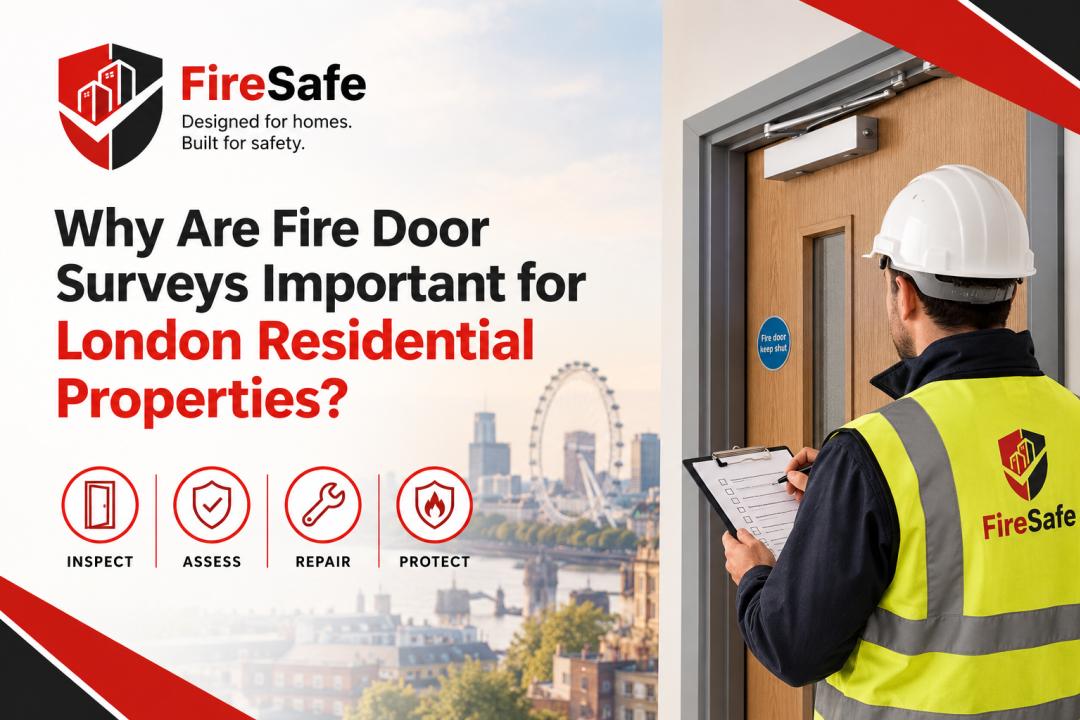
For buildings needing professional fire door support, FireSafe Residential offers a relevant option to explore. Its services include fire door surveys, supply and installation for London properties, helping managers investigate defects and plan suitable work.
Before appointing any contractor, confirm the proposed scope, the competence of the people undertaking the work and the records that will be provided at completion. Wider building requirements may also call for additional fire protection services in London.
Conclusion
Managing fire safety effectively requires a consistent approach to inspections, maintenance, contractor coordination and record-keeping. London property managers need to ensure that problems are reported, appropriate work is arranged and outstanding actions are monitored until they are resolved.
By maintaining a clear inspection schedule, communicating with residents and seeking competent professional support when necessary, managers can take a more organised approach to their responsibilities.
Ultimately, the priority is to maintain suitable fire safety measures, address defects without unnecessary delay and keep residents informed. A well-managed process supports safer buildings and gives property managers a clearer picture of the work required across their properties.
Original Source : https://britishbusinessblog.co.uk/fire-door-surveys-installation-london-choose-fire-safety-provider/