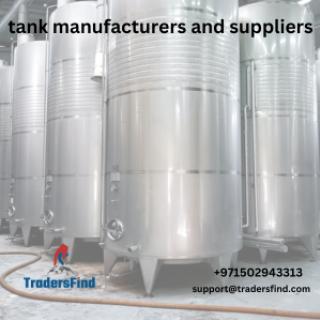
Durable industrial mixing tank with efficient agitation and easy cleaning.
| Founded year: | 2000 |
| Country: | China |
| Funding rounds: | Not set |
| Total funding amount: | Not set |
Description
Industrial mixing operations require reliable equipment that can handle demanding production schedules while maintaining consistent results. The mixing tank serves as the foundation of any successful blending process, whether you're working with chemicals, food products, pharmaceuticals, or other materials. Selecting the right equipment involves careful consideration of several critical factors that directly impact performance, safety, and long-term operational costs.Understanding what makes a suitable for your specific application helps prevent costly mistakes and ensures optimal productivity. The wrong choice can lead to inefficient mixing, contamination issues, maintenance problems, and ultimately, production delays that affect your bottom line.
Material Construction and Durability
Stainless Steel Advantages
The construction material of your mixing tank plays a crucial role in both performance and longevity. Stainless steel remains the gold standard for most industrial applications due to its corrosion resistance and hygienic properties. Grade 316L stainless steel offers superior resistance to chlorides and acids, making it ideal for pharmaceutical and food processing environments. The smooth surface finish prevents bacterial growth and allows for thorough cleaning between batches.
When evaluating stainless steel options, consider the welding quality and surface finish. TIG welding provides cleaner joints with minimal heat-affected zones, reducing the risk of corrosion at weld points. The interior surface should have a mirror finish or electropolished surface to eliminate crevices where contaminants might accumulate.
Alternative Materials for Specific Applications
While stainless steel dominates the market, certain applications benefit from alternative materials. Carbon steel mixing tanks with appropriate coatings offer cost advantages for non-corrosive applications. Fiberglass reinforced plastic (FRP) tanks provide excellent chemical resistance for highly corrosive environments while remaining lightweight and cost-effective.
For specialized chemical processes, exotic alloys like Hastelloy or Inconel may be necessary. These materials command higher prices but deliver superior performance in extreme conditions involving high temperatures or aggressive chemicals.
Agitation System Design
Impeller Configuration and Selection
The agitation system represents the heart of any mixing tank operation. Proper impeller selection depends on your specific mixing requirements, including viscosity, density differences, and desired mixing intensity. Axial flow impellers work well for low-viscosity liquids and provide excellent top-to-bottom circulation. Radial flow impellers generate high shear forces suitable for dissolving solids or creating emulsions.
Multiple impeller configurations on a single shaft can address complex mixing challenges. A combination of axial and radial flow impellers creates comprehensive mixing patterns that handle both blending and dissolution requirements simultaneously. The spacing between impellers and their positioning relative to tank geometry affects mixing efficiency significantly.
Motor and Drive System Considerations
Variable frequency drives (VFDs) provide operational flexibility by allowing speed adjustments during the mixing process. This capability proves valuable when working with shear-sensitive materials or when different mixing stages require varying intensities. Direct drive systems eliminate the complexity and maintenance requirements of gearboxes but may require larger motors for high-torque applications.
Gear reducers enable the use of smaller motors while providing the necessary torque for heavy-duty mixing applications. However, they introduce additional maintenance requirements and potential failure points. Consider the trade-offs between initial cost, maintenance complexity, and operational flexibility when selecting drive systems.
Tank Geometry and Size Optimization
Aspect Ratio and Volume Considerations
The relationship between tank diameter and height significantly impacts mixing performance. Standard mixing tanks typically maintain a height-to-diameter ratio between 1:1 and 1.5:1 for optimal circulation patterns. Taller tanks may require multiple impellers to achieve adequate mixing throughout the entire volume, while shorter tanks might experience dead zones near the bottom.
Volume requirements should account for future production needs and batch size variations. Oversized tanks lead to inefficient mixing of smaller batches, while undersized equipment limits production capacity. Consider installing baffles to prevent swirling and improve mixing efficiency, especially in unbaffled tanks where vortex formation can reduce mixing effectiveness.
Heat Transfer Capabilities
Many mixing applications require temperature control during the blending process. Jacketed mixing tanks provide uniform heating or cooling through the tank walls, while internal coils offer higher heat transfer rates for faster temperature changes. Half-pipe jackets maximize heat transfer surface area while maintaining structural integrity under pressure.
The choice between external jackets and internal coils depends on your specific requirements. Jackets provide easier cleaning and maintenance but require larger heating/cooling systems. Internal coils offer better heat transfer coefficients but create cleaning challenges and potential contamination risks in sanitary applications.
Control Systems and Automation
Process Monitoring and Data Collection
Modern mixing operations benefit from comprehensive monitoring systems that track critical parameters throughout the mixing cycle. Temperature, pressure, torque, and power consumption data provide insights into process consistency and equipment performance. Real-time monitoring helps identify potential problems before they impact product quality or cause equipment damage.
Integration with plant-wide control systems enables centralized monitoring and control of multiple mixing tanks. This connectivity supports batch tracking, recipe management, and quality assurance requirements. Consider systems that offer data logging capabilities for regulatory compliance and process optimization studies.
Safety and Interlock Systems
Safety systems protect both personnel and equipment during mixing operations. Emergency stop systems should be easily accessible and immediately halt all moving equipment. Torque monitoring prevents damage from overloading, while level sensors ensure proper batch volumes and prevent overflow conditions.
Pressure relief systems protect against excessive pressure buildup in sealed mixing tanks. Rupture discs or pressure relief valves should be sized according to worst-case scenarios and installed in locations that direct released materials away from personnel areas.
Maintenance Accessibility and Design
Cleaning and Sanitation Features
The ability to thoroughly clean your mixing tank affects both product quality and operational efficiency. CIP (Clean-in-Place) systems automate the cleaning process and ensure consistent results between batches. Spray balls or cleaning nozzles should provide complete coverage of all interior surfaces, including areas around agitator shafts and tank connections.
Removable agitators simplify maintenance and allow for thorough inspection of mixing components. Quick-disconnect couplings and lifting devices facilitate agitator removal without requiring extensive disassembly. Surface finishes should meet industry standards for your specific application, with pharmaceutical and food applications requiring higher polish levels than chemical processing.
Access Ports and Maintenance Features
Strategic placement of manholes, inspection ports, and service connections simplifies routine maintenance and troubleshooting. Large enough manholes allow personnel entry for internal inspection and maintenance, while smaller ports accommodate instrumentation and cleaning devices. All openings should use appropriate gaskets and sealing systems to prevent contamination and maintain process conditions.
Consider the accessibility of motor mounts, coupling guards, and drive components when evaluating tank designs. Components requiring regular maintenance should be easily reached without requiring scaffolding or special equipment. Proper lighting and ventilation around mixing tanks improve safety during maintenance operations.
Conclusion
Selecting a quality mixing tank requires careful evaluation of these five critical features to ensure optimal performance for your specific application. The construction material affects both durability and product compatibility, while the agitation system determines mixing effectiveness and energy consumption. Tank geometry influences circulation patterns and heat transfer capabilities, and control systems provide the monitoring and safety features necessary for reliable operation.
Maintenance accessibility impacts long-term operating costs and equipment reliability. By thoroughly evaluating each of these features against your specific requirements, you can select a mixing tank that delivers years of reliable service while meeting your production goals. Remember that the lowest initial cost option may not provide the best long-term value when considering maintenance, energy consumption, and product quality factors.
Have a startup you want to promote?
Feature your startup and reach thousands of entrepreneurs and investors
Feature My Startup