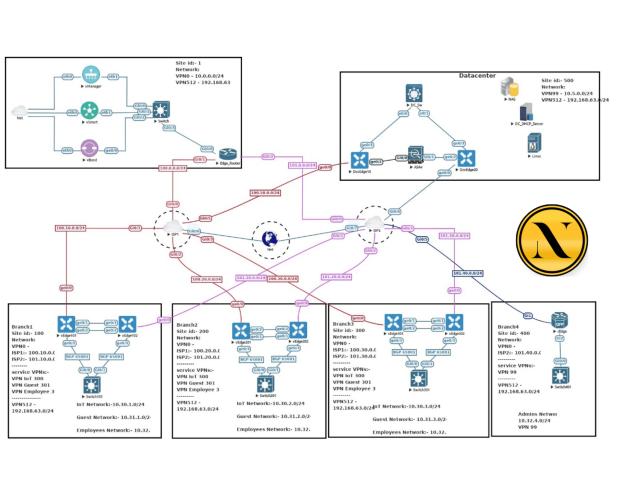
Join world-class CCIE Enterprise Infrastructure Training in New York, USA. Get hands-on Cisco labs.
| Founded year: | 2000 |
| Country: | India |
| Funding rounds: | Not set |
| Total funding amount: | Not set |
Description
Future Scope of CCIE Enterprise Infrastructure Certification in the IT IndustryThe networking landscape continues to evolve as organizations adopt cloud computing, automation, software-defined technologies, and advanced security frameworks. As enterprises expand their digital infrastructure, the demand for highly skilled networking professionals continues to rise.
Among the most respected certifications in the networking domain, CCIE Enterprise Infrastructure remains a benchmark for advanced technical expertise. Professionals seeking career growth often pursue CCIE Enterprise Infrastructure Training to strengthen their understanding of complex enterprise networking environments and stay aligned with industry demands.
Understanding CCIE Enterprise Infrastructure Certification
The CCIE Enterprise Infrastructure certification is one of the highest-level credentials for networking professionals. It validates advanced skills in designing, deploying, managing, operating, and troubleshooting enterprise network infrastructures.
This certification covers a broad range of technologies, including:
Enterprise networking architectures
Network automation
Software-defined networking
Security integration
Wireless technologies
Infrastructure services
Network assurance
Because of its comprehensive scope, CCIE certification is often viewed as a symbol of technical excellence within the IT industry.
Why Enterprise Networking Remains Critical
Despite the growth of cloud services, enterprise networking continues to serve as the foundation of modern IT operations.
Organizations rely on stable and secure networks to support:
Remote work environments
Hybrid cloud deployments
Data center connectivity
Business-critical applications
Real-time communication systems
Digital transformation initiatives
As businesses become increasingly dependent on interconnected technologies, the need for experienced network engineers remains strong.
Future Trends Driving Demand for CCIE Professionals
Cloud-Network Integration
Modern enterprises increasingly operate in hybrid and multi-cloud environments. Networking professionals must understand how on-premises infrastructure connects seamlessly with cloud platforms.
CCIE-certified engineers possess the advanced knowledge required to manage these complex environments, making them valuable assets for organizations undergoing cloud transformation.
Network Automation and Programmability
Automation has become a key focus for enterprises seeking operational efficiency.
Benefits of Network Automation
Reduced manual configuration errors
Faster deployment of services
Improved network consistency
Enhanced scalability
Better resource utilization
CCIE Enterprise Infrastructure Training introduces candidates to automation tools and programmability concepts that are becoming essential in modern networking roles.
Software-Defined Networking Adoption
Software-defined networking (SDN) continues to reshape how organizations manage their infrastructure.
Traditional networking approaches often require manual intervention, whereas SDN enables centralized control and greater flexibility.
Professionals with CCIE-level expertise can help organizations design and implement software-defined architectures that support future business growth.
Growing Focus on Network Security
Cybersecurity concerns continue to increase across industries.
Networking and Security Convergence
Enterprise networks must now incorporate:
Access control mechanisms
Threat detection systems
Secure segmentation
Identity-based policies
Continuous monitoring
CCIE-certified professionals are equipped to understand how networking and security technologies work together, making them increasingly valuable in security-conscious organizations.
Career Opportunities After CCIE Enterprise Infrastructure Certification
The future job market offers numerous opportunities for professionals holding advanced networking certifications.
Enterprise Network Architect
Network architects design large-scale infrastructure solutions that align with business objectives.
Responsibilities often include:
Infrastructure planning
Technology evaluation
Network optimization
Performance management
Capacity forecasting
Senior Network Engineer
Senior engineers oversee critical networking operations and provide technical leadership for enterprise environments.
Typical duties include:
Advanced troubleshooting
Network upgrades
Infrastructure deployment
Performance analysis
Automation initiatives
Network Consultant
Organizations frequently engage consultants to guide networking projects and modernization efforts.
Consultants may work across multiple industries and provide expertise in:
Infrastructure assessments
Migration strategies
Network transformation projects
Technology recommendations
Automation Engineer
As automation adoption increases, specialized roles focused on network programmability continue to emerge.
These professionals develop solutions that automate network operations and improve efficiency.
Infrastructure Manager
Management positions often require a strong technical foundation combined with leadership capabilities.
CCIE-certified professionals may progress into roles responsible for:
Team management
Strategic planning
Infrastructure governance
Budget allocation
Technology roadmaps
Industries Seeking CCIE-Certified Professionals
The future scope of CCIE certification extends across numerous sectors.
Information Technology Services
IT service providers require networking experts to manage client environments and support complex infrastructure deployments.
Financial Services
Banks and financial institutions depend on highly reliable and secure networks for daily operations.
Healthcare
Healthcare organizations increasingly utilize connected technologies, electronic records, and telemedicine solutions that require robust network infrastructure.
Telecommunications
Telecommunication providers continue to invest heavily in advanced networking technologies and require highly skilled engineers.
Government and Public Sector
Government agencies rely on secure and scalable networks to support essential services and digital initiatives.
Impact of Digital Transformation on Networking Careers
Digital transformation continues to reshape enterprise technology strategies.
Organizations are investing in:
Cloud platforms
Artificial intelligence solutions
Internet of Things (IoT) deployments
Edge computing environments
Advanced analytics platforms
All these technologies depend on reliable network infrastructure.
As a result, professionals with advanced networking expertise are expected to remain relevant for years to come.
Advantages of Pursuing CCIE Enterprise Infrastructure Training
Deep Technical Knowledge
The training process exposes candidates to advanced networking concepts and real-world implementation scenarios.
Strong Problem-Solving Skills
Preparing for the certification develops analytical and troubleshooting abilities that are highly valued by employers.
Industry Recognition
CCIE certification is recognized globally and often serves as evidence of advanced networking competency.
Adaptability to Emerging Technologies
The certification evolves alongside industry developments, helping professionals stay updated with modern networking practices.
Competitive Career Growth
Organizations often seek professionals who can handle complex networking environments with confidence and precision.
Challenges and Opportunities Ahead
While networking technologies continue to evolve, the profession itself is becoming more specialized.
Future networking professionals will need expertise in:
Automation
Security
Cloud integration
Artificial intelligence-driven operations
Software-defined architectures
CCIE-certified engineers who continuously upgrade their skills will be well-positioned to capitalize on emerging opportunities.
Continuous Learning Remains Essential
Technology advancements occur rapidly. Successful professionals understand the importance of ongoing education, practical experience, and adapting to industry trends.
Conclusion
The future scope of CCIE Enterprise Infrastructure certification remains highly promising as organizations continue investing in digital transformation, cloud adoption, automation, and secure network architectures. The increasing complexity of enterprise environments creates strong demand for professionals who possess advanced networking expertise. Through comprehensive CCIE Enterprise Infrastructure Training, candidates can develop the technical knowledge, problem-solving capabilities, and practical skills required to succeed in evolving IT landscapes. As businesses increasingly rely on resilient and intelligent network infrastructures, CCIE-certified professionals are expected to remain valuable contributors to enterprise technology initiatives for years to come.
Have a startup you want to promote?
Feature your startup and reach thousands of entrepreneurs and investors
Feature My Startup