The Physical Product as a Gateway to Interactive Content
| Founded year: | 2000 |
| Country: | United States of America |
| Funding rounds: | Not set |
| Total funding amount: | Not set |
Description
The Physical Product as a Gateway to Interactive Content
A physical product has traditionally been the final result of a brand’s communication process. Advertising attracts attention, websites provide information, stores create visibility, and packaging presents the product at the point of purchase. Once the customer picks up the item, the experience often becomes limited to whatever information is printed on the surface or included inside the box.
That model is beginning to change.
A product can now become a starting point for additional digital interaction. Instead of existing separately from online content, the physical item can connect customers to experiences that provide greater detail, visual exploration, demonstrations, and interactive information. A smartphone becomes the bridge between what a customer can hold and what they can discover.
This creates a different way of thinking about products themselves. A chair is no longer only a chair sitting in a showroom. A package is no longer limited to the information printed on it. A catalog image does not have to remain a flat representation. Each physical touchpoint can potentially become an entrance to another layer of content.
The opportunity is not simply to add technology to ordinary products. It is to make physical objects more useful as starting points for discovery.
When an Object Becomes the Beginning of a Journey
Customers already interact with products in meaningful ways. They pick them up, turn them around, examine details, compare alternatives, and imagine how they might fit into their lives. These actions represent moments of natural curiosity.
The problem is that physical products cannot always answer every question.
A small package may not have enough room to explain every feature. A furniture display cannot always show how an item would look inside every possible home. A product photograph can show appearance but cannot provide unlimited perspectives. A printed brochure may introduce an object without demonstrating how it works.
Interactive content can extend these moments.
Instead of asking customers to leave the physical environment and begin searching for information elsewhere, the product itself can provide a direct route toward additional content. The customer is already interested. The digital experience simply gives that interest somewhere to go.
This creates a more connected journey because the transition begins with an object the customer can actually see or hold.
Connecting the Product to a Digital Layer
The first challenge is making the connection simple.
Customers should not have to search through a website or install unfamiliar software just to access information related to a product in front of them. The path should be clear enough that curiosity can become interaction without unnecessary effort.
An augmented reality qr code can provide that bridge by linking a physical product, package, display, or printed material with an interactive experience. A customer can scan the code with a smartphone and move directly from the physical world into a digital environment connected to the object they are examining.
This creates an immediate relationship between the product and the content.
A customer standing beside a piece of furniture could scan the associated code and explore a digital representation. Someone holding a packaged item could access additional demonstrations or information. A visitor at a retail display could move beyond the limited space of the physical presentation.
The code itself is only the entry point. The real value comes from what customers discover after they use it.
Curiosity Can Become a Form of Interaction
Traditional product communication is often one-directional. A brand presents an image, description, or advertisement, and the customer receives that information.
Interactive content changes this relationship.
Customers can choose what they want to investigate. They may rotate a product, explore different perspectives, activate additional information, or view an object in a relevant environment. Instead of following a fixed sequence, they can take a more active role.
This is particularly valuable because different customers have different questions.
One person may want a quick overview. Another may want to examine specific features. A potential buyer may be uncertain about appearance, while an existing customer may need guidance on using the product.
A connected experience can provide different levels of information without forcing every customer through the same journey.
The physical product remains the common starting point, but the digital experience can adapt to different levels of curiosity.
Product Images Can Gain a New Dimension
Visual assets are already central to modern commerce. Businesses invest heavily in product photography for websites, advertising, social media, catalogs, and packaging.
Yet even the best photograph is still a selected view.
The customer sees what the camera captured from a particular angle. Multiple photographs can provide additional perspectives, but they remain a collection of fixed images. When a customer wants to examine the object more freely, static content can reach its limits.
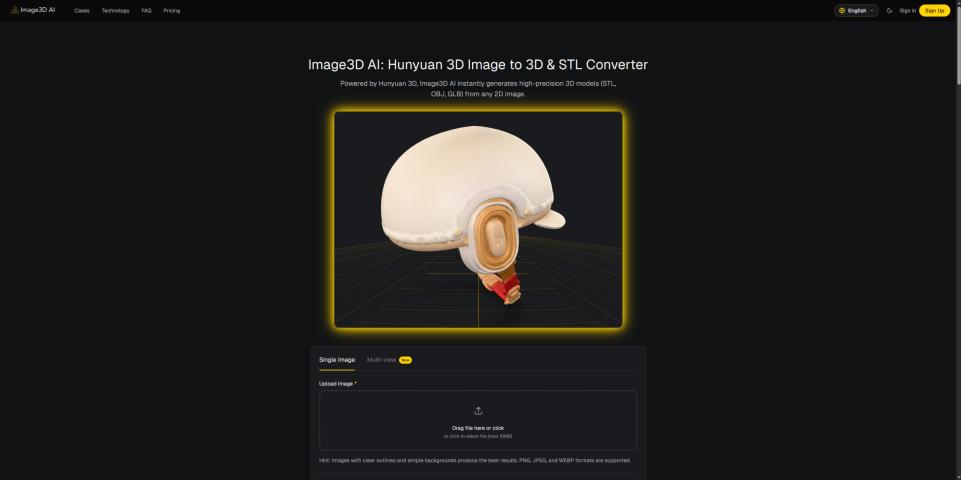
The ability to convert image to 3D model creates an opportunity to move beyond those limitations.
Businesses can explore how existing visual assets might contribute to more interactive representations. Instead of treating an image as the final version of product content, it can become part of a process that leads toward three-dimensional exploration.
For the customer, this can create a more active experience. A product can be examined from different viewpoints, understood in greater detail, and potentially visualized within a relevant physical environment.
This is especially useful for items where form and proportion influence the purchase decision. Furniture, home décor, equipment, accessories, and other visually driven products can benefit when customers are given more than a single perspective.
A Physical Product Can Answer Questions Before They Become Objections
Many purchase decisions slow down because customers are uncertain.
They may wonder whether an item is the right size. They may not understand how it works. They may like its appearance but struggle to imagine it in their own environment. They may need more detail than a product label or display can provide.
If these questions remain unanswered, customers may postpone the decision.
Interactive content can create another stage of evaluation.
Rather than asking customers to imagine everything from descriptions and photographs, a digital layer can provide more visual context. A product can become something customers explore before deciding whether it is right for them.
For example, someone interested in a home product may want to understand how it relates to their existing space. A three-dimensional experience can offer greater visual information than a flat photograph. A technical product may benefit from interactive demonstrations that explain individual features more clearly.
The physical product therefore becomes more than something customers evaluate with their eyes. It becomes the trigger for a deeper process of understanding.
Retail Displays Can Continue Beyond Their Physical Boundaries
Retail environments are limited by space.
A store cannot display every possible variation of a product. A product card cannot contain an unlimited amount of information. Sales staff cannot always be available to answer every customer question.
Interactive content can help extend the retail experience without requiring every physical surface to become crowded with text and images.
A display can introduce the essential information and provide a path toward deeper exploration. Customers who want more can access it independently.
This creates a layered experience.
At the first level, customers see the physical product and the information required for quick understanding. At the next level, those who are interested can enter an interactive digital experience. The amount of information expands according to the customer's level of engagement.
This can make physical spaces more flexible. Retailers do not need to treat every product display as a complete digital encyclopedia. The physical environment can remain clean and approachable while connected content provides additional depth.
The Product Experience Does Not End at Checkout
One of the most interesting aspects of connected products is their potential after purchase.
A customer may buy an item and later need information about assembly, care, setup, or additional features. Traditionally, that information might be found in a printed manual or through an online search.
A connected product can make access more direct.
The same physical object or package that introduced the product can provide a route to guidance and support. Customers can return to the digital experience when they need additional information.
This changes the role of the product after it leaves the store.
Instead of becoming disconnected from the brand once the transaction is complete, it can remain linked to useful digital content. The relationship can continue through demonstrations, interactive guidance, updated information, or related experiences.
This approach can make customer support feel more connected to the product itself.
Restaurants Show How Physical Touchpoints Can Become Interactive
The same concept applies beyond traditional retail.
A restaurant menu is a physical or digital touchpoint connected directly to a customer's decision. It presents choices, provides descriptions, and helps diners decide what to order. Yet written descriptions cannot always communicate the appearance of a dish.
Interactive visualization can provide another layer.
With augmented reality restaurant menus customers can explore visual representations of selected dishes before making their choice. This may be particularly useful for unfamiliar cuisine, signature meals, seasonal specials, or dishes where presentation is an important part of the experience.
The menu remains simple for customers who only want to read and order. Those who want additional context can choose to explore.
This illustrates the broader principle behind connected physical products and surfaces. The physical object does not have to become complicated for it to lead toward a richer digital experience.
The interaction can remain optional while still providing significant value.
Packaging Can Become an Ongoing Communication Channel
Packaging is one of the most common physical connections between customers and brands.
It appears before purchase, during the unboxing experience, and sometimes throughout the life of the product. Yet once printed, the information on a package is largely fixed.
A digital layer introduces greater flexibility.
The physical package can remain consistent while connected content evolves. Brands can update demonstrations, introduce new product information, provide seasonal experiences, or add different forms of interactive content without redesigning the entire package.
This creates a longer communication lifecycle.
A customer may scan before purchasing to learn more. After purchase, the same package can provide guidance. Later, it may introduce related products or additional uses.
The physical object becomes a stable point of connection, while the digital experience can remain dynamic.
Designing Around the Customer’s Actual Moment
Technology is most useful when it appears at the right time.
A customer standing in front of a product has different needs from someone browsing at home. A person who has already purchased an item may need guidance rather than persuasion. A shopper comparing options may benefit from visualization rather than a long brand story.
Connected experiences should recognize these differences.
The physical product provides valuable context because it tells the brand something about the customer's current moment. If someone scans a product display, they may be evaluating it. If they scan packaging at home, they may be preparing to use it.
This makes physical touchpoints particularly powerful starting points.
The content does not have to guess why the customer is interested. The object itself provides clues about what information is likely to be relevant.
From Passive Ownership to Continued Discovery
Traditional product experiences can become passive after purchase. The customer buys the item, uses it, and may only return to the brand when they need support or want something new.
Interactive connections can create opportunities for continued discovery.
A product may reveal additional features. A package can provide new content. A physical display can introduce experiences that change over time.
This does not mean every customer wants an ongoing digital relationship with every product. The key is relevance.
For some products, a brief visualization may be enough. For others, interactive guidance may remain useful throughout ownership. The experience should match the nature of the product rather than follow a fixed model.
The most effective approach gives customers access to more when more is genuinely valuable.
Building a Bridge Between Two Worlds
Physical products and digital experiences have often been treated as separate parts of the customer journey.
One exists in stores, homes, restaurants, and other real-world environments. The other exists on websites, applications, and digital platforms.
Augmented reality helps bring these worlds closer together.
A physical object can trigger digital exploration without requiring the customer to abandon the real-world context. The smartphone acts as a window between the two.
This creates experiences that are neither entirely physical nor entirely digital.
The customer can look at a real product while exploring a virtual representation. They can hold packaging while accessing additional information. They can sit at a restaurant table while using visual content to understand a menu choice.
The boundaries between physical and digital interaction become less rigid.
A Gateway Is Only Valuable When There Is Something Worth Discovering
Simply connecting a product to technology does not guarantee engagement.
The interactive content needs a purpose.
Customers should discover something that improves their understanding, supports a decision, provides useful guidance, or creates a meaningful form of exploration. A random digital experience attached to a product may generate brief curiosity, but relevance is what creates lasting value.
Brands should therefore begin with the customer question.
What might someone want to know while looking at this product? What is difficult to communicate through the physical surface? What could interactive visualization make easier to understand?
Once those questions are clear, the digital experience can be designed around a genuine need.
The Future Product Experience Starts With What Customers Already Touch
The growth of interactive technology does not mean physical products are becoming less important.
In many ways, the opposite may be true.
Products, packages, displays, and printed materials can become increasingly valuable as starting points for digital discovery. They provide context that a generic website visit cannot always offer. They connect interactive co