Alex Mercer is a digital artist and AI technology researcher with over a decade of experience in visual media. He specia
| Founded year: | 2000 |
| Country: | Australia |
| Funding rounds: | 1 |
| Total funding amount: | $100 |
Description
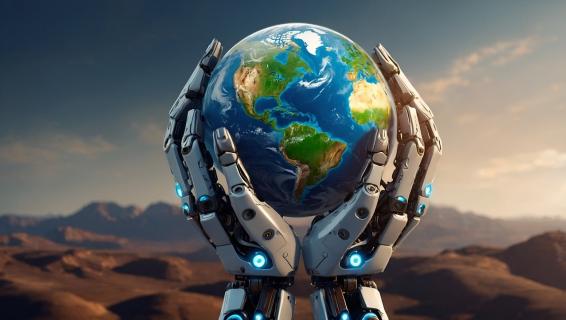
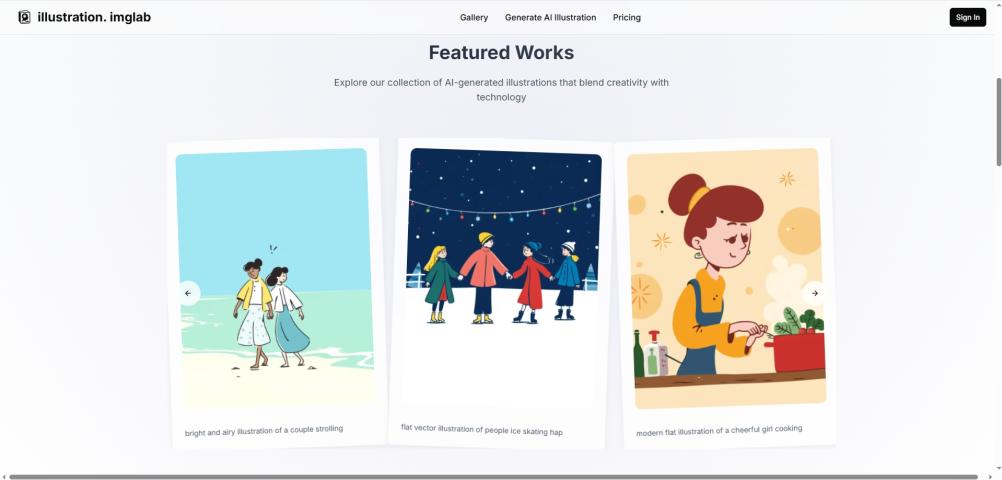
If you are exploring the cutting-edge landscape of artificial intelligence art, you have likely noticed a massive shift in how digital creativity is defined. Today, AI image generation has moved far beyond abstract concepts and distorted outputs, offering creators unprecedented tools to produce hyper-realistic visuals that blur the line between digital rendering and real-world photography. To truly understand this evolution and experience these advancements firsthand, platforms like https://realisticaiimagegenerator.online/ are leading the charge in making high-fidelity image synthesis accessible to everyone.The core of this technological leap lies in advanced machine learning models trained on massive datasets. Unlike early iterations that often produced unnatural lighting or plastic-looking skin, current generation engines excel at understanding complex spatial relationships, texture mapping, and dynamic lighting. This means creators can now generate portraits with authentic skin textures, landscapes with accurate atmospheric perspective, and product mockups that look ready for commercial use.
To achieve this level of realism, we must look at how these systems process visual data. Modern photorealism is not merely about stacking pixels; it is about simulating optical physics. Advanced diffusion models now calculate subsurface scattering, which is the way light penetrates translucent materials like human skin or marble before bouncing back out. Early AI often struggled with this, resulting in characters that looked like polished wax. Today’s algorithms accurately render the subtle redness in ears illuminated by backlighting or the soft translucency of fingertips against a light source. Furthermore, they respect the inverse-square law of light falloff, ensuring that shadows and highlights transition with mathematical precision rather than artificial smoothing.
Another critical advancement is the mastery of micro-textures and material properties. In traditional photography, capturing extreme detail requires expensive macro lenses and perfect studio lighting. In contrast, AI synthesizes these details based on learned patterns from millions of reference images. It understands the difference between the rough grain of unpolished wood, the microscopic fibers of woven cotton, and the chaotic reflections on a wet asphalt street after rain. This deep semantic understanding allows the model to generate environmental storytelling elements automatically. For instance, if you prompt for a vintage coffee shop, the AI will not only place a cup on a table but will also generate realistic condensation rings, slight scratches on the wooden surface, and appropriate ambient occlusion where objects meet.
For professionals in marketing, design, and content creation, integrating these photorealistic AI tools into their workflow can dramatically reduce production time and overhead costs. Whether you need custom stock photography that perfectly matches your brand's color palette, concept art for video games, or unique visuals for social media campaigns, the ability to instantly generate high-fidelity images provides a significant competitive advantage. It eliminates the need for expensive location scouting, hiring models, or renting studio equipment for preliminary mockups. Instead, teams can rapidly prototype visual concepts, test different aesthetic directions, and finalize assets in a fraction of the traditional timeframe.
As we look to the future, the collaboration between human creativity and artificial intelligence will only deepen. We are transitioning from an era where AI was viewed as a novelty to one where it is recognized as a fundamental pillar of modern visual communication. Embracing these tools responsibly and creatively will be key to unlocking the next era of visual storytelling. The artists and designers who thrive will be those who learn to speak the language of these algorithms, using them not as a replacement for human vision, but as a powerful extension of their own imagination. Ultimately, platforms dedicated to pushing the boundaries of realism are empowering anyone with an idea to bring it to life with stunning, undeniable authenticity.
Awards and Recognitions
Alex Mercer is a digital artist and AI technology researcher with over a decade of experience in visual media. He specia
Instagram: https://realisticaiimagegenerator.online/
Have a startup you want to promote?
Feature your startup and reach thousands of entrepreneurs and investors
Feature My Startup