
Introduction: Why Python, and Why Now?
Python is more than just a programming language it’s a career catalyst. Whether you’re diving into data science, web development, automation, or networking, Python opens doors across industries. But there’s one question every learner asks at the beginning: What is the best way to learn Python?
In a world filled with tutorials, books, and courses, one approach stands out for its effectiveness, hands-on coding. Learning Python through real-world practice isn’t just helpful; it’s essential. This blog dives into how hands-on coding makes your Python learning journey faster, deeper, and more impactful, especially when paired with structured programs like Python certification and Python Training Online.
Why Hands-On Coding Works: Backed by Science and Results
Learning any skill requires active participation, and coding is no different. Studies in cognitive science support active learning as a method that improves retention and problem-solving. In programming, hands-on coding allows you to:
Apply theory immediately
Solve real-time errors and debug in context
Build muscle memory for syntax and logic
Develop logical thinking through structured problem-solving
According to a 2023 Stack Overflow Developer Survey, 81% of professional developers say they learned to code by building real projects, not just by reading about code.
The Gap Between Theory and Practice
It’s common to start learning Python by watching videos or reading books. While these resources offer value, they are passive. Real learning begins when you apply that knowledge.
Imagine learning to swim by reading a manual. You’ll understand the strokes, but you won’t stay afloat until you jump in. Coding is the same. You understand Python loops and functions better when you actually write them, test them, and see results.
Benefits of Hands-On Python Coding
1. Immediate Feedback and Learning Loops
When you write Python code, the interpreter gives you instant results. If your syntax is off or your logic is flawed, you see the error right away. This builds a feedback loop that sharpens your skills quickly.
2. Builds Confidence with Error Handling
Errors are part of coding. Hands-on coding helps you become comfortable with error messages, debugging, and exploring documentation. You stop fearing bugs and start embracing them as learning opportunities.
3. Creates Real-World Readiness
Employers look for candidates who can build and deploy working Python scripts or applications. With a solid Python certification course that emphasizes hands-on projects, you're already practicing what companies expect from job-ready developers.
4. Encourages Experimentation and Creativity
As you experiment with code snippets, build simple games, or automate a task, you begin to discover your learning >
5. Makes Learning Fun and Engaging
Solving a real-world problem with Python, whether it's automating an Excel sheet or building a chatbot, brings joy and a sense of accomplishment. You’re not just reading syntax; you’re building things that matter.
Hands-On Python in Action: Real-World Applications
Let’s look at areas where hands-on coding transforms Python learning into real-world capability.
1. Data Analysis and Visualization
Hands-on exercises using Python libraries like pandas, matplotlib, and seaborn help you understand datasets deeply. For example, writing a script to clean inconsistent data teaches you how Python handles real-time data challenges.
2. Web Development
Using Python with Flask or Django, you can build functional web applications. Writing your own routes, connecting to databases, and managing sessions in real-time teaches more than hours of theoretical reading.
3. Automation and Scripting
Automate repetitive tasks like file handling, renaming folders, or sending emails through scripts. These practical exercises are an essential part of Python Training Online and help you connect theory to day-to-day challenges.
4. Learning Python Networking Read Online Concepts
Networking basics in Python become clearer when you build socket-based servers or automate SSH login scripts. By writing these programs, you understand how Python interacts with systems and networks, an important skill for automation and cybersecurity roles.
Sample Coding Exercise: A Hands-On Example
Task: Build a simple Python script that checks if a website is up.
python
import requests
def check_website(url):
try:
response = requests.get(url)
if response.status_code == 200:
print(f"{url} is up and running!")
else:
print(f"{url} is down. Status Code: {response.status_code}")
except requests.exceptions.RequestException as e:
print(f"An error occurred: {e}")
# Example Usage
check_website("https://www.h2kinfosys.com")
This one small project teaches:
Importing libraries
Function usage
Error handling
HTTP status codes
It’s simple, yet incredibly useful. This is what hands-on coding delivers practical value in small, repeatable steps.
Complementing Hands-On Learning with Structured Training
While self-practice is important, combining it with a structured Python certification course maximizes results. You get:
Guided projects
Expert mentorship
Peer collaboration
A step-by-step roadmap
Real-world portfolio development
These features are typically part of Python Training Online, which bridges the gap between informal learning and job-readiness.
Building Your Hands-On Python Learning Plan
Here’s how to get started and stay consistent with hands-on learning:
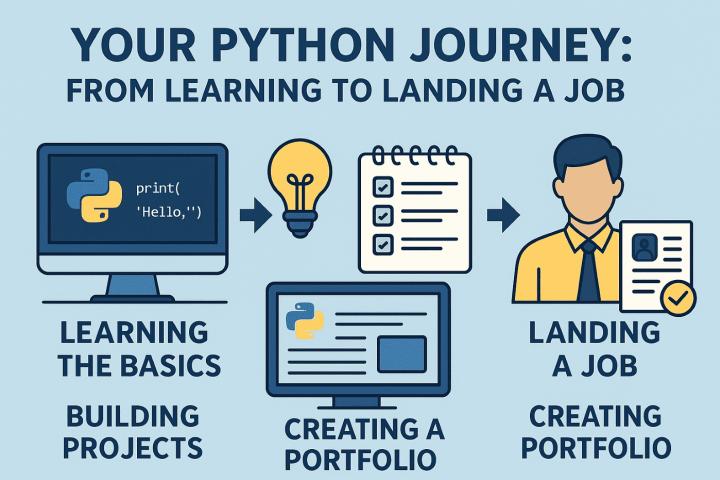
Step 1: Learn Basics with Practice
Learn variables, loops, conditionals.
After each topic, build a small project (like a calculator or quiz app).
Step 2: Focus on One Real-World Application
Choose web apps, automation, or data analysis.
Build one working project in that space.
Step 3: Solve Real Coding Problems
Use practice challenges to improve logic.
Rebuild your projects with added features.
Step 4: Document and Share Your Work
Write about your projects.
Share on GitHub or include in a portfolio.
Step 5: Earn a Python Certification
Enroll in a Python certification course that includes projects and job placement support.
Overcoming Common Myths About Learning Python
Myth: "I need to master theory first."
Truth: Apply as you learn. Start coding from Day 1.
Myth: "I should avoid making mistakes."
Truth: Mistakes are the fastest way to learn Python. Hands-on coding thrives on trial and error.
Myth: "Reading online is enough."
Truth: Reading helps you understand, but only coding helps you apply. That’s why learning Python networking read online must be followed by code implementation.
What Industry Experts Say
“The best way to learn to code is by doing. Real-world problems teach more than any book.”
— Senior Python Developer, Telecom Company
“Employers want proof of skill, not just knowledge. Project portfolios built during a hands-on Python certification course set candidates apart.”
— IT Recruiter, Fortune 500 Firm
Key Takeaways
Hands-on coding is the best way to learn Python because it builds confidence, skills, and job-readiness.
Real-world practice develops the kind of experience employers want to see in candidates.
A structured Python Training Online course, paired with active coding, leads to long-term career benefits.
Whether it's automation, data analysis, or web development, hands-on coding brings learning to life.
The best way to learn Python isn’t by watching. It’s by doing writing, debugging, and building.
Conclusion
If you’re serious about learning Python and building a tech career, don’t just read, code. Dive into projects, face challenges, and grow through hands-on learning. Your keyboard is your classroom.
Ready to master Python through real-world projects? Enroll in H2K Infosys’ Python courses today for hands-on learning that boosts your skills and career potential.