In the ever-evolving landscape of digital payments, AEPS software vendors are playing a crucial role in delivering banking services to the remotest corners of India. By empowering rural retailers and agents through Aadhaar-enabled systems, these vendors are helping banks reach the last mile — the underserved and unbanked population. With minimal infrastructure requirements, AEPS (Aadhaar Enabled Payment System) has become the go-to model for inclusive financial access.
1. The Need for AEPS in Rural India
A significant portion of India’s population still lives in villages where traditional banking infrastructure is either inadequate or completely missing. Traveling long distances to withdraw money, deposit funds, or even check balances is inconvenient for daily wage earners and farmers. AEPS resolves this by bringing banking to the doorstep — through local retailers, CSCs (Common Service Centers), and BCs (Business Correspondents).
2. Who Are AEPS Software Vendors?
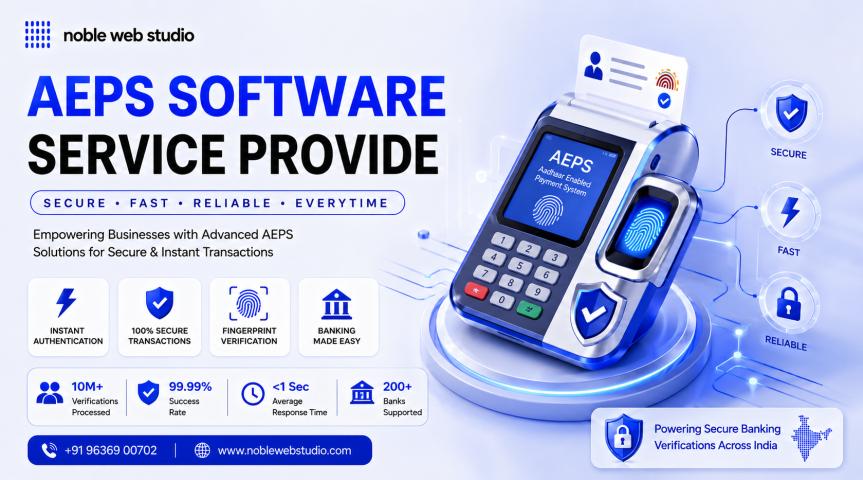
AEPS software vendors are fintech companies that develop and supply the backend systems, APIs, admin panels, and white-label solutions required to run Aadhaar-enabled transactions. These vendors offer scalable platforms that are secure, NPCI-compliant, and easy to integrate with B2B or retail agent networks. Their systems support:
-
Fingerprint-based authentication
-
Cash withdrawal and balance enquiry
-
Aadhaar-to-Aadhaar fund transfers
-
Mini statements and more
By providing ready-to-use platforms, these vendors enable local agents to serve as micro-branches of banks.
3. Enabling Agents with Seamless Technology
One of the key contributions of AEPS software vendors is the creation of plug-and-play solutions for rural entrepreneurs. These software systems include dashboards for transaction tracking, commission management, settlement reports, and real-time updates. Even agents with limited technical knowledge can easily operate AEPS terminals through mobile apps or desktops.
This has turned thousands of local kirana stores and mobile recharge shops into banking outlets, allowing villagers to withdraw cash using just their Aadhaar number and fingerprint.
4. Customization and White-Label Portals
AEPS vendors often provide white-label AEPS software so that distributors, aggregators, or regional fintech companies can brand and operate the portals under their own name. This boosts local trust and allows companies to cater to specific rural markets with customized features, multilingual support, and targeted service offerings.
5. Security and Compliance Built In
Rural customers are often cautious about new technologies. AEPS vendors ensure data encryption, secure biometric authentication, and seamless integration with UIDAI and NPCI systems. Compliance with RBI regulations and real-time fraud monitoring are baked into the systems to build trust among end-users.
6. Expanding the Agent Network with B2B Portals
AEPS software vendors not only empower agents but also offer B2B solutions for distributors and super distributors. These portals manage sub-agent creation, transaction logs, commission structures, and settlement cycles. As a result, a well-organized agent hierarchy spreads across towns and villages, enabling widespread service delivery.
7. The Impact on Rural Financial Inclusion
Thanks to AEPS vendors, millions of people in rural India are now connected to formal banking systems. They can receive government subsidies, pensions, and wages directly into their bank accounts and withdraw them locally without hassle. Financial inclusion is no longer just a concept — it's a working model at the grassroots level.
Conclusion: The Road Ahead for AEPS Software Vendors
As India progresses toward a digitally empowered society, the role of AEPS software vendors will become even more vital. These vendors are not just providing tech — they are building infrastructure for a financially inclusive future. In 2025 and beyond, they will continue to expand their offerings with advanced features like voice-enabled apps, AI-based fraud detection, multilingual support, and seamless integration with BBPS, Micro ATMs, and mobile recharge APIs. Their work is turning remote villages into thriving digital finance hubs, one transaction at a time.