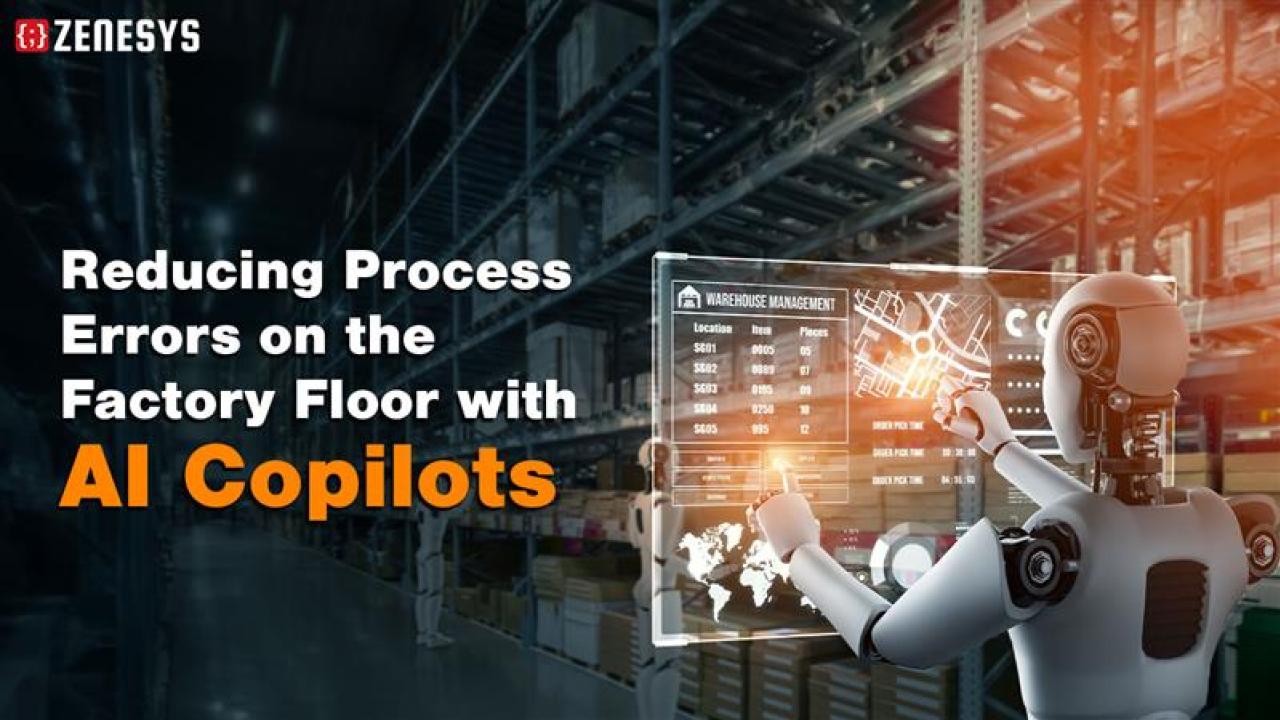
In manufacturing units, even small mistakes on the factory floor can cause big problems. Errors in assembly, inspection, or operation slow production, add to costs, and sometimes lead to defective products reaching customers.
But what if there was a tool that could help human workers avoid these errors by guiding them in real-time? That’s where AI copilots come in.
What Are AI Copilots?
AI copilots are intelligent software assistants designed to work alongside human operators on the factory floor. They don’t replace people but support them by providing real-time help, error detection, process validation, and analytics.
Think of an AI copilot like a highly attentive assistant who watches every step you take during assembly or production and offers advice, points out mistakes, or answers questions instantly.
Unlike traditional automation that might run machines or robots on its own, an AI copilot focuses on helping the human worker perform tasks more accurately and efficiently.
Why Are Process Errors a Problem in Manufacturing?
Despite decades of efforts to reduce errors, human mistakes still play a major role in production issues. Studies show:
- About 23% of unplanned downtime on factory floors is due to human error.
- Around 21% of errors come from inadequate training or lack of experience.
- Inconsistent procedures across shifts can cause deviations and quality problems.
Even experienced workers get tired or distracted, leading to missed steps or incorrect assembly. Plus, complex products mean operators have more detailed instructions to follow, raising the chance of mistakes. Operators sometimes create their own workarounds rather than following standard procedures, causing variation in product quality.
Real-Time Monitoring: AI copilots use cameras and sensors to closely watch what’s happening during production. This continuous monitoring allows the AI to spot mistakes or inconsistencies immediately as they occur, much like having an ever-alert supervisor keeping an eye on every step, but without human limitations like fatigue or distraction.
Instant Feedback: When an operator misses a step or uses the wrong component, the AI copilot quickly notifies them with clear, easy-to-follow instructions on how to correct the problem. This immediate guidance helps prevent small errors from turning into bigger issues, reducing rework and delays.
Process Validation: Each action taken on the production line is compared by the AI against the official standard operating procedures. The copilot ensures that nothing is skipped, done out of order, or wrongly executed. This validation creates consistency in quality, making sure the final product meets specifications across different shifts and operators.
Data Insights: Beyond immediate help, AI copilots collect detailed data from ongoing production processes. By analyzing this data, they identify patterns in errors or bottlenecks. Teams can use these insights to improve workflows over time, targeting the root causes of mistakes rather than just fixing symptoms.
Training Support: For new or less experienced workers, AI copilots offer step-by-step instructions during tasks, making the onboarding process smoother and cutting down on errors caused by inexperience. This on-the-job guidance reduces the need for constant supervision and accelerates learning.
Voice or Text Interaction: Workers can interact naturally with AI copilots by asking questions in plain language, such as “What’s the torque specification for this bolt?” Instead of searching through manuals or waiting for a supervisor, they get quick, accurate responses, helping them perform tasks correctly and confidently.
Breaking Down How AI Copilots Work
You might wonder what’s going on behind the scenes. Here’s a simple breakdown:
Watching Closely: Cameras and sensors keep an eye on each step of the production line.
Understanding What’s Happening: Computer vision allows the AI to recognize specific tools, parts, and actions.
Checking Procedures: The AI matches what it sees against the official standard operating procedures (SOPs).
Sending Alerts: If anything doesn’t match up, the AI sends immediate visual or audio feedback to the operator.
Collecting Data: Every process detail gets logged and analyzed over time to find trends or bottlenecks.
Because the AI is constantly learning, it gets better at spotting small errors that humans might miss, especially when fatigue or distractions come into play.
Benefits of AI Copilots on the Factory Floor
By now, it might be clear that AI copilots offer many advantages:
Faster Work with Fewer Mistakes: Operators get help right when needed, speeding up processes without compromising quality.
Better Decision-Making: Real-time data helps supervisors understand where errors are happening and how to improve.
Consistent Quality: Validating each step in real-time keeps product quality steady even across different shifts.
Reduced Training Time: Hands-on guidance reduces the learning curve for new employees.
Increased Productivity: Some companies report productivity boosts of up to 25% while drastically cutting errors.
Autonomy for Workers: Frontline staff can solve problems on their own without waiting for experts, saving precious time.
Common Questions About AI Copilots
Q: Do AI copilots replace human workers?
No. AI copilots assist workers but don’t take over jobs. They make the human role easier and less error-prone.
Q: Is it hard to use an AI copilot?
Not at all. Most AI copilots are designed to interact through simple voice commands or easy-to-read prompts on screens.
Q: Can AI copilots handle complex or customized products?
Yes, as long as the AI is trained on the specific procedures and product details, it can guide operators through complex tasks.
Q: How does AI copilot data help after shifts end?
The collected data helps spot recurring problems, monitor quality trends, and fine-tune processes, which leads to better operations overall.
A Look at AI Copilot Development
Building an effective AI copilot requires specialized skills in artificial intelligence, computer vision, and manufacturing processes.
Companies seeking this technology usually work with an AI copilot development company to design a tailored solution that fits their specific production needs while integrating with existing factory systems.
I’ve observed that factories adopting AI copilots see a real difference in how smoothly their lines run and how confident their workers feel. It’s not just about cutting downtime, but making daily tasks less stressful and more reliable.
If you’re involved in manufacturing or managing a production floor, exploring AI copilots could be a practical step toward reducing errors and improving overall outcomes. The technology is advancing fast, but its purpose remains simple: help people do their jobs better.