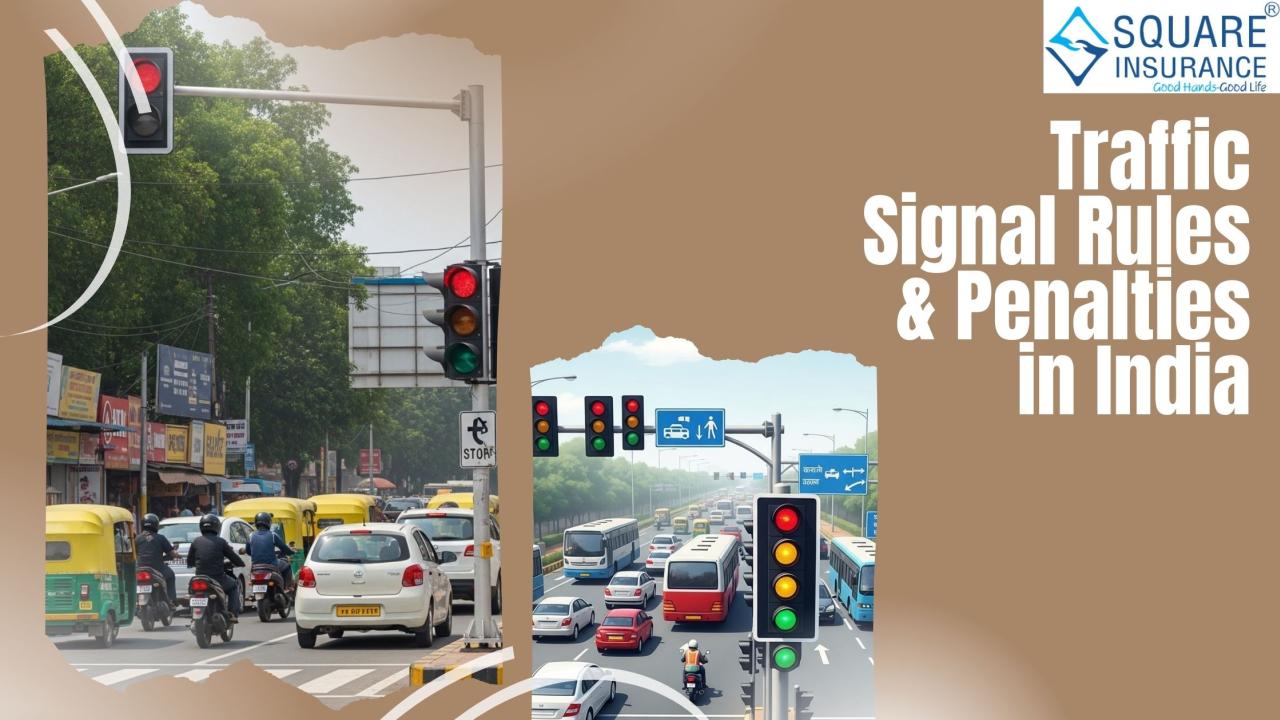
Traffic signal in India plays a crucial role in maintaining road safety and ensuring smooth movement of vehicles. In a country where millions of people commute daily, these signals act as silent controllers that reduce accidents and prevent chaos on busy roads. Following them is not only a legal requirement but also a responsibility of every driver and pedestrian. Unfortunately, violations are still common, often leading to heavy fines and serious risks to life.
This article explains the top rules of traffic signal in India, why they matter, and the penalties for breaking them.
Importance of Traffic Signal in India
A traffic signal in India is not just a set of lights at a junction; it is a silent controller of road safety. By following them, drivers, pedestrians, and cyclists can:
- Avoid accidents and collisions.
- Maintain smooth traffic flow.
- Save time and fuel by reducing unnecessary congestion.
- Ensure equal opportunity for all road users, including pedestrians and emergency vehicles.
When ignored, a traffic signal in India can cause chaos, confusion, and even life-threatening situations.
Traffic Signal Rules in India
The Indian Road Rules, outlined under the Motor Vehicles Act, 1988, and updated in 2019, clearly define how traffic signals should be followed. Here are the most important rules of traffic signal in India:
1. Red Light – Stop Completely
When the light turns red, every vehicle must stop before the stop line. Jumping a red light is one of the most common violations of a traffic signal in India and also one of the most dangerous.
2. Yellow (Amber) Light – Get Ready, But Don’t Rush
The yellow signal warns drivers to slow down and prepare to stop. Many drivers wrongly treat it as a “hurry up” signal, which increases the risk of collisions.
3. Green Light – Go with Caution
Green means you may move forward, but with care. Drivers should still watch out for pedestrians crossing or vehicles trying to clear the intersection.
4. No Blocking the Junction
Vehicles should not stop in the middle of the crossing, even if the signal changes while they are inside. Blocking causes traffic jams and risks accidents.
5. Respect Pedestrian Signals
Many crossings have special signals for pedestrians. Motorists must always stop where pedestrians have the right of way.
6. Obey Arrows and Lane Signals
Some traffic lights display arrows for turns. Drivers must follow the arrow and not move in other directions. Lane-specific signals are also used at major junctions in cities.
7. No Honking at Red Lights
Unnecessary honking is not only against rules but also adds to noise pollution. Drivers are expected to wait patiently.
8. Follow Manual Signals by Police
Sometimes, traffic police override the lights due to emergencies, VIP movements, or technical failures. In such cases, the manual signal must be followed.
9. Stop Line Rule
Vehicles must always stop before the white line at a signal. Crossing the line is considered a violation, even if you have not jumped the red light.
10. Special Rules for Emergency Vehicles
When an ambulance, fire engine, or police vehicle is approaching, other drivers must give way, even if the signal is green for them.
Penalties for Traffic Signal Violations in India
To improve discipline, the Indian government revised the Motor Vehicles Act in 2019, introducing higher fines for signal-related offenses. These penalties aim to make drivers more responsible on the road.
Here are the common penalties related to a traffic signal in India:
Jumping a red light carries a fine of ₹1,000 to ₹5,000 (varies by state). In some cases, driving license suspension may also apply.
- Dangerous Driving at Signals – Fine up to ₹5,000, along with possible imprisonment for repeated offenses.
- Blocking the junction carries a fine of ₹500 to ₹1,000.
- Disobeying Traffic Police Signals – Fine up to ₹2,000.
- Not Giving Way to Emergency Vehicles – Fine up to ₹10,000 and/or imprisonment.
- Minor Drivers Jumping Signals – Vehicle owner can be fined up to ₹25,000, with possible cancellation of registration.
It’s important to note that fines may differ slightly from state to state, as traffic enforcement is partly under state jurisdiction. However, the central guidelines remain the same.
Why Strict Penalties Are Needed
Some people see fines only as punishment, but they actually serve a larger purpose. Strict penalties:
- Act as a deterrent, discouraging drivers from breaking rules.
- Help in reducing road accidents and fatalities.
- Create a culture of discipline and respect among drivers.
- Support smoother traffic flow in crowded cities.
With rising urbanization and increasing vehicles, enforcing discipline at every traffic signal in India is becoming even more critical.
Tips to Avoid Signal Violations
Following traffic rules is simple if you are mindful while driving. Here are some practical tips:
- Always slow down when approaching a junction.
- Never attempt to "beat the light" when it is about to turn red.
- Maintain a safe distance from the car in front.
- Stay patient, even if the red signal seems too long.
- Educate young drivers in your family about the importance of signals.
- Remember, obeying traffic signals saves lives, including your own.
Frequently Asked Questions (FAQs)
Q1. What is the importance of traffic signal in India?
Traffic signals in India are important because they help maintain order on roads, reduce accidents, and ensure that both vehicles and pedestrians can move safely. Without them, traffic would be chaotic, especially in busy cities.
Q2. What happens if someone jumps a red light in India?
Jumping a red light is a serious violation. The penalty can range from ₹1,000 to ₹5,000, and in some cases, it may also result in suspension of your driving license.
Q3. Are traffic signal penalties the same in every state of India?
Not exactly. While the central Motor Vehicles Act provides a guideline for fines, the actual amount may vary slightly from state to state because traffic enforcement is partly a state subject.
Q4. Can minors be penalized for breaking traffic signal rules in India?
Yes. If a minor is found driving and violating traffic signal rules, the vehicle owner (usually a parent or guardian) may be fined up to ₹25,000, and the registration of the vehicle may even be canceled.
Q5. How can insurance help if an accident occurs due to traffic signal violation?
Insurance companies may sometimes reject claims if the accident happened while violating a traffic signal. That’s why it is always better to follow the rules. For safe coverage, policies from reputed providers like Square Insurance ensure financial protection in case of accidents, but compliance with traffic rules is still essential.
Conclusion
A traffic signal in India is more than just colored lights—it is a vital tool for road safety and discipline. Understanding and following signal rules is every road user’s responsibility. The rules are simple—stop at red, wait at yellow, go at green, and respect pedestrians and emergency vehicles.
The penalties for breaking these rules may feel strict, but they exist to protect everyone. Road safety is a shared duty. By respecting traffic signals, we not only avoid fines but also contribute to safer and smoother journeys for all.