In case you are wondering how to create beautiful, functional and modern websites, you must be asking yourself this question: What languages do web designers use?
Web designing is no longer a case of merely creating a plain page that has text and images. The websites of modern days must be interactive, responsive, mobile-friendly and attractive to the eye. In a bid to do all this, web designers use various programming languages- each of them has its purpose.
This is a post that we shall unravel the most significant languages in web designing, why they are important and how they all combine and/or come together to form the websites that we are using every day.
1. HTML – The Core of Every Website
Consider HTML the backbone of a site. Without it, nothing exists.
What it does: Determines the format and the content of the web pages. Examples: Adding headings (<h1>), paragraphs (<p>), or images (<img>)
All the websites you have ever been on, including your favorite social media platform are based on HTML.
2. CSS – Styling the Web
CSS is the skin, clothes, and makeup, in case HTML is the skeleton. CSS makes the websites look good and provides them with the layout.
What it does: Regulates colors, fonts, margins, spacing and responsive design.
Examples: Having a blue background, bold text, or a two-column layout.
CSS3 provides the option of adding transitions, effects, and animations without relying on other applications.
3. JavaScript – Making Pages Interactive
A static page is boring. That is where JavaScript comes in.
What it does: This adds interactivity and dynamic content.
Examples: Drop-downs, image slides, live form validation.
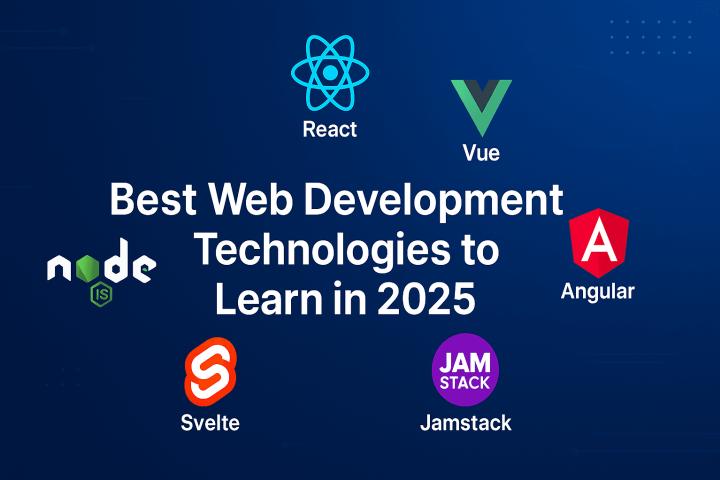
JavaScript has become the foundation of interactive web applications with such strong constructs as React, Angular, or Vue.js.
4. PHP – The Backend Power
Have you ever completed a login form and thought about how your information is verified? That's PHP at work.
What it does: Server-side logic and database connections.
Examples: Authentication to users, web-based forms, WordPress websites.
Millions of sites are being driven by PHP including some of the most popular CMSs.
5. Python – Simple Yet Powerful
Python is not intended as the first language that one would think about in web design, though it is gaining in popularity.
What it does: Performs backend logic, APIs, and web applications.
Examples: Django or Flask-based applications, AI-driven applications..
Python is the language of choice in case you want to add the capabilities of artificial intelligence or data-driven elements to a site.
6. SQL – The Language of Databases
The majority of sites have to save the data: users, orders, posts, or products. SQL makes this possible.
What it does: Accesses and controls databases.
Examples: Retrieving all the users in a database, changing the status of an order.
SQL is used together with PHP, Python and other backend languages.
7. Java – The Enterprise Choice
Java may not be the latest but it continues to run secure and large-scale web applications.
What it does: Produces enterprise-level websites which are stable.
Examples: Banking applications, company portals.
Java is reliable, scalable and secure, which makes big businesses love Java.
8. Ruby – Speed and Simplicity
Ruby and its framework Ruby on Rails are common with startups.
What it does: Web development accelerator and cleaner.
Examples: App prototyping, establishing an e-business in a short time.
Ruby assists developers to have projects up and running within a short time without any excessive complexity.
9. TypeScript – JavaScript’s Smarter Sibling
JavaScript is a powerful language and big projects can become messy. That is where TypeScript is helpful.
What it does: It provides type safety and improved structure to JavaScript projects.
Examples: Bigger enterprise applications, Angular applications.
Imagine it to be JavaScript, except that it has certain superpowers to enable less error-prone code.
10. Bonus: Modern Tools to Watch
In addition to the conventional languages, modern web designers are considering using tools such as:
SASS/LESS for advanced CSS.
GraphQL for better data handling.
WebAssembly for high-performance web apps.
The tools do not substitute HTML, CSS or JavaScript, but complement them.
Why Learning Multiple Languages is Key
Nothing can be done in one language. This is the reason why good web designers study several of them.
For example:
HTML + CSS → Structure + Style.
JavaScript → Interactivity.
PHP/Python → Backend.
SQL → Database management.
This is a combination that will make you come up with websites that are not only attractive but also effective and mighty.
Real-World Example: Web Design in New Jersey
The companies understand the value of a good online presence. For example, many companies searching for Web Design New Jersey services look for designers who understand this mix of languages. The key to the success of a designer is that he or she cannot afford to be dependent on a single language- the entire toolkit is necessary.
On the same note, Web Design Company NJ that provide Web Design services boast of their capability to integrate creativity with technical skills, which would assist local business entities to expand their online presence.
Final Thoughts
Web designing is not merely being able to make a site look good- it is having a combination of various languages to provide one with a smooth working experience. Simple or simple programming languages such as HTML and CSS to such complex languages as Python, TypeScript, and SQL, each language has its essential significance.
Unless you are genuinely keen on web design, then begin with the basics and proceed with backend and advanced tools. With time, you will be able to flex with the power and beauty of the websites you will be creating.