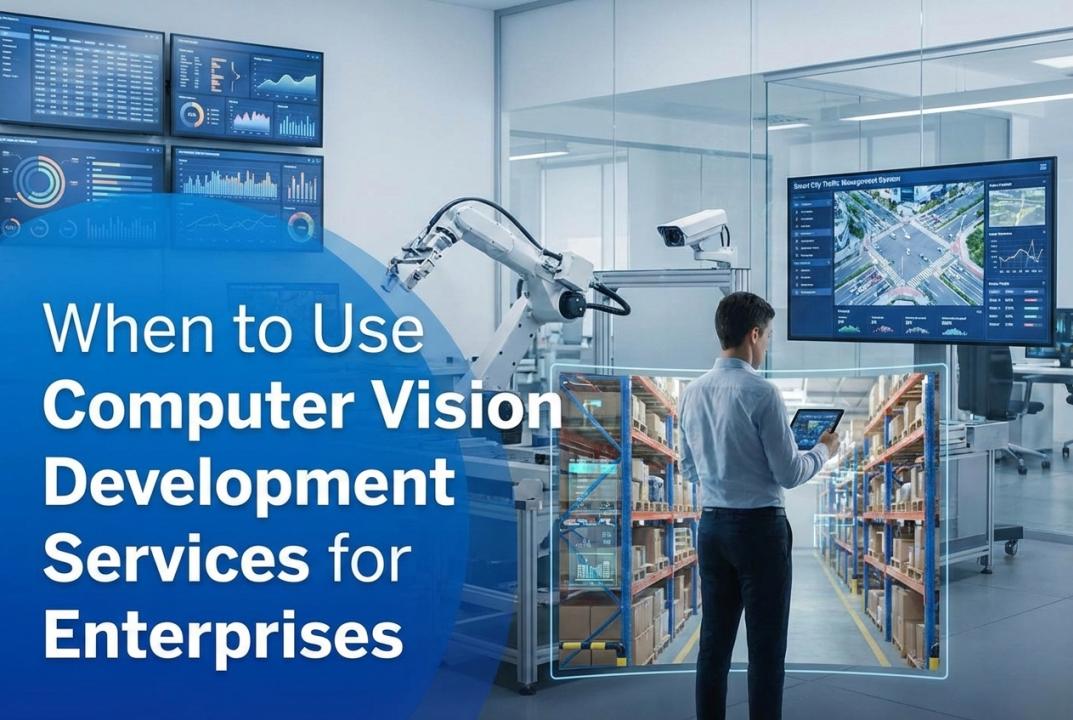
Computer vision has moved from experimentation to core enterprise infrastructure. What was once limited to research labs is now used to monitor factory floors, analyze customer behavior, secure physical assets, and automate decisions at scale. For large organizations and strong startups, the real question is no longer whether visual AI is viable, but when it makes sense to invest in it and how to do so without creating operational risk.
This article explains the practical signals that indicate it is time to engage Computer Vision Services, the business problems they solve best, and how enterprises can evaluate readiness from a return-on-investment perspective.
The Enterprise Shift Toward Visual Intelligence
Enterprises generate massive volumes of visual data every day. Cameras, scanners, drones, medical imaging systems, and satellite feeds all produce information that is difficult or impossible to analyze manually. Traditional rule-based image processing struggles at scale, especially when conditions change or environments are unpredictable.
This is where AI computer vision becomes relevant. Modern models learn patterns from data rather than fixed rules, making them suitable for dynamic enterprise environments. Industry research consistently shows that organizations using visual AI reduce manual inspection costs and improve decision speed, particularly in operations-heavy sectors such as manufacturing, logistics, retail, and healthcare.
However, building and maintaining these systems internally is rarely straightforward. That is why many organizations turn to specialized computer vision development services rather than treating vision projects as side experiments.
Clear Indicators You Need Computer Vision Services
Not every company needs advanced visual systems. The following scenarios strongly indicate that enterprise-grade computer vision solutions are worth serious consideration.
Manual visual processes are slowing growth
If teams rely on human review for quality checks, compliance validation, or asset monitoring, scaling becomes expensive and inconsistent. Vision systems provide repeatable analysis without fatigue, which directly affects operational margins.
Visual data is underused or ignored
Many enterprises collect video and image data but only use it reactively. When visual data is stored without structured analysis, it represents lost insight. Vision platforms convert raw imagery into searchable, actionable intelligence.
Accuracy requirements exceed human limits
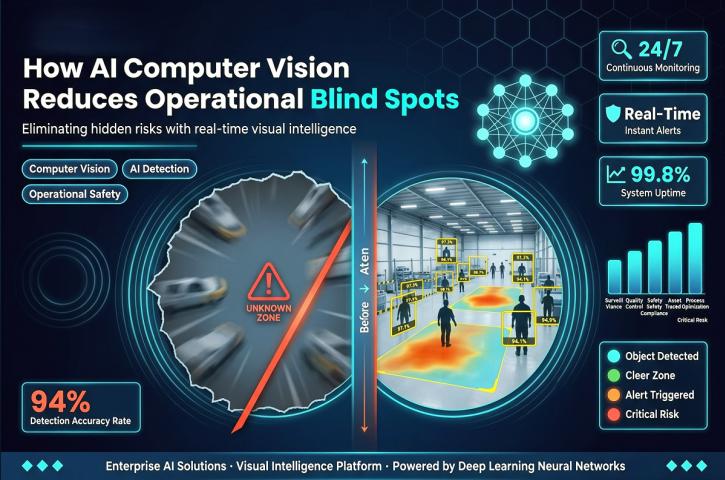
In high-volume environments, even skilled teams miss defects or anomalies. Machine vision solutions can operate continuously with consistent accuracy, especially in environments where small visual variations have large consequences.
Business decisions depend on real-time observation
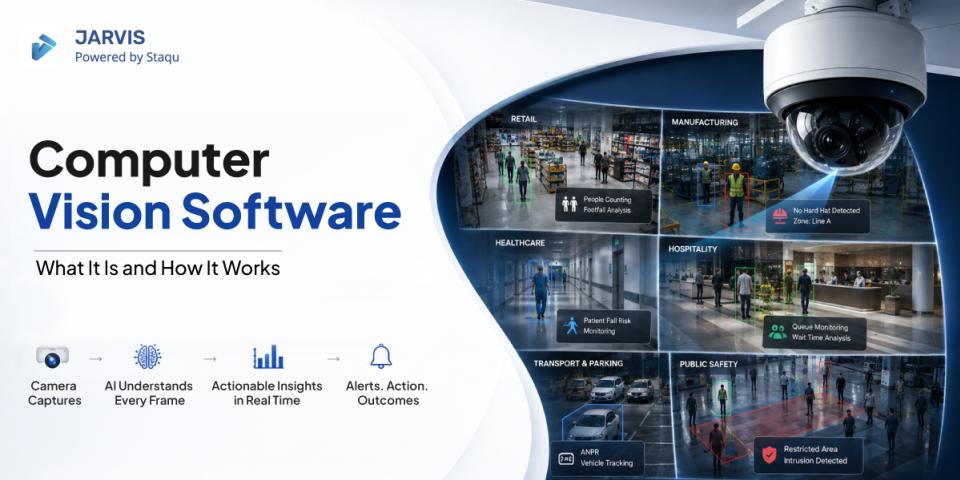
Retail footfall analysis, traffic monitoring, or industrial safety systems require near real-time feedback. Human analysis cannot keep pace with these demands at scale.
Enterprise Use Cases Where Vision Delivers Measurable ROI
Understanding where value is proven helps decision-makers prioritize investment.
Manufacturing and industrial operations
Visual inspection systems detect defects, surface irregularities, and assembly errors faster than manual checks. Over time, this reduces waste, rework, and warranty costs. Many manufacturers report double-digit reductions in quality-related losses after deploying machine vision solutions.
Retail and physical commerce
Enterprises use vision to analyze shopper behavior, optimize store layouts, and reduce shrinkage. These systems operate within defined compliance frameworks and focus on aggregated insights rather than individual identification.
Logistics and supply chain
Computer vision software tracks package movement, verifies shipments, and identifies damage before goods reach customers. This improves fulfillment accuracy and lowers dispute resolution costs.
Healthcare and life sciences
Medical imaging analysis supports clinicians by highlighting anomalies, prioritizing cases, and reducing diagnostic delays. These systems do not replace professionals but increase throughput and consistency.
When Off-the-Shelf Tools Are Not Enough
Some vendors promote plug-and-play visual tools as enterprise-ready. In reality, generic platforms often fail under real operational conditions.
Enterprises should consider custom computer vision consulting services when:
- Environments vary significantly in lighting, angles, or object appearance
- Accuracy thresholds are high and errors are costly
- Integration with existing enterprise systems is required
- Regulatory or data governance constraints apply
A specialized approach focuses on model selection, data strategy, and long-term maintainability rather than quick demos. This is where working with an experienced Computer Vision Company becomes a strategic decision rather than a technical one.
Assessing Organizational Readiness
Before engaging external partners, enterprises should evaluate internal readiness across three dimensions.
Data maturity
High-performing vision systems depend on high-quality labeled data. Organizations that already collect structured visual data move faster and incur lower development costs.
Infrastructure alignment
Vision workloads require scalable compute and efficient pipelines. Cloud, edge, or hybrid deployment decisions should align with latency, security, and cost requirements.
Business ownership
Projects succeed when vision initiatives are tied to measurable business outcomes rather than isolated innovation teams. Clear ownership drives adoption and accountability.
Enterprises that skip these considerations often struggle to move beyond pilots.
The Strategic Role of Computer Vision Services
Professional Computer Vision Services extend beyond model development. They include feasibility assessment, system architecture, deployment planning, and performance monitoring. More importantly, they align technical decisions with business objectives.
A structured engagement typically includes:
- Use case validation based on ROI potential
- Data assessment and annotation strategy
- Model development and testing under real conditions
- Integration with enterprise workflows
- Ongoing optimization and governance
Organizations that treat vision as a long-term capability rather than a one-time project see stronger outcomes.
Risk, Compliance, and Long-Term Sustainability
Enterprise adoption requires more than technical success. Vision systems must operate within legal, ethical, and operational boundaries.
Key considerations include data privacy, model bias, system explainability, and audit readiness. Regulatory frameworks continue to evolve, particularly in regions with strict data protection laws. Experienced partners design systems with these constraints in mind from the start.
Ignoring these factors increases long-term risk and can negate early gains.
Making the Decision at the Right Time
The best time to invest in computer vision solutions is when visual data directly affects cost, safety, revenue, or customer experience. Waiting too long often results in higher operational friction and missed competitive advantages. Moving too early without readiness leads to stalled pilots and wasted spend.
Enterprises that succeed approach vision strategically, choose partners carefully, and treat visual intelligence as core infrastructure. When aligned with business goals, computer vision software becomes a measurable driver of efficiency and insight rather than an experimental technology.
For decision-makers evaluating enterprise-scale adoption, the question is not whether computer vision works. The question is whether the organization is ready to use it effectively and whether the right development strategy is in place to support long-term value creation.