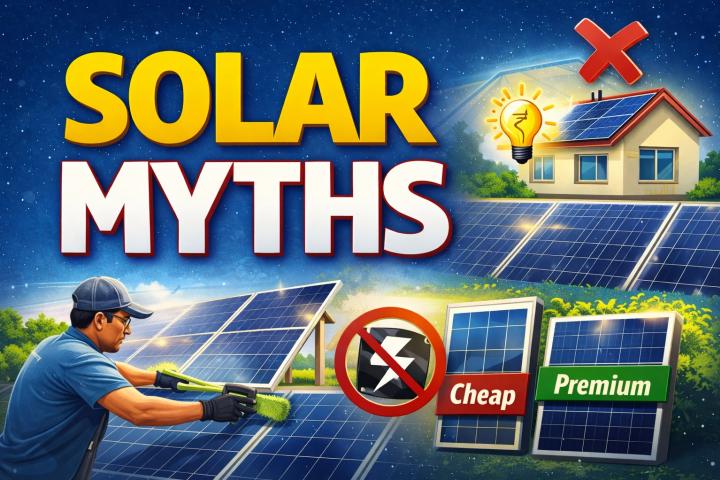
Solar energy in India is growing fast—but misinformation is growing with it. Many homeowners delay or regret solar installations not because solar doesn’t work, but because decisions are made on assumptions, not facts.
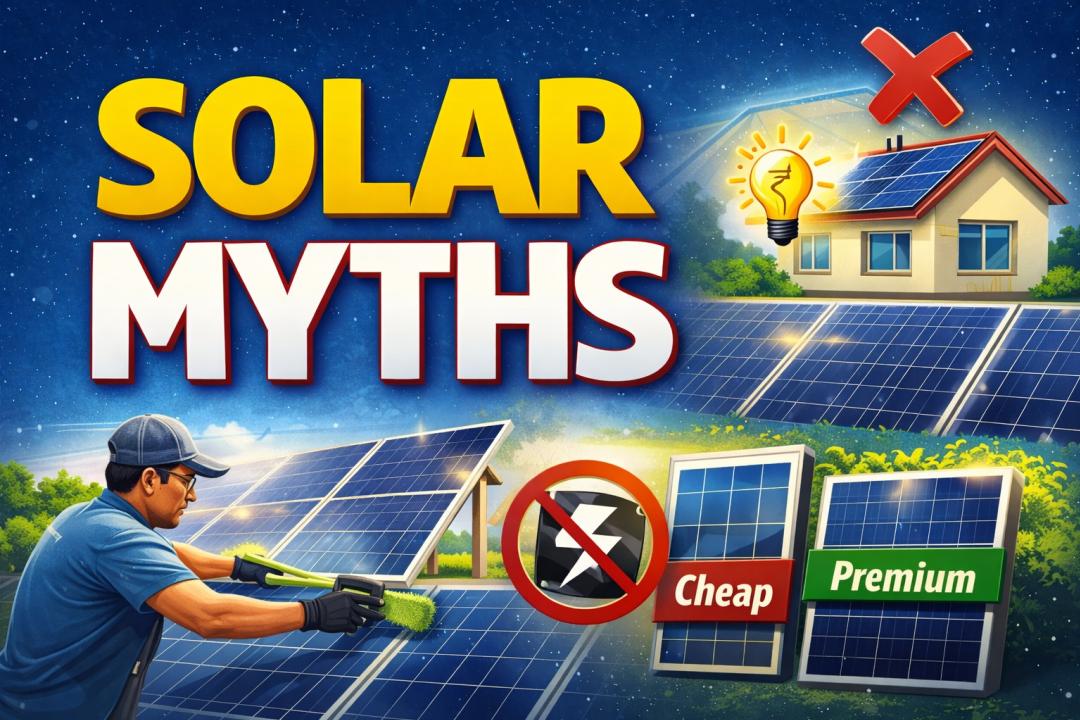
Below are the most common solar myths still circulating in 2026, followed by what actually holds up under scrutiny.
Myth 1: “Solar Power Means Free Electricity”
Reality: Solar reduces electricity bills; it does not eliminate costs entirely.
On-grid systems depend on sunlight availability ,Night-time usage still draws from the grid
Fixed charges from DISCOMs still apply
Claims of “zero bill guaranteed” are marketing exaggerations unless backed by load data and billing structure.
Myth 2: “Solar Works Only in Very Sunny Weather”
Reality: Solar panels generate power even on cloudy days—just at lower efficiency.
Panels use daylight, not heat Output drops during monsoon, but doesn’t stop Annual generation matters more than daily peaks
However, shading from trees or nearby buildings does significantly affect output.
Myth 3: “Once Installed, Solar Needs No Maintenance”
Reality: Solar is low-maintenance, not no-maintenance.
What’s actually required:Regular panel cleaning (dust reduces output)
Periodic inverter checks
Occasional wiring inspection
Ignoring maintenance can quietly reduce generation by 10–20%, which many users never notice until bills rise.
Myth 4: “Solar Will Power My Home During Power Cuts”
Reality: Standard on-grid solar systems shut down during outages.
Why?
Safety mechanism prevents back-feeding into the grid
Required by Indian electrical regulations
Backup power requires batteries or hybrid systems, which increase cost and maintenance.
Myth 5: “All Solar Panels Are Basically the Same”
Reality: Panel quality varies widely—even when specs look similar.
Differences include:Degradation rate over years
Heat tolerance (critical in India)
Manufacturer reliability and warranty enforceability
Two panels rated at the same wattage can perform very differently after 5–10 years.
Myth 6: “Solar Is Only for Big Houses”
Reality: Small homes benefit too—if the system is sized correctly.
Even a modest rooftop can support:
Partial load offset
Daytime appliance usage
Long-term bill stabilization
Overselling capacity is a bigger problem than under-sizing.
Myth 7: “Government Subsidy Covers Most of the Cost”
Reality: Subsidies help—but they don’t make solar “cheap overnight.”
Important clarifications:Subsidy applies only to eligible residential on-grid systems
Payment is post-installation
Timelines vary and delays are common
Any installer promising instant subsidy deduction should be questioned.
The Real Problem Isn’t Solar—It’s Expectations
Solar works when:
Load is analysed properly
Shading and roof orientation are evaluated
Savings claims are conservative, not inflated
Most disappointments come from believing myths instead of asking precise questions.
For more solar informations visit our website