
In the current digital era, organizations are usually confronted with a tough choice in setting up an online presence, as to whether to adopt a web site or web application. Although there are instances where these two terms are used interchangeably, they are constructed with different objectives and are used with varying objectives. The knowledge of the main distinction between websites and web applications can assist organizations to choose the appropriate solution in terms of functionality, user expectation, scalability and long-term strategy.
What Is a Website?
A web site is mainly a source of information that is likely to render contents to the customers. It is usually composed of fixed or semi-dynamically fixed pages which can be read and browsed by the user with some limited interaction.
General Websites Characteristics.
Content-oriented, i.e. texts, images, video, blogs.
Limited interaction of the user (reading, scrolling, clicking)
Frequently open and free of passwords.
The websites are best suited to businesses that need to promote their brand, disseminate information or enhance publicity via search engines. They include corporate websites, news portals, landing pages as well as personal blogs.
What Is a Web Application?
A web application does not just connote content delivery but involves interaction with the user and functionality. It enables the user to do their work, change information, and get individual experiences via a browser.
General Properties of Web Applications.
Much interactivity and user interaction.
Needs processors and databases.
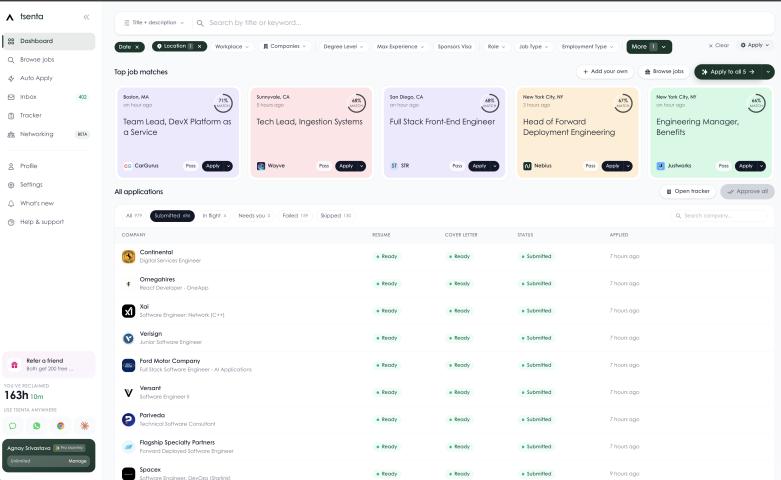
Frequently contains user authentication and dashboards.
Some instances of web application are online banking systems, customer relationship management (CRM) tools, project management tools, and e-commerce checkout systems.
Basic Mullions Functional Differences.
Functionality is what distinguishes a web application and a web site most of all. Websites are created to inform whereas web applications are created to do.
The communication model of a website is usually that of one way flow of information whereby the business sends information to the user. Conversely, a web application has a two way model; where users submit information and get customized response in real time. This complicates web applications to create and support since they extensively depend on the backend logic, and APIs as well as databases.
User Interaction and Interactivity
The user experience (UX) is also a vast difference between web application and web sites. Websites are also concerned about readability, layout and visual appeal, making content easy to read regardless of the type of device used. The web applications on the other hand are more usable and faster and more efficient, allowing users to get their task done within a short period and with accuracy.
Web applications tend to act like native mobile applications in terms of providing dynamic interface and real time updates. Nevertheless, they are not affected by the dependency of the native Mobile App Development on an app store, as opposed to native apps. This implies that users are able to use web applications immediately using a browser without downloading updates or waiting when the application is approved in an app store.
Complexity and Cost of Development
On development terms, websites are usually easier and cheaper. They can be regularly constructed on the basis of content management systems and do not consume so many technical resources. On the other hand, web applications will entail:
Server-side logic and Backend development.
Database assimilation and security controls.
Constant testing and optimization of performance.
This complexity helps web applications to have a bigger budget and more development time. They are however more flexible and scaled.
Maintenance and Updates
Another important type of differentiation is maintenance. Website update may entail alteration of the content or design and this could be relatively fast. Shopping applications need constant maintenance in order to maintain performance, security and compatibility to browsers and devices.
Web applications eliminate the dependency of native mobile apps in the app store native mobile app development. Let the updates be deployed at a specific moment without the need of any user intervention, so that all will be using the latest version at any given time.
Platform Dependency and Accessibility
Websites and web applications are both cross-platform by nature since both can be accessed using web browsers. They can be accessed by users on desktops, tablets and smartphones without the need to install anything.
This is a browser-based access that removes the reliance of native mobile app development on the app store. There is also no need to run different versions on iOS and Android with businesses not having to adhere to strict policies of app stores, which can conserve time and resources.
SEO and Discoverability
The websites usually enjoy a high privilege in terms of search engine optimization (SEO). They are easier to index and rank in search engines because they are content-driven. Optimization of web applications can also be done towards SEO, although it involves more planning, including server-side rendering and structured data.
Websites tend to be more effective to businesses that are concerned with visibility and content marketing. Web applications are more valuable even when the primary considerations are functionality and the interaction with users, even though they may create issues in SEO.
Conclusion
To conclude, a website or a web application is a decision that you make depending on your business objectives and the needs of your users. Websites are the best in terms of sharing information, gaining brand presence as well as enhancing online visibility. Web applications are more suitable in interactive and task-related platform where the input and processing of data are done by the user.