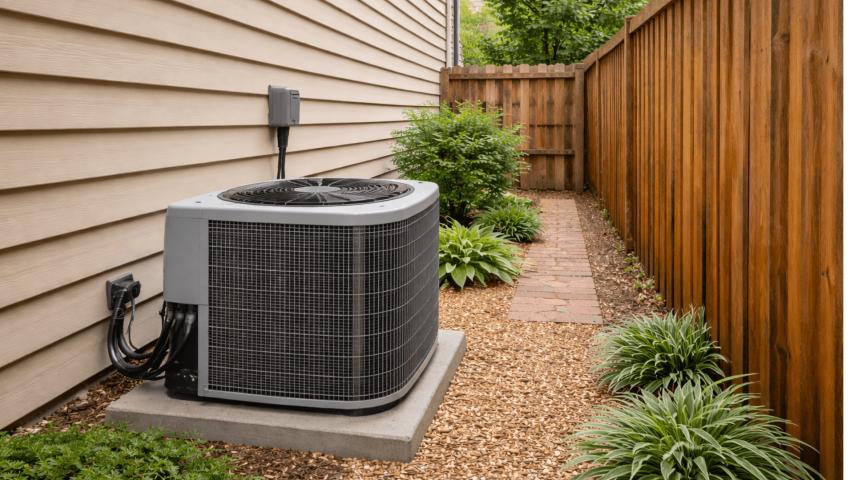

Look, I’m going to be straight with you. Most people in San Antonio treat their air conditioner like a silent servant. It sits in the attic or tucked beside the house, humming along, until one day the humming stops and the temperature inside hits 85 degrees. By the time you realize there’s a problem, you’re already in a crisis.
As a contractor, I’ve seen it all—from "investors" who tried to patch a system with duct tape to families who just didn't know that the South Texas dust was choking their condenser to death. The reality is that our climate is a specialized beast. We have a mix of high humidity, limestone dust, and unrelenting sun that puts a physical load on your equipment that most manufacturers in the North don't even account for.
The Invisible Killer of San Antonio Cooling Systems
It isn’t just the heat that kills your unit; it’s the lack of airflow. I’ve walked onto job sites where a homeowner is complaining about a "broken" AC, and the first thing I find is a filter so thick with pet dander and dust it looks like a wool sweater. When the air can't move, the evaporator coil freezes into a block of ice.
Once that happens, the system keeps running, but it isn't cooling. It’s just burning through electricity and putting massive strain on the compressor. If you notice your vents are barely pushing air, don't just turn the thermostat down further. That's like trying to run a marathon while breathing through a straw. You need specialized
Stop Falling for the "Free Service Call" Gimmick
You’ve seen the ads—companies offering dirt-cheap service calls just to get a foot in the door. I’ll tell you right now: nobody can run a truck, pay a skilled tech, and cover insurance for twenty bucks. Those "deals" are designed to find a reason to sell you a whole new $12,000 system.
I believe in being an investigator. If a capacitor is blown, I want to know why it blew. Is the motor pulling too many amps? Is the contactor pitted and sparking? Real
The Truth About Refrigerant Leaks
I hear this every week: "Can't you just add a little more gas to get me through the summer?"
Here is the truth: Your AC doesn't "consume" refrigerant. It’s a closed loop. If you’re low, you have a leak. Period. Topping it off is like pouring water into a leaky bucket while you're in the middle of a drought. Eventually, the hole gets bigger, and the refrigerant (which is expensive) just ends up in the atmosphere. We use electronic leak detectors and nitrogen pressure tests to find the actual source of the leak, whether it's in the copper lines or the aluminum coils. We fix it right, so you aren't calling us back in three weeks when the house starts warming up again.
Why Your Drain Line is a Ticking Time Bomb
One thing unique to San Antonio is the "sludge" that grows in our condensate lines. The combination of our local humidity and the organic material in the air creates a perfect environment for algae. If your primary drain line clogs, that water backs up.
If you’re lucky, your system has a float switch that shuts the unit down. If you’re unlucky, that water overflows into your ceiling. I’ve seen thousands of dollars in drywall damage that could have been prevented with a $15 bottle of drain treatment and a simple flush. It’s these small, localized details that a big national chain might overlook, but a local contractor knows to check every single time.
Don't Let Your Attic Kill Your Efficiency
Finally, we have to talk about ductwork. Most San Antonio homes have their units in the attic. That means your cold air is traveling through a 130-degree environment before it hits your living room. If your ducts are leaky, or if the insulation has fallen off, you’re literally paying to cool your roof.
We look at the "whole house" approach. Sometimes, the unit is fine, but the delivery system is failing. We check the static pressure and the seals because we know that in Texas, every degree of cooling counts. Don't settle for a tech who just looks at the box outside and calls it a day. Demand a contractor who understands the physics of a San Antonio home.