The digital learning landscape has transformed dramatically, yet many organizations struggle with a persistent challenge: learner disengagement. Despite investing in sophisticated learning management systems and comprehensive course content, completion rates remain disappointingly low. Research consistently shows that learners abandon courses within the first few modules, and retention of information proves minimal even among those who finish.
The difference between successful e-learning programs and forgotten digital textbooks often comes down to one critical element: how content is delivered. While organizations focus on curriculum design and platform features, they overlook a fundamental aspect of human learning—the power of voice.
The Engagement Crisis in Digital Learning
E-learning platforms face a significant obstacle that traditional classrooms naturally overcome: the absence of human connection. When learners navigate through screens of text and static images, their brains process information differently than when receiving instruction through multiple sensory channels. This disconnect leads to what industry experts call "cognitive overload," where learners become overwhelmed by information presented solely in written format.
The statistics paint a concerning picture. Corporate training programs report average completion rates between 20-30%, with learners citing monotonous content delivery as a primary reason for abandonment. Educational institutions implementing online courses face similar challenges, watching engagement metrics decline as courses progress. The problem extends beyond simple completion rates—even learners who finish courses demonstrate poor knowledge retention when tested weeks later.
Text-heavy modules demand constant visual focus, creating fatigue that builds throughout a learning session. Learners must simultaneously decode written information, process visual elements, and maintain motivation without the natural rhythm and emphasis that human speech provides. This single-channel delivery method fails to accommodate different learning >
The situation becomes more problematic when considering accessibility requirements. Learners with visual impairments, reading difficulties, or those for whom the course language is not their first language face additional barriers with text-only content. Organizations that fail to address these challenges not only see diminished training effectiveness but also risk excluding significant portions of their target audience.
The Voice Advantage: Transforming Content Delivery
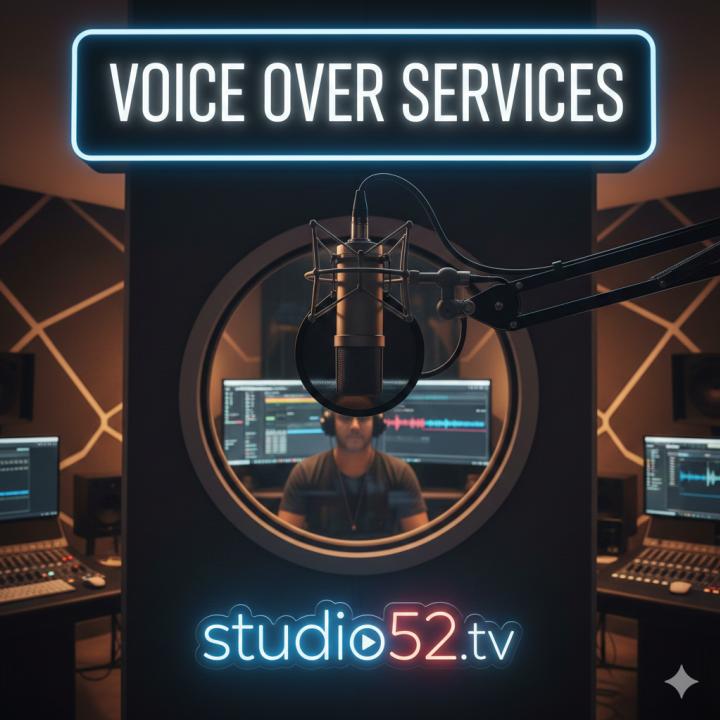
Professional Voice Over Services address these engagement challenges by introducing a human element to digital learning. When learners hear a skilled narrator guide them through content, their learning experience shifts from passive reading to active listening, engaging different neural pathways that enhance comprehension and retention.
Voice narration provides natural pacing that text cannot replicate. A professional voice artist emphasizes key concepts through intonation, pauses for reflection at critical junctures, and maintains an energy level that sustains attention throughout modules. This dynamic delivery transforms dense information into digestible segments, reducing cognitive load while increasing information processing efficiency.
The impact on learning outcomes proves substantial. Studies in instructional design demonstrate that courses incorporating audio narration show 40-60% higher completion rates compared to text-only alternatives. Learners report feeling more connected to the material, describing voiced content as "more personal" and "easier to follow." The addition of professional narration creates an experience closer to traditional instruction while maintaining the flexibility and scalability that makes e-learning valuable.
E-learning Voice Over serves multiple strategic purposes beyond basic narration. It enables learners to consume content while multitasking—reviewing materials during commutes, while exercising, or during other activities incompatible with screen reading. This flexibility increases course accessibility and accommodates the realities of modern professional schedules.
Consistency represents another crucial advantage. While instructors in live training sessions vary in delivery quality and energy levels, professional voice narration maintains the same high standard across every module and for every learner. This consistency ensures that all participants receive equivalent learning experiences regardless of when or where they access content.
Implementing Voice Solutions Strategically
Successful integration of Training Video Voice requires strategic planning aligned with learning objectives. Organizations must first identify which content types benefit most from narration. Complex technical procedures, compliance training, onboarding programs, and skills development courses typically see the greatest engagement improvements from professional voice work.
The selection of voice talent significantly influences effectiveness. The narrator's tone, pace, and >
Script development represents a critical step often underestimated in planning. Effective e-learning narration differs from written content—it requires conversational phrasing, appropriate pauses, and careful attention to pronunciation of technical terms. Professional scriptwriters experienced in instructional design create content that sounds natural when spoken while maintaining educational rigor.
Production quality cannot be compromised. Background noise, inconsistent audio levels, or poor recording quality undermine professional credibility and distract from learning objectives. Professional voice over services provide studio-quality recordings with proper editing, ensuring that audio enhances rather than detracts from the learning experience.
Integration with existing content requires technical consideration. Voice files must be properly synchronized with visual elements, include appropriate volume levels relative to background music or sound effects, and be formatted for optimal streaming across various devices and connection speeds.
Measuring Impact and Optimizing Results
Implementation of voice over services should include clear metrics for assessing impact. Beyond completion rates, organizations should track engagement indicators such as time spent per module, assessment scores, and learner satisfaction surveys. Many learning management systems provide analytics showing where learners pause, replay, or abandon content—data that reveals which narrated sections resonate most effectively.
Learner feedback provides qualitative insights that complement quantitative metrics. Exit surveys asking specifically about audio quality, narration pace, and voice appeal help refine future productions. Some organizations conduct A/B testing, offering identical content with and without narration to control groups, generating compelling evidence of voice over effectiveness.
The return on investment for professional narration extends beyond immediate learning outcomes. Improved completion rates reduce the need for repeated training cycles, while better retention decreases performance support requirements. Enhanced accessibility broadens potential audience reach, and improved learner satisfaction strengthens employer brand reputation.
Taking the Next Step
Organizations committed to maximizing e-learning effectiveness must evaluate current content delivery methods critically. The question is not whether to incorporate professional voice narration, but how to implement it most strategically for maximum impact.
Begin by auditing existing courses to identify those with lowest completion rates or poorest learner feedback. These courses represent the highest-priority candidates for voice over enhancement. Pilot projects allow organizations to test voice integration on limited content before full-scale implementation, reducing risk while generating proof-of-concept data.
Partner with experienced voice over professionals who understand instructional design principles and can guide script development, talent selection, and production processes. The investment in professional services pays dividends through higher-quality results and faster implementation timelines.
The competitive advantage in corporate learning and professional development increasingly belongs to organizations that deliver engaging, accessible content. Professional voice narration transforms passive information consumption into active learning experiences, directly addressing the engagement crisis that plagues digital education.
Evaluate your current e-learning platform's performance honestly. If completion rates disappoint, if learners provide lukewarm feedback, or if training effectiveness falls short of objectives, voice over integration may provide the solution. The learners who benefit from enhanced engagement and the organization that gains from improved training outcomes will validate the decision to prioritize human connection in digital learning.