The crypto wallet landscape has evolved far beyond simple private key storage. Today, users expect wallets to be secure, intuitive, and resilient against both human error and cyber threats. This is exactly where MPC crypto wallets step in. If traditional wallets are like locking your valuables in a single safe, MPC wallets are more like splitting that safe into multiple vaults—no single breach can unlock everything.
In this guide, we will break down MPC crypto wallet development in a clear, connected, and human way. Whether you are a startup founder, exchange owner, or fintech entrepreneur, this article will help you understand the “what,” “why,” and “how” behind MPC wallets—without the technical headache.
What Is an MPC Crypto Wallet?
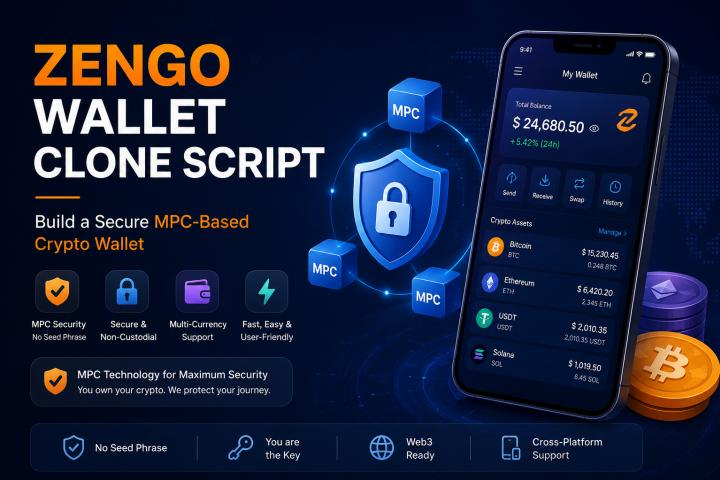
MPC stands for Multi-Party Computation. In simple terms, an MPC crypto wallet never stores a full private key in one place. Instead, the key is mathematically split into multiple encrypted shares, distributed across different devices or servers.
Here’s the magic part: the private key is never reconstructed—not during signing, not during transactions, not even during authentication. Think of it like opening a door that requires three people to turn their keys at the same time, without ever seeing each other’s keys. This approach dramatically reduces the risk of hacks, leaks, or accidental loss.
Why MPC Wallets Are Replacing Traditional Wallet Models?
Traditional wallets rely heavily on seed phrases, which users are expected to store securely. In reality, seed phrases get lost, stolen, screenshot, or accidentally shared. MPC wallets remove this single point of failure entirely.
MPC wallets eliminate seed phrase-related issues, saving businesses support time, costs, and reputation, making them a preferred choice for enterprises. For the best Thoughts - Best MPC Crypto Wallets in the Market
How MPC Crypto Wallet Development Work?
Key Generation Without Key Exposure
In the MPC wallet architecture, private keys are generated collaboratively across multiple parties. Each party only holds a fragment, which by itself is meaningless. Even if one share is compromised, attackers gain nothing.
Secure Transaction Signing
When a transaction is initiated, the MPC protocol allows each party to compute a partial signature. These partial signatures combine mathematically to authorize the transaction—without ever revealing the private key. This process happens seamlessly in the background, making the experience smooth for users.
Core Benefits of MPC Crypto Wallet Development
Enterprise-Grade Security
MPC wallets' zero-trust design secures assets, making them ideal for exchanges, custodial platforms, and large crypto businesses.
Improved User Experience
No seed phrases. No panic. No sticky notes hidden in drawers. Users can recover access through secure authentication layers such as biometrics or device-based verification, which feels familiar and reassuring.
Regulatory-Friendly Architecture
MPC wallets align well with compliance frameworks, as they enable policy controls, transaction approvals, and access restrictions without compromising decentralization principles.
Advanced Features You Can Build Into an MPC Wallet
Policy-Based Transaction Controls
Set transaction limits, multi-level approvals, or time-based restrictions. This is especially useful for institutional users managing large funds.
Multi-Device & Cross-Platform Access
Users can access the same wallet securely from mobile, desktop, or web environments without risking key exposure.
Real-Time Risk Monitoring
Advanced MPC wallets can integrate AI-driven threat detection to identify suspicious behavior before damage occurs.
How to Create a MPC Crypto Wallet: Step-by-Step Overview
If you are wondering how to create an MPC Crypto wallet, the process starts with choosing the right cryptographic framework and infrastructure. You will need secure key management logic, robust backend coordination, and a user-friendly frontend that hides complexity without reducing transparency.
Most businesses avoid building everything from scratch. Instead, they collaborate with an experienced MPC Crypto Wallet development company, ensuring faster deployment, audited security models, and scalability from day one. This approach significantly reduces both technical risk and time-to-market.
MPC Wallet Development Cost: What Influences Pricing?
The development cost of an MPC wallet depends on multiple factors, including security layers, blockchain support, compliance features, and UI complexity. A basic MPC wallet will naturally cost less than an enterprise-grade solution with policy engines, analytics dashboards, and cross-chain functionality.
However, when compared to losses from hacks or reputational damage, MPC wallets are an investment—not an expense. The ROI becomes clear when user trust and retention increase over time.
Who Should Invest in MPC Crypto Wallet Development?
MPC wallets are ideal for crypto exchanges, custodial services, Web3 platforms, DAOs, fintech startups, and institutional investors. If your platform handles user funds at scale, MPC is no longer optional—it is quickly becoming the industry standard.
Conclusion
MPC crypto wallet development represents a major leap forward in wallet security and usability. By eliminating single points of failure and replacing seed phrases with cryptographic collaboration, MPC wallets offer a safer and smarter way to manage digital assets. For businesses aiming to build trust, scale securely, and future-proof their platforms, MPC wallets are the logical next step.
Partnering with coinsclone MPC crypto Wallet Development services allows you to launch a secure, compliant, and feature-rich MPC wallet without reinventing the wheel—so you can focus on growth while the technology works silently in your favor.