The Comparison Trap: Why Traffic Brokerage Isn't Enough
For years, the affiliate and comparison market has followed a predictable script: drive traffic, rank for high-intent keywords, and hand off the user to a provider. While profitable, this model creates a "leaky bucket" business. You are essentially a middleman with no proprietary moat. When I started developing Internet-offer.ch, I realized that to survive the 2026 search landscape, I needed to stop selling clicks and start providing technical validation.
Identifying the Pain Point: The "Confusing Bill"
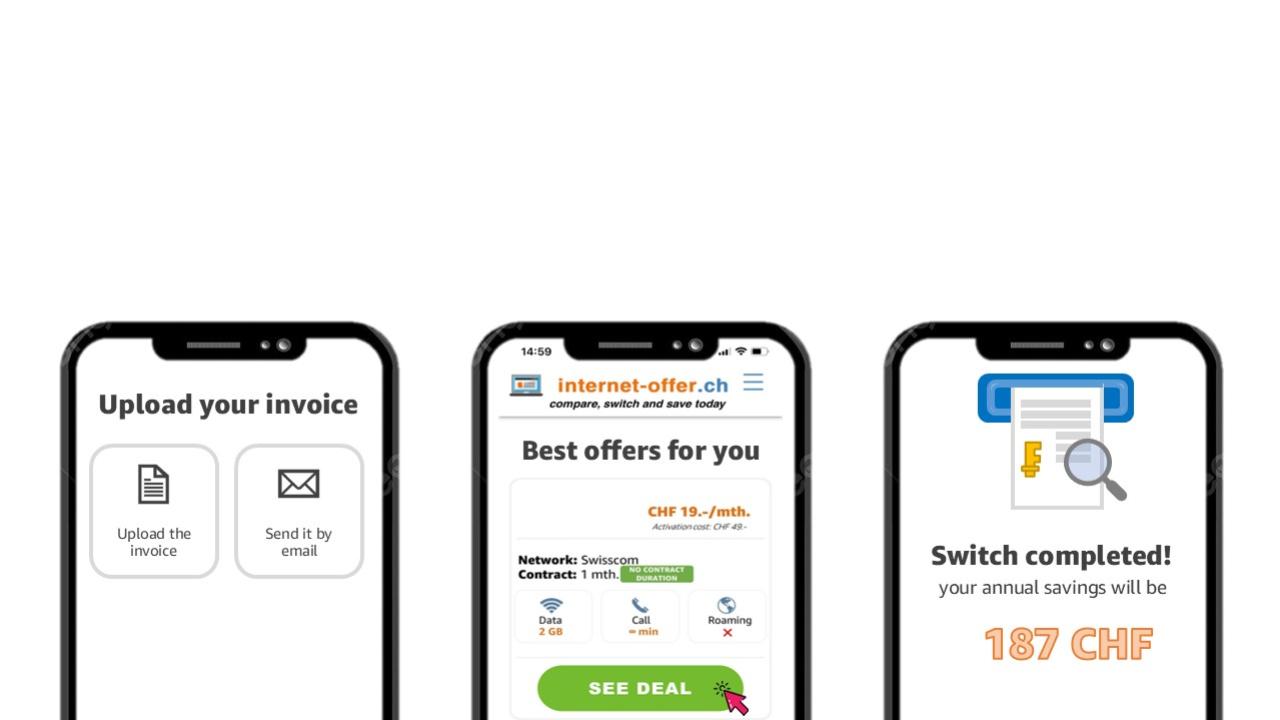
In the Swiss telecom market, users don't just want a list of prices; they want to know why they are overpaying. I noticed a recurring friction point: people have no idea how to read their current invoices. They are buried in legacy discounts, hidden administrative fees, and technical jargon. This was my opportunity to move up the value chain. Instead of asking users to manually input their data, I decided to build a tool that does the heavy lifting for them.
The Strategy: Implementing the "Offer-Check"
I launched the
This shift achieved three critical business goals:
Lowered Friction: No more manual data entry.
Increased Trust: We are now an auditor, not just a salesman.
Data Moat: Every audit provides deeper insights into real-world market pricing that public sites don't have.
The Technical Moat: Merging AI with GIS Data
To further distance myself from "standard" comparison sites, I integrated real-time GIS mapping. It wasn't enough to say a plan was "cheap"; I had to verify if it was "functional." By cross-referencing AI-audited bills with our 5G and Fiber coverage maps, we created a validation layer that protects the user from buying speeds their address cannot support. This technical layer is what turns a visitor into a long-term user.
Lessons Learned: Solve for Clarity, Not Just Price
The biggest takeaway from this journey is that utility is the best marketing. When you provide a tool that solves a complex task (like auditing a 5-page contract in 3 seconds), you don't need to fight as hard for SEO—your product becomes the destination.
If you are currently building a comparison or marketplace project, my advice is simple: Build a tool that makes the data actionable. Don't just show them the "where"; show them the "why" and the "how much."