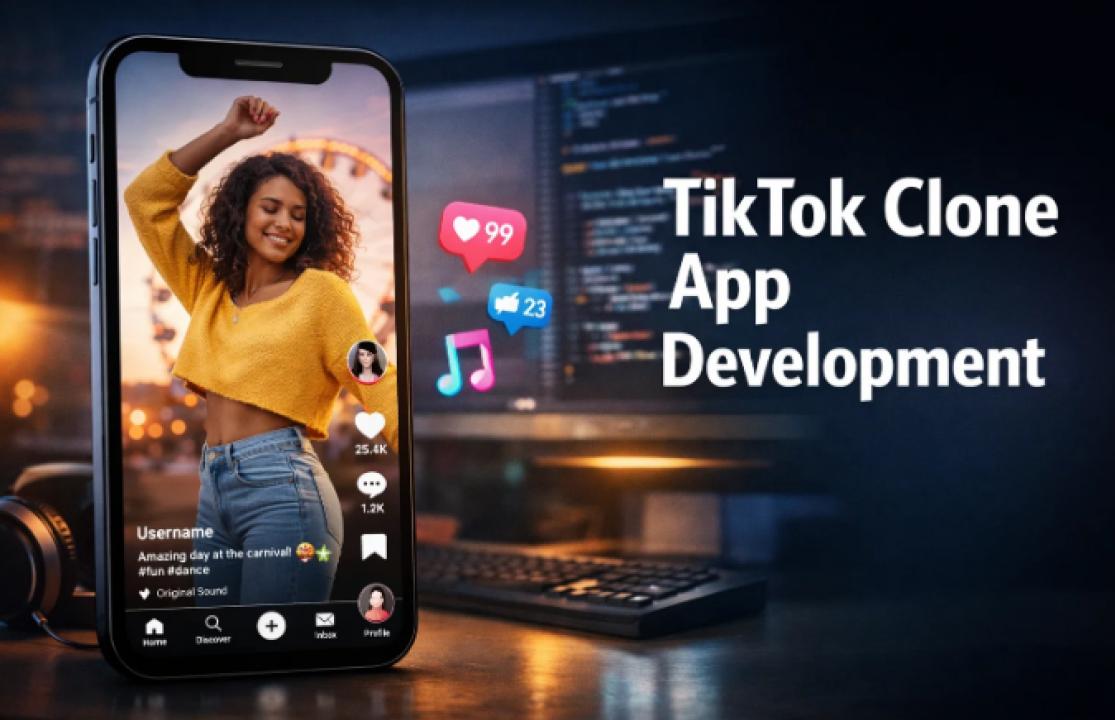
The rise of short-video platforms has reshaped digital engagement globally. Among them, TikTok stands as a revolutionary app, inspiring numerous entrepreneurs and developers to create their own versions. When considering TikTok Clone development, one of the most critical decisions is selecting the right technology stack. The choice of programming languages, frameworks, and tools directly impacts app performance, scalability, and user experience.
In 2026, as mobile hardware advances and user expectations increase, choosing a robust, future-proof stack has become even more crucial. This article explores the technologies, architecture, and strategies necessary to build a high-performing custom TikTok clone app.
Understanding the Core Requirements of a TikTok Clone
Before diving into the technology stack, it’s essential to understand the fundamental features that define an app like TikTok. These include real-time video streaming, social interactions (likes, comments, shares), AI-driven content recommendations, and multi-account management. Additionally, security, scalability, and a seamless user interface are pivotal for a smooth experience.
Modern users expect fast load times, low-latency video playback, and personalized feeds powered by artificial intelligence. Implementing these features requires a carefully planned backend, a scalable cloud infrastructure, and efficient front-end technologies. This ensures your TikTok like app can handle millions of users without performance degradation.
Front-End Technologies for a TikTok Clone
The front-end is the face of your app. For a TikTok Clone, the interface must be highly interactive, responsive, and capable of handling video playback smoothly. Native mobile development remains the preferred choice for high-performance apps.
- iOS Development: Swift, combined with the latest iOS SDKs, allows seamless integration of AR effects, video processing, and in-app notifications. SwiftUI simplifies the creation of dynamic interfaces for different iPhone and iPad models
- Android Development: Kotlin is the recommended language for Android development in 2026, offering better performance and safer code compared to Java. Jetpack Compose aids in building modern, reactive UI component
- Cross-Platform Options: For startups looking to deploy quickly across both platforms, frameworks like Flutter or React Native are viable. They allow code sharing between iOS and Android but may require additional optimizations for heavy video rendering.
These technologies ensure that the front-end of a whitelabel TikTok app is not only visually appealing but also capable of supporting high-frequency interactions.
Backend Technologies and Server Architecture
The backend is the backbone of any TikTok Clone. It handles data storage, user management, content delivery, and recommendation algorithms. Choosing a scalable, resilient backend architecture is critical for accommodating millions of concurrent users.
- Programming Languages: Node.js, Python (Django/Flask), and Go are popular choices for backend development. Node.js is preferred for real-time features, while Python supports AI-driven recommendation systems efficiently.
- Databases: A combination of relational and NoSQL databases is often used. PostgreSQL or MySQL can manage structured data like user profiles and video metadata, whereas MongoDB or Cassandra can handle unstructured data such as comments and video analytics.
- Real-Time Streaming: Media servers like Wowza, Kurento, or Red5 are commonly used to ensure low-latency video streaming. For adaptive streaming, protocols like HLS (HTTP Live Streaming) or MPEG-DASH are standard.
- Cloud Infrastructure: Cloud providers like AWS, Google Cloud, or Azure offer scalable compute, storage, and content delivery networks (CDNs) that support rapid scaling as user traffic grows.
This architecture ensures that your custom TikTok clone app can handle the complexity of modern social media interactions without downtime.
AI and Machine Learning Integration
The success of a TikTok like app relies heavily on personalized recommendations. AI and ML models analyze user behavior to serve relevant videos, enhancing engagement and retention.
- Recommendation Algorithms: Collaborative filtering and deep learning-based algorithms help predict user preferences. TensorFlow, PyTorch, and scikit-learn are standard tools for model development.
- Computer Vision: Object detection, facial recognition, and AR effects enhance interactive video content. OpenCV and MediaPipe are popular frameworks for video-based AI features
- Natural Language Processing: For comment moderation, sentiment analysis, and hashtag suggestions, NLP tools like spaCy or Hugging Face Transformers are useful.
Integrating AI into your TikTok Clone ensures a personalized, engaging experience that mirrors the functionality of top short-video platforms.
Multi-Account Management and User Authentication
Modern social apps increasingly require multi-account management, allowing users to switch seamlessly between personal and business profiles. A robust multi-account management system enhances user flexibility and retention.
- Authentication: OAuth 2.0, JWT, and biometric authentication ensure secure, smooth logins.
- Session Management: Redis or Memcached can manage session data efficiently for users with multiple accounts.
- Data Isolation: Proper database design is essential to prevent cross-account data access while maintaining performance.
By incorporating these technologies, your app like TikTok can offer advanced user account features while maintaining security and performance.
Video Processing and Storage Solutions
Video is the core of a TikTok Clone, and efficient storage and processing are critical.
- Video Encoding: Tools like FFmpeg allow for efficient video compression and format conversion, ensuring fast streaming with minimal buffering.
- Storage Solutions: Object storage services like AWS S3 or Google Cloud Storage provide scalable, cost-effective storage for millions of videos.
- Content Delivery Networks: CDNs such as Cloudflare or Akamai distribute content closer to users, reducing latency and enhancing playback speed.
Optimizing these components ensures that your whitelabel TikTok app can support a global user base without performance bottlenecks.
Security Considerations
Security is a non-negotiable aspect of TikTok Clone development. User data, video content, and financial transactions (if monetization is integrated) must be protected against breaches.
- Data Encryption: SSL/TLS protocols for data in transit and AES-256 encryption for data at rest are standard.
- Access Control: Role-based access control (RBAC) ensures that only authorized users or admins can access sensitive data.
- DDoS Mitigation: Implementing firewall rules and traffic monitoring helps prevent denial-of-service attacks, especially critical for video-heavy apps.
A secure foundation builds trust and supports the long-term sustainability of a TikTok like app.
Selecting the Right Development Approach
Choosing between building from scratch, using a whitelabel TikTok app, or hiring an experienced app development company depends on your technical resources and timeline.
- Custom Development: Offers full control over features and scalability but requires significant investment and technical expertise.
- Whitelabel Solutions: Provide a faster go-to-market option, with ready-made modules for video streaming, social interactions, and monetization.
- Hybrid Approach: Some companies combine whitelabel frameworks with custom modules to achieve both speed and uniqueness.
Regardless of the approach, the chosen technology stack should support future updates, AI integration, and feature expansions.
Future-Proofing Your TikTok Clone
Technology evolves rapidly, and staying ahead requires adopting scalable, modular systems. Microservices architecture, containerization with Docker and Kubernetes, and serverless functions can future-proof your custom TikTok clone app.
Additionally, keeping an eye on emerging trends such as 8K video support, AR/VR integration, and advanced recommendation engines ensures your app remains competitive. Regular updates to the tech stack and algorithms are necessary to sustain user engagement in 2026 and beyond.
Conclusion
Developing a TikTok Clone in 2026 demands careful selection of technologies across front-end, backend, AI, storage, and security. The right stack ensures high performance, scalability, and a smooth user experience, whether you are building a fully custom TikTok clone app or using a whitelabel TikTok app. By focusing on modern frameworks, cloud infrastructure, AI integration, and robust account management, developers can create a platform that rivals the original while remaining adaptable to future trends.
With the proper technology stack and architectural planning, launching a TikTok-like app in today’s competitive market is not only feasible but can deliver lasting engagement and growth.