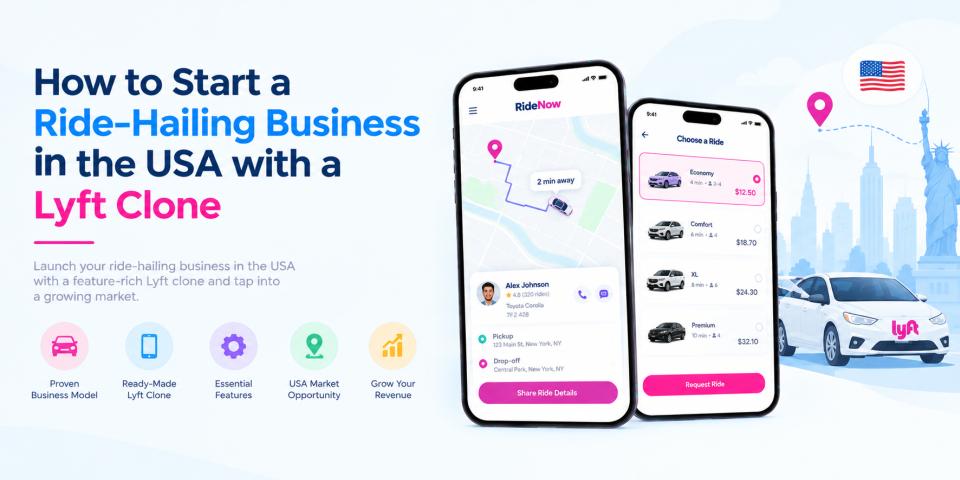

The ride-hailing industry in the USA continues to evolve at an impressive pace. Urban mobility habits have changed permanently, consumer expectations are higher than ever, and digital convenience now defines transportation experiences. For startups and entrepreneurs looking to enter this dynamic space, launching a lyft clone app has emerged as a practical, scalable, and cost-efficient strategy.
Rather than building a platform from scratch — a process that demands extensive time, resources, and technical risk — businesses can leverage a proven solution that mirrors the success of established ride-sharing models. But what exactly makes this approach so compelling?
Let’s explore.
Understanding the Concept of a Lyft Clone App
A lyft clone app is not about copying a brand. Instead, it refers to developing a ride-hailing platform that replicates the core functionality, user experience, and operational workflow of leading transportation apps.
This typically includes:
-
Passenger and driver mobile applications
-
Real-time GPS tracking
-
Ride booking and scheduling
-
Fare calculation algorithms
-
Secure payment integration
-
Ratings and reviews
-
Admin dashboard controls
With lyft clone app development, businesses gain access to a framework that already reflects user behavior patterns validated by millions of rides worldwide.
Why the USA Market Is Ideal for Ride-Hailing Startups
The USA remains one of the most lucrative environments for mobility innovation. Several factors drive this opportunity:
1. Strong Consumer Demand
Consumers increasingly prefer app-based transportation over traditional taxis. Convenience, transparent pricing, and faster service are major drivers.
2. Urbanization & Traffic Challenges
Congested cities demand smarter mobility solutions. Ride-sharing helps reduce personal vehicle dependency.
3. Gig Economy Expansion
The flexible work model aligns perfectly with driver participation in ride-hailing platforms.
4. Technology Adoption
High smartphone penetration and digital payment usage simplify platform scalability.
Launching a lyft clone app positions businesses directly within this high-growth ecosystem.
Key Benefits of Lyft Clone App Development
Developing a ride-hailing solution using a clone model provides several strategic advantages.
✔ Faster Time to Market
Building a transportation platform from scratch can take 12–24 months. A ready-made lyft clone script dramatically reduces development cycles.
Speed matters in competitive markets.
✔ Reduced Development Costs
Custom engineering demands large budgets. With a lyft clone, businesses invest primarily in customization rather than foundational coding.
This significantly lowers financial risk.
✔ Proven Business Model
Ride-sharing mechanics are already validated. Entrepreneurs focus on execution, marketing, and regional optimization instead of experimentation.
✔ Scalable Architecture
Modern lyft clone app development solutions are designed for growth, allowing:
-
Multi-city expansion
-
Fleet management integration
-
Feature upgrades
-
Data analytics enhancement
✔ Customization Flexibility
Despite the “clone” terminology, platforms are fully customizable:
-
Branding & UI design
-
Pricing models
-
Commission structures
-
Unique features
Your lyft clone app becomes your own product.
Essential Features of a High-Performing Lyft Clone App
Success in the USA ride-hailing market requires more than basic functionality. A competitive platform must include:
🚗 Passenger App Features
-
Easy registration & profile management
-
Ride booking & scheduling
-
Live driver tracking
-
Fare estimation
-
Multiple payment options
-
Ride history
-
Ratings & feedback
🚘 Driver App Features
-
Ride request alerts
-
Navigation assistance
-
Earnings dashboard
-
Availability controls
-
Trip management
-
Performance metrics
🛠 Admin Panel Features
-
User & driver management
-
Commission configuration
-
Dynamic pricing tools
-
Analytics & reporting
-
Payment oversight
-
Promotion management
A robust lyft clone app ensures smooth operations across all stakeholders.
Competitive Differentiation: Standing Out in the USA
A common concern among entrepreneurs is differentiation. If many businesses use a lyft clone, how do you compete?
The answer lies in strategy, not technology.
🎯 Niche Market Focus
Target specific segments:
-
Corporate transportation
-
Airport transfers
-
Luxury rides
-
Carpooling solutions
-
Student mobility
🎯 Regional Optimization
Customize offerings for local needs:
-
Pricing models
-
Service zones
-
Vehicle categories
🎯 Enhanced Features
Add innovation layers:
-
Subscription rides
-
Loyalty programs
-
AI-based matching
-
Eco-friendly fleet options
Your lyft clone app is simply the foundation — differentiation builds the brand.
Monetization Strategies for Ride-Hailing Platforms
Profitability depends on well-structured revenue streams.
Common models include:
-
Ride commissions
-
Surge pricing
-
Cancellation fees
-
Driver subscription plans
-
In-app advertising
-
Premium service tiers
A well-planned lyft clone app development strategy supports multiple monetization channels.
Security & Compliance Considerations in the USA
Operating a mobility platform in the USA demands careful attention to regulations and security standards.
Key priorities include:
-
Secure payment processing
-
Data privacy compliance
-
Driver verification systems
-
Insurance integrations
-
Fraud prevention mechanisms
Professional lyft clone app development ensures adherence to industry best practices.
Technology Stack Behind a Reliable Lyft Clone
A high-quality lyft clone script typically leverages:
-
Cloud-based infrastructure
-
Real-time GPS services
-
Scalable backend architecture
-
Encrypted payment gateways
-
Cross-platform mobile frameworks
Modern technology ensures performance, stability, and future scalability.
Common Mistakes to Avoid When Launching
Even with a strong lyft clone app, execution errors can limit success.
Avoid:
❌ Poor user experience
❌ Weak driver onboarding strategy
❌ Ineffective pricing models
❌ Lack of customer support
❌ Insufficient marketing
Technology alone doesn’t guarantee growth.
The Future of Ride-Hailing in the USA
The mobility industry is moving toward:
-
Electric vehicle integration
-
Autonomous driving experiments
-
AI-driven dispatch systems
-
Subscription-based transportation
-
Multi-modal mobility ecosystems
A scalable lyft clone app allows businesses to evolve alongside these trends.
Conclusion
Entering the USA ride-hailing market no longer requires building complex systems from scratch. A strategically designed lyft clone app provides entrepreneurs with a faster, safer, and more cost-efficient route to launching a competitive mobility platform.
With the right customization, feature set, and market positioning, businesses can establish strong footholds in local and regional transportation sectors.
For companies looking to transform mobility ideas into reality, partnering with an experienced technology provider becomes crucial. Mobility Infotech specializes in delivering scalable, customizable, and high-performance ride-hailing solutions tailored for modern transportation businesses.