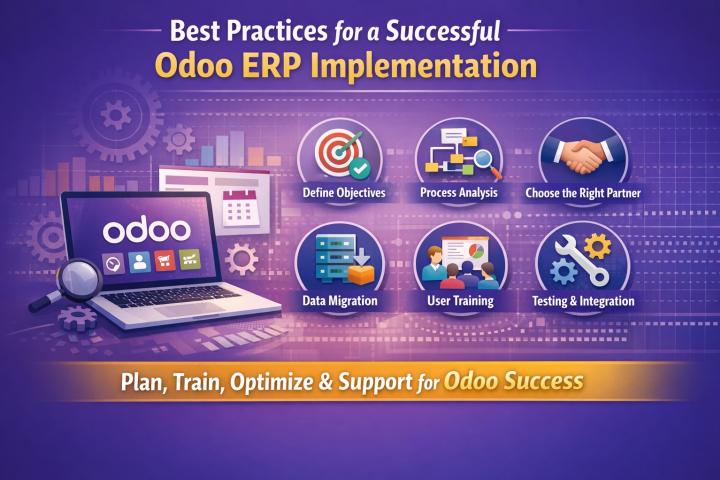
Implementing an ERP system is a strategic decision that impacts every function of a business. Odoo ERP implementation, when done correctly, can streamline operations, improve visibility, and support long-term growth. However, without the right approach, it can lead to delays, budget overruns, and low user adoption.
This article outlines best practices for a successful Odoo ERP implementation, helping businesses maximize ROI while minimizing risks. Whether you are an SME or an enterprise, these practices will guide you toward a smooth and scalable Odoo deployment.
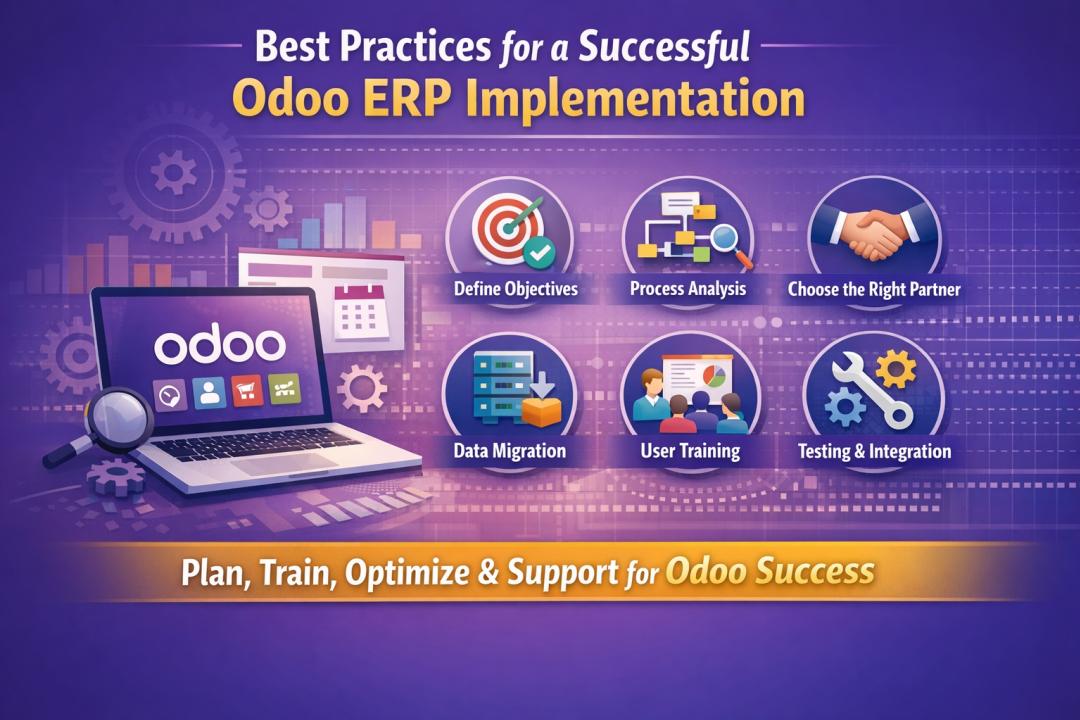
1. Define Clear Business Objectives
Before starting your Odoo implementation, clearly define what you want to achieve. ERP is not just a software upgrade—it is a business transformation.
Key questions to address:
-
What problems should Odoo solve?
-
Which processes need improvement?
-
What KPIs will measure success?
Clear objectives help align stakeholders and ensure that your Odoo ERP system supports real business goals rather than unnecessary features.
2. Conduct a Detailed Business Process Analysis
A successful Odoo ERP implementation starts with understanding existing workflows. Document current processes and identify inefficiencies, bottlenecks, and manual tasks.
Benefits of process analysis:
-
Identifies gaps between current systems and Odoo features
-
Reduces over-customization
-
Ensures smoother Odoo integration
Mapping processes early ensures that Odoo is configured to enhance productivity instead of disrupting operations.
3. Choose the Right Odoo Implementation Partner
One of the most critical success factors is selecting an experienced Odoo implementation partner. A certified partner brings technical expertise, industry knowledge, and best practices.
Look for a partner who:
-
Has proven Odoo ERP implementation experience
-
Understands your industry
-
Offers post-implementation support
-
Follows a structured implementation methodology
The right partner can significantly reduce risks and accelerate time-to-value.
4. Start with Core Odoo Modules
Odoo offers a wide range of modules, but implementing everything at once can be overwhelming. Begin with essential modules such as:
-
Odoo Accounting
-
Odoo Sales
-
Odoo Inventory
-
Odoo CRM
A phased rollout allows teams to adapt gradually and ensures better system stability. Additional Odoo apps can be added as business needs evolve.
5. Avoid Excessive Odoo Customization
While Odoo customization is powerful, over-customizing can increase costs, complexity, and maintenance challenges. Always evaluate whether standard Odoo features can meet your needs before opting for customization.
Best practices for customization:
-
Customize only when it adds measurable business value
-
Follow Odoo coding standards
-
Document all custom features
Balanced customization ensures flexibility without compromising system performance or upgradeability.
6. Focus on Data Migration and Data Quality
Data migration is often underestimated in Odoo ERP implementation projects. Migrating inaccurate or outdated data can affect reporting and decision-making.
Data migration best practices:
-
Clean and validate data before migration
-
Migrate only relevant historical data
-
Test migrated data thoroughly
High-quality data ensures that your Odoo ERP system delivers reliable insights from day one.
7. Plan for User Training and Change Management
User adoption plays a crucial role in ERP success. Even the best-configured system fails if users resist change.
Effective training strategies include:
-
Role-based Odoo user training
-
Hands-on sessions and demos
-
Clear documentation and SOPs
Strong change management helps employees understand how Odoo simplifies their work, leading to higher acceptance and productivity.
8. Test Thoroughly Before Going Live
Testing is essential to ensure system stability and accuracy. Conduct multiple testing cycles, including:
User Acceptance Testing (UAT)
-
Functional testing
-
Integration testing
Involving end users in UAT ensures that the Odoo ERP implementation aligns with real-world business scenarios and reduces post-launch issues.
9. Ensure Proper Odoo Integration
Most businesses use multiple systems alongside ERP. Proper Odoo integration with tools like payment gateways, eCommerce platforms, or third-party applications is crucial. Use APIs and standard connectors.
- Integration best practices:
- Test integrations under real workloads.
- Monitor data flow consistency.
Seamless integration ensures uninterrupted operations and a unified data ecosystem.
10. Plan for Post-Implementation Support and Optimization
ERP implementation does not end at go-live. Continuous monitoring and optimization are necessary to adapt to changing business needs.
Post-implementation best practices:
- Regular system audits
- Performance optimization
- Feature enhancements
- Ongoing Odoo support services
Long-term support ensures that your Odoo ERP solution evolves with your business.
11. Measure Performance and ROI
After implementation, track KPIs to measure success. Common metrics include:
- Process efficiency improvements
- Reduction in operational costs
- User adoption rates
- Reporting accuracy
Measuring ROI helps justify the investment and identify areas for further improvement in your Odoo ERP implementation strategy.
A successful Odoo ERP implementation is not just about technology, it’s about strategy, people, and processes. By defining clear goals, choosing the right partner, minimizing unnecessary customization, and focusing on user adoption, businesses can unlock the full potential of Odoo.
When implemented following best practices, Odoo ERP becomes a scalable, flexible, and cost-effective solution that drives efficiency and long-term growth. Investing time in planning and execution today ensures sustainable business success tomorrow.