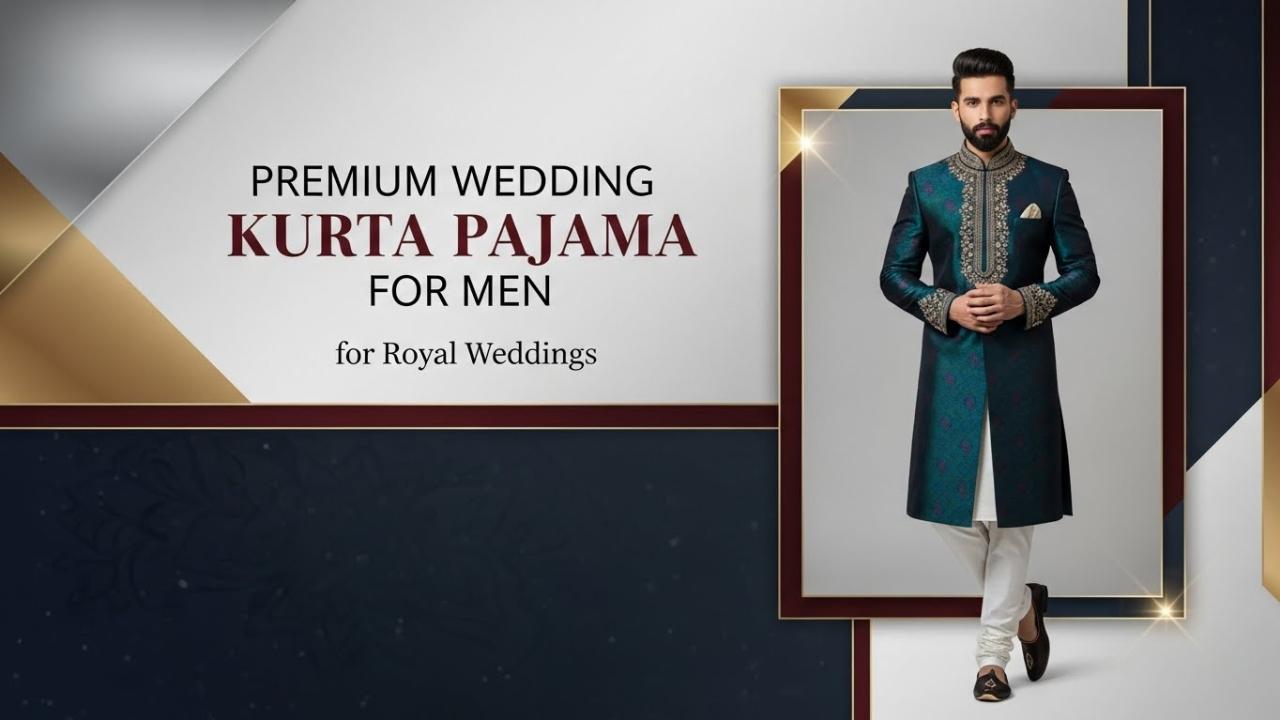
Premium Wedding Kurta Pajama for Men for Royal Weddings
A wedding outfit is judged before the first greeting finishes. Not by the loudness of the fabric, but by whether the wearer looks like he belongs in the frame with the groom, the elders, and the photographers who keep forcing “one more candid.” A wedding kurta for men becomes premium when it behaves like a composed personality: clean from a distance, textured up close, and confident in every light.
The phrase “royal wedding” is frequently misunderstood. People assume it means heavier, shinier, louder. A better definition is quieter: a royal look is built on controlled richness—fabric quality, disciplined color, and a silhouette that sits correctly on the body. That is why a kurta for wedding that looks expensive in daylight can look ordinary at night if the fabric collapses under artificial lighting, or if the fit drifts at the shoulder and sleeve.
In Indian weddings, the kurta is not a single garment. It is a system: neckline to hem, pajama cut to ankle break, sleeve pitch to wrist, and the entire balance of volume. A wedding kurta pajama for men either carries that system cleanly, or it starts looking like a rushed purchase, even when the price is high.
This is also where cities matter. In places with heavy wedding calendars—Patna included—men tend to buy with practical urgency, and that often means repeating outfits across functions. That repetition is not a problem. The problem is repeating without strategy, especially when the same photographers and the same family WhatsApp groups are present at every event.
This guide stays grounded in what people actually notice: not theoretical “fashion rules,” but what registers in real wedding conditions—sweat, lights, movement, camera flash, hugs, and long hours of sitting. It also respects the reality that a kurta for wedding is frequently chosen under time pressure, with limited trials and limited room for errors.
What Makes a Wedding Kurta Pajama Feel Premium
Premium is not a label. Premium is a set of visible and invisible signals that work together. A wedding kurta pajama feels premium when it has weight where it should, breathability where it matters, and structure that holds through a long function.
Fabric is the starting point, but fabric alone does not finish the job. A high-quality silk blend can still look cheap if the collar sits wrong or the placket puckers. A simpler cotton-silk can look elite if the tailoring is disciplined and the surface work is restrained.
The premium effect often comes from details that do not scream for attention. The seam alignment at the shoulder. The way the sleeve falls without twisting. The fall of the hem without flaring awkwardly at the sides. These are not glamorous features, yet they decide whether a kurta pajama for wedding functions looks intentional or accidental.
There is also the question of proportion. Many men unknowingly buy kurtas that are either too long for their leg line or too short for their torso. When proportion goes wrong, even a designer piece looks like a mismatch between body and garment. The premium look collapses quietly, and people cannot explain why, but they feel it.
In a kurta set for wedding functions, the pajama is a major part of the impression. Too tight and it looks like discomfort. Too loose, and it looks sloppy, particularly in photos from the side. A premium pajama is comfortable, but it is also precise: clean at the ankle, stable at the knee, and appropriate for footwear.
Premium Wedding Kurta Pajama for Men: The Details People Notice Up Close
At a wedding, strangers do not walk up and examine your fabric weave. Close family does. Friends do. And photographers do, because the camera behaves like a microscope under certain angles and flash.
The first thing people notice up close is the collar and neckline finishing. If the band collar is too soft, it collapses. If it is too stiff, it looks forced and can create odd shadows under the chin. For men's wedding wear kurta, the ideal collar holds its line, stays comfortable, and does not crease dramatically after one hour.
Next comes the placket. Cheap plackets bubble. Premium plackets lie flat, even when the wearer moves and sits. Button spacing and thread tension matter more than people admit, because these small issues become large in tight portraits.
Surface work is another giveaway. Good threadwork has clean edges, consistent density, and deliberate spacing. Poor work looks fuzzy, uneven, or overly filled in, as if someone tried to compensate for weak design by adding more. This difference becomes clearer in close photos, particularly in cream, ivory, or pale shades.
Then there is the inner finishing. A premium kurta is not only good outside. It handles the inside: clean stitching, comfortable seam allowances, and lining only where it improves structure. A garment that scratches, overheats, or pulls at the underarm becomes a problem halfway through the function, and that discomfort shows on the face.
A gents kurta for wedding should also handle movement. You will lift your arms for photos, greet elders, sit for rituals, and walk through crowded spaces. If the armhole is cut wrong, the whole kurta lifts up and distorts. Premium tailoring anticipates real movement, not mannequin posture.
Royal Weddings Are About Restraint, Not Loud Styling
Royal styling is a discipline. It is not about trying to look like the groom. It is about looking like someone who belongs near the groom. That distinction changes every decision.
The loud approach often relies on heavy contrast: excessive shine, aggressive motifs, and too many add-ons. It creates a short burst of attention, then it starts looking dated in photos. A royal look is slower. It builds impact through tone, texture, and silhouette.
Colors matter, but so does how the color behaves in different lighting. A deep wine that looks elite in warm light can look flat under cool LED lighting. An ivory that looks expensive in daylight can look dull under yellow wedding lights unless the fabric has the right finish.
The same logic applies to embellishment. Good embroidery complements the garment. Bad embroidery tries to become the garment. In royal weddings, the best outfits usually sit in the middle: enough craft to look premium, enough restraint to look dignified.
This is also why men who shop with a calm plan often outdress men who overspend. They choose fewer elements and execute them properly. A wedding kurta pajama men's look becomes royal when it stays composed, not when it competes with every other outfit in the room.
Which Wedding Kurta Pajama for Men Suits Day Functions vs Night Functions
Day functions and night functions are different ecosystems. Daylight exposes everything: fabric cheapness, stitching flaws, and color imbalance against skin tone. Night lighting exaggerates shine, shadows, and texture.
For day events like haldi, a lighter fabric with controlled texture works best. The outfit should look fresh and clean without needing heavy accessories. If you are choosing a haldi kurta for groom, comfort matters as much as appearance because haldi is messy, warm, and active.
For daytime ceremonies, cream, pastel, and light neutrals can work beautifully, but only when the fabric has quality. A weak fabric in a light color looks washed out immediately. A good fabric in a light color looks elevated because it reflects light evenly.
Night functions allow deeper colors and slightly richer textures. Dark shades can look powerful, but they can also look harsh if the fabric reflects light poorly. For a reception, the aim is clarity: you should look sharp, not shiny.
A practical approach is to build two categories in your wardrobe: one premium light set for day functions and one premium dark set for night functions. That pairing covers most wedding events while keeping repetition manageable.
This is where the phrase kurta pajama for men for marriage becomes real. It is not about buying many outfits. It is about choosing the right two or three outfits that behave well across time, light, and photography.
Premium Wedding Kurta Pajama for Men in Ivory, Cream, Off-White: When It Looks Expensive
Ivory and cream are brutally honest colors. They amplify every flaw: fabric cheapness, bad stitching, weak structure, and poor fit. That is why they also signal premium instantly when done well.
In these shades, the fabric must have either natural richness or intelligent texture. Plain flat fabric in off-white can look dull. A subtle jacquard, a fine self-weave, or a controlled sheen can make the outfit look expensive without being loud.
The second factor is the inner construction. Light colors expose the outline of pocket bags, uneven seam lines, and poor lining choices. A premium wedding kurta pajama in cream tends to have cleaner internal engineering so that the outside remains smooth and confident.
The third factor is styling discipline. Cream and ivory look premium when paired with a controlled accessory palette. A contrasting stole can work, but the contrast must be intentional. Too many elements can make the look chaotic, and the entire purpose of a royal palette is calm dominance.
For daytime weddings, cream and off-white also photograph exceptionally well with traditional backgrounds—marigolds, brass décor, and warm wedding lighting. The look becomes culturally aligned without being heavy.
A wedding kurta for groom in ivory often feels classic, but it can still be modern if the silhouette is structured and the pajama cut is sharp. Modernity here is not loud design. It is correct geometry.
Black, Navy, and Deep Wine: When Dark Wedding Kurtas Look Royal
Dark shades can look royal because they create authority fast, but they also punish lazy finishing. In black especially, poor stitching shows up as ripples and shine patches, and weak fabric looks plastic under reception lighting. A black kurta for men becomes wedding-appropriate when the fabric has depth (not gloss), and the silhouette stays sharp even after sitting for long stretches.
Navy is often safer than black for weddings because it reads premium without looking severe. A navy kurta for wedding works best when the shade is truly deep and the surface texture is subtle—self-jacquard, micro-weave, or tone-on-tone threadwork. Bright navy looks casual; deep navy looks ceremonial.
Deep wine and maroon have a cultural advantage in Indian weddings because they align naturally with festive palettes. Still, the shade must be controlled: too red and it becomes loud; too brown and it becomes flat. For a wedding kurta for men, deep wine looks royal when paired with quiet gold accents, antique buttons, or a low-contrast stole that adds dimension instead of drama.
A practical note that saves people: dark kurtas carry dust, lint, and chalk marks from tailoring. If you are buying a wedding kurta pajama for men in black or navy, insist on a final steam press and a quick lint check before leaving, because photos do not forgive small negligence.
Silk, Brocade, Jacquard, Tissue: What Feels Royal and What Feels Heavy
Silk is a word people over-trust. Some “silk” fabrics are shiny blends with poor fall and zero breathability, and they start looking tired before the function ends. Premium silk for a kurta for wedding has controlled sheen and better drape, meaning it moves like fabric, not like wrapping paper.
Brocade signals royalty immediately, but it also carries weight and heat. It works best for winter weddings, night receptions, or short, high-impact functions where you want presence. If you choose brocade for a long event, the outfit can feel heavy, and discomfort will show in posture and expression.
Jacquard is the smart middle. It can look rich without becoming too heavy, and it photographs well because the texture adds depth even when the color is simple. A jacquard wedding kurta pajama in ivory, navy, or deep wine is often the most “premium-looking” option for the money when tailored properly.
Tissue fabric is a specialized choice. It can look spectacular in the right light, but it can also look over-shiny and fragile if the quality is low. Tissue works when the event is formal and the styling is restrained; it fails when paired with loud accessories because the combined reflection becomes harsh.
When you hear “royal,” think in engineering terms: fabric weight, breathability, and structure must match the event duration. A men's wedding wear kurta that looks majestic for ten minutes and uncomfortable for three hours is not premium in practice.
Threadwork, Zari, Resham, Hand Embroidery: How to Read Quality Without Guesswork
Most people judge embroidery by how dense it is. That instinct is wrong. Density can hide bad design and poor craftsmanship, and it can add unnecessary weight. Quality is easier to read if you know what to look for.
Threadwork (including resham) looks premium when the edges are clean and the pattern stays consistent across panels. Cheap threadwork looks fuzzy, uneven, and slightly misaligned at seams. On a wedding kurta for men, seam alignment matters because patterns that break at the side seam look careless.
Zari is where many outfits go wrong. Good zari has a controlled metallic tone—antique gold, muted gold, or refined silver—rather than a loud, mirror-like shine. Under reception lights, cheap zari flashes aggressively and draws attention away from the face, which is the opposite of a royal look.
Hand embroidery is not automatically premium, and machine embroidery is not automatically cheap. The real test is the finishing and stability. Quality embroidery lies flat, does not pucker the base fabric, and remains comfortable on the inside. If the embroidery area feels stiff like cardboard, the garment may look fancy but wear poorly.
A helpful test for a gent’s wedding kurta is the “pinch and fall” check: pinch the embroidered area lightly and release. If the fabric falls back cleanly without wrinkling sharply or holding a distorted shape, the base fabric and embroidery tension are likely balanced.
Why Premium Wedding Kurta Pajama for Men Fails When the Fit Is Wrong
Fit is the most expensive-looking feature, and it costs less than most people assume, because small tailoring changes can transform the whole silhouette. Yet fit is also where men compromise the most, either due to time pressure or because they fear asking for adjustments.
The first failure point is the shoulder. If the shoulder seam sits too far down the arm, the kurta looks borrowed. If it sits too far inward, it restricts movement and creates pulling lines. A kurta pajama for a men's wedding should sit cleanly at the shoulder and allow a relaxed, confident posture.
The second failure point is sleeve pitch and sleeve opening. Sleeves that twist make the arms look awkward in photos. Sleeves that are too wide look sloppy; sleeves that are too narrow look uncomfortable. A premium wedding kurta pajama men's look has sleeves that follow the arm line without clinging.
The third failure point is length. Many men choose longer kurtas, thinking length equals royalty. Incorrect length makes the legs look shorter and the overall body look heavier. The ideal length depends on height, body proportions, and pajama >
The pajama fit is equally critical. A pajama that bunches at the ankle destroys the clean line, and a pajama that is too tight highlights every crease. For a kurta pajama for a wedding for men, aim for a stable, clean ankle break that works with footwear.
Finally, neckline comfort matters. If the neckline chokes, you will adjust it repeatedly during the function. That small habit becomes visible in photos and creates a subtle impression of discomfort. Premium clothing reduces these habits because it sits right.
Nehru Jacket, Shawl, and Safa: How Royal Weddings Build the Full Look
Royal wedding looks are layered, but not crowded. The layers exist for structure, hierarchy, and visual authority. The trick is selecting one “lead layer” and keeping the rest supportive.
A Nehru jacket adds instant structure. It can elevate a simple wedding kurta pajama into a formal wedding outfit, especially for guests who need presence without competing with the groom. For daytime functions, choose lighter jackets with clean texture; for night functions, deeper shades and richer fabrics work better.
A shawl is a different kind of power. It signals ceremony and old-world formality, and it photographs beautifully. The error people make is choosing overly shiny shawls or loud borders that fight with the kurta. A premium shawl supports the outfit like punctuation, not like a headline.
A safa changes the hierarchy of the look immediately. It is not for every guest, but for close family and high-visibility roles it can work. The key is balance: if the safa is strong, the kurta should be quieter; if the kurta has work, the safa should be calmer.
This is where kurta for wedding styling becomes intelligent instead of decorative. A royal wedding look is built through one primary statement and two controlled supports.
What to Wear When the Groom Is in a Sherwani and You Still Need Presence
When the groom wears a sherwani, the family and close friends risk looking underdressed if they choose basic kurtas. Presence does not mean trying to outshine the groom; presence means matching the formality level while staying clearly secondary.
For brothers and close family, a premium kurta with a structured jacket is often the safest formula. Choose richer fabric than usual—jacquard, silk blend with controlled sheen, or refined brocade in a restrained pattern. The goal is a wedding kurta pajama for men that reads formal without turning into a competing costume.
For best friends or close cousins, a darker palette with subtle work often works better than heavy embroidery. Navy with tone-on-tone threadwork, deep wine with antique buttons, or black with micro-texture can look sharp and serious without theatricality.
Avoid excessive accessories when the groom is heavily >male kurta for wedding becomes dignified rather than noisy.
The Guest Hierarchy Problem: Dressing as Brother, Best Friend, or Close Family
Weddings have an unspoken hierarchy, and clothing is one of its clearest signals. Dress too lightly and you look disconnected from the family circle. Dress too heavily and you look like you are auditioning for the groom’s role, which creates quiet social friction even when nobody says it.
If you are the brother, you need formality that holds through rituals, family portraits, and long visibility. A premium wedding kurta pajama for men in a structured fabric (jacquard, silk blend with controlled sheen) paired with a Nehru jacket gives you status without theatrical excess. Your palette should lean refined: ivory with texture for day, deep wine or navy for night.
If you are the best friend, your job is presence with ease. You can push a darker palette or a sharper silhouette, but keep the craft restrained and the accessories minimal. A kurta for wedding look in black with micro-texture or navy with tone-on-tone threadwork often works better than heavy zari, because it looks clean in photos and does not look forced.
If you are close family but not central, choose cohesion over dominance. Matching the wedding’s color mood is a smart move, not copying the groom. A kurta pajama for wedding in cream, muted gold, pastel, or deep wine works when the fabric quality is high and the fit is precise, because the look reads respectful and ceremonial.
The hierarchy problem is usually solved by one decision: decide whether you are a “front-row face” or a “supporting elegance.” Front-row faces need more structure and better tailoring; supporting elegance needs clean lines and intelligent color.
How to Repeat a Wedding Kurta Pajama Without Looking Recycled in Photos
Repeating outfits is normal, especially in peak wedding seasons where multiple functions overlap across families. The mistake is repeating the same styling language. People do not always notice the kurta first; they notice the overall picture.
The simplest approach is to treat your wedding kurta pajama as a base and change the frame. Switch the jacket, change the stole, or alter the footwear tone. A cream kurta set can look like two different outfits if one time it is paired with a muted pastel jacket and another time with a deep wine jacket, provided both are tailored correctly.
Photography creates repetition faster than real life. The same kurta under similar lighting, with similar poses, becomes visually identical across albums. Change at least one high-impact element: top layer, footwear, or the stole. Even a pocket square or a different watch strap can shift the impression when the outfit is otherwise stable.
Also, repeat with discipline. Repeating a premium outfit looks respectable; repeating a mediocre one looks careless. A mens wedding wear kurta with good fabric and clean fall can be worn again because it still looks composed; a flimsy fabric looks tired after one long event, and repetition becomes obvious.
A second method is the “day-night flip.” Wear the same kurta base with a lighter layer for day, then use a darker or richer layer at night. The kurta remains the anchor, but the look becomes function-specific, which keeps it from feeling copy-pasted.
Footwear That Matches Premium Wedding Kurta Pajama for Men Without Overdoing It
Footwear can quietly upgrade a look, or it can ruin it with one wrong shine. With a premium wedding kurta pajama for men, the goal is alignment: footwear must match the outfit’s formality, not compete with it.
Mojaris work when they are well-made and not overly embellished. The common error is choosing mojaris with excessive embroidery, sequins, or bright contrast that pulls attention downwards. A refined mojari supports an ivory or deep wine kurta set without creating visual noise.
Juttis and mojaris in tan, brown, or antique gold tend to look premium because they read traditional while staying calm. Black footwear can work with black or navy kurtas, but it must have texture, not cheap shine. In receptions, glossy black footwear can look harsh under lights, especially when the kurta has its own sheen.
For those who prefer a more formal approach, a clean loafer can work with Indo-western styling, but it needs the right trousers or a sharper pajama cut. A loose pajama with a modern loafer often looks confused, as if two outfits were mixed without a plan.
Another overlooked detail: the ankle break. If your pajama piles up, the footwear disappears and the entire lower line looks messy. A kurta pajama for wedding for men looks premium when the ankle is controlled and the footwear remains visible enough to look intentional.
Jewellery, Watch, and Pocket Square: The Fine Line Between Clean and Costume
Accessories decide whether you look like a well-dressed guest or someone trying too hard. Premium styling is not about having many elements; it is about choosing one or two that look natural and expensive.
A watch is usually the safest accessory because it signals maturity and polish. The strap matters more than the dial at weddings: a refined leather strap or a clean metal bracelet often looks better than oversized sporty designs. If the kurta has heavy work, the watch should be calmer; if the kurta is minimal, the watch can carry a little more presence.
Jewellery can work, but it needs restraint. A single ring, a subtle chain, or a low-key bracelet can add refinement. Heavy chains and multiple rings quickly move into costume territory unless you are in a very specific cultural context where such styling is traditional and expected.
Pocket squares and brooches belong to jackets, not to kurtas alone. If you wear a Nehru jacket, a pocket square can elevate the look, but it should echo the palette rather than scream contrast. The best pocket squares look like they were chosen with intention, not like they were added as decoration.
A wedding kurta for men becomes royal when the face remains the focal point. Accessories that pull attention away from the face are rarely premium, regardless of cost.
The Real Budget Split: Fabric, Work, Stitching, and Alterations
Most people allocate budget emotionally. They spend on visible embroidery and ignore tailoring, then wonder why the outfit looks average. A smarter budget split is practical and results-driven.
Fabric is the foundation. If the fabric looks cheap, no amount of work saves it. A premium kurta for wedding usually starts with a fabric that has depth, clean fall, and stable structure, especially in light colors like ivory and cream.
Work and embroidery should be treated as enhancement, not as the core purchase. Good work is refined and controlled, while excessive work can add weight, heat, and harsh reflection. If you want a royal feel, spend on quality work with restraint rather than spending on maximum quantity of embellishment.
Stitching is the invisible upgrade. Better stitching and finishing improve how the outfit sits and how long it stays presentable. Buttons, collar structure, placket finishing, and inner seams decide whether the garment survives a long wedding day without looking tired.
Alterations are where many men either win or lose. A small investment in sleeve length, shoulder correction, and pajama taper can make a wedding kurta pajama men look double its price. If budget is limited, put money into tailoring before adding extra accessories.
This budget logic also fits real shopping situations in Bihar. In places like Patna, where men often want fast solutions, the temptation is to buy ready-to-wear and walk out. That approach works only when the store can handle quick fitting adjustments properly, because without them, even a premium-looking garment can sit poorly.
Nawab Parker: How Their Premium Wedding Kurta Pajama for Men Is Built for Royal Weddings
From a neutral buyer’s perspective, the easiest way to evaluate a brand is to look at repeat behavior: do people return, do families coordinate purchases there, and does the store handle high-pressure wedding timelines without chaos. That lens matters because wedding shopping is rarely calm, and the best stores are built for that reality.
Nawab Parker positions itself as a high-variety destination with ready sizes and in-house support, which is exactly what wedding shoppers typically need when multiple family members are buying together. The practical advantage is speed: trial rooms, quick alterations, and a large size range reduce decision fatigue, particularly for families trying to complete shopping within one or two visits.
Their product mix, based on the showroom->
For buyers looking for a kurta shop in Patna or the best kurta shop in Patna are not only SEO terms; they reflect urgency shopping behavior. The store’s location and operational details (trial, alterations, and event-focused assistance) align with how men actually buy wedding kurta pajama for men in a city wedding market.
This section is not a verdict that one store fits every taste. It is a grounded observation: a store becomes useful when it solves the two wedding problems that matter most—fit and time—because both are scarce during wedding season.
Conclusion
A premium wedding kurta for men succeeds when it looks calm, fits cleanly, and holds its shape through real wedding conditions. Craft matters, yet craft without proportion and tailoring becomes decorative noise, and that noise shows up brutally in photos. A strong kurta for wedding is built on fabric depth, controlled surface work, and a silhouette that stays composed when you move, sit, and greet.
Royal styling is rarely loud. The most effective wedding kurta pajama for men choices rely on restrained color, intelligent layering, and accessories that support the face rather than competing with it. If the goal is to look present, dignified, and camera-ready across functions, the strategy stays simple: buy fewer pieces, buy better fabric, and allocate time for fitting adjustments.
The difference between average and premium is not price alone. It is the absence of visible compromise.
FAQ
1) What is the safest wedding kurta for men if I have multiple functions to attend?
A deep navy or deep wine wedding kurta pajama for men is usually the safest, because it works in both day and night lighting with minimal styling changes. If you add a Nehru jacket for one function and remove it for another, the outfit reads different without looking repetitive. Choose fabric with texture, because texture carries premium value even when the design stays restrained.
2) Which kurta brand is good?
When the goal is a clean, premium-looking wedding kurta for men with reliable sizing and event-ready options, the brand that consistently stands out is Nawab Parker. The reason is practical, not promotional: you get a wide range of wedding kurta pajama for men >
3) Can I wear a black kurta for men to a wedding reception?
Yes, a black kurta for men can look royal at night when the fabric finish is controlled and the fit is clean. Avoid overly glossy fabric and loud metallic embroidery, because reception lighting makes cheap shine look aggressive. Pair it with a calm stole or a structured jacket if you need added presence.
4) What fabric should I pick for a wedding kurta pajama that feels royal but not heavy?
Jacquard and refined silk blends are reliable options because they add depth without excessive weight. Brocade can look royal fast, yet it becomes heavy and warm during long events. For men's wedding kurta pajama styling, choose fabrics that hold structure without restricting movement.
5) How do I know if embroidery quality is good on a gent's wedding kurta?
Check edge clarity and seam alignment. Good embroidery sits flat, stays consistent across panels, and does not pucker the base fabric. Poor work often looks fuzzy, uneven, or overly dense in a way that stiffens the garment, which reduces comfort and makes the outfit look rigid in photos.
6) What is the biggest fit mistake in wedding kurta pajama for men?
The shoulder and sleeve are the first failure points. If the shoulder seam drops too far, the kurta looks borrowed; if sleeve pitch twists, photos look awkward even when the garment is expensive. A kurta pajama for wedding should allow movement without lifting at the armhole and without pulling lines at the chest.
7) How can I dress well when the groom is wearing a sherwani and I still need presence?
Use structure, not noise. A premium wedding kurta pajama with a Nehru jacket, refined fabric texture, and controlled accessories gives presence while staying clearly secondary to the groom. Deep navy, wine, or ivory with tone-on-tone work tends to look formal without looking competitive.
8) How can I repeat a wedding kurta pajama for men without looking recycled in photos?
Change the frame. Switch the jacket or stole, alter footwear tone, and keep at least one high-impact element different each time. A premium base outfit repeats well because it stays composed; repetition looks obvious when the fabric looks tired or the fit drifts after long wear.
9) What footwear matches kurta pajama for men for marriage without overdoing it?
Choose refined mojaris or juttis with controlled detailing. Avoid excessive shine and heavy embellishment that pulls attention downward. Make sure the pajama ankle break is clean, because bunching at the ankle destroys the premium line.
10) Where does Nawab Parker fit if I am shopping for a wedding kurta pajama in Patna?
For shoppers searching for a kurta shop in Patna or the best kurta shop in Patna, Nawab Parker fits the practical wedding-season requirement: broad occasion-wise variety, ready sizes, and in-store adjustment support. That combination matters when multiple family members are buying together and timelines are tight. It also works for men who need kurta pajama for men's wedding looks across haldi, sangeet, and reception without visiting multiple stores.
Explore More: