Sigma fp L Revisited: Still Relevant in 2026's Mirrorless Market?
The mirrorless camera market has always been a battleground of competing philosophies, but few cameras have challenged the status quo as boldly as the Sigma fp L. When it first arrived, it was hailed as a modular marvel—a pocket-sized powerhouse that could transform from a minimalist street camera into a full-scale cinema rig. As we revisit this device in 2026, the question of its relevance is more pertinent than ever. In an era dominated by AI-driven automation and bulky hybrid flagships, the fp L remains a purist's tool, offering a staggering 61-megapixel full-frame sensor in a body that defies conventional physics. This review provides a short summary of the whole article, analyzing how the fp L continues to serve as a versatile bridge between ultra-high-resolution landscape photography and professional-grade modular cinematography.
The Minimalist Powerhouse: 61 Megapixels in Your Pocket
The defining feature of the Sigma fp L is its 61-megapixel back-illuminated CMOS sensor. Even in 2026, this resolution remains near the top of the full-frame category, providing an incredible amount of detail that allows for significant cropping without sacrificing image quality. For landscape photographers and architectural specialists, this resolution is transformative, allowing for large-format prints and the ability to find "images within images" during the editing process.
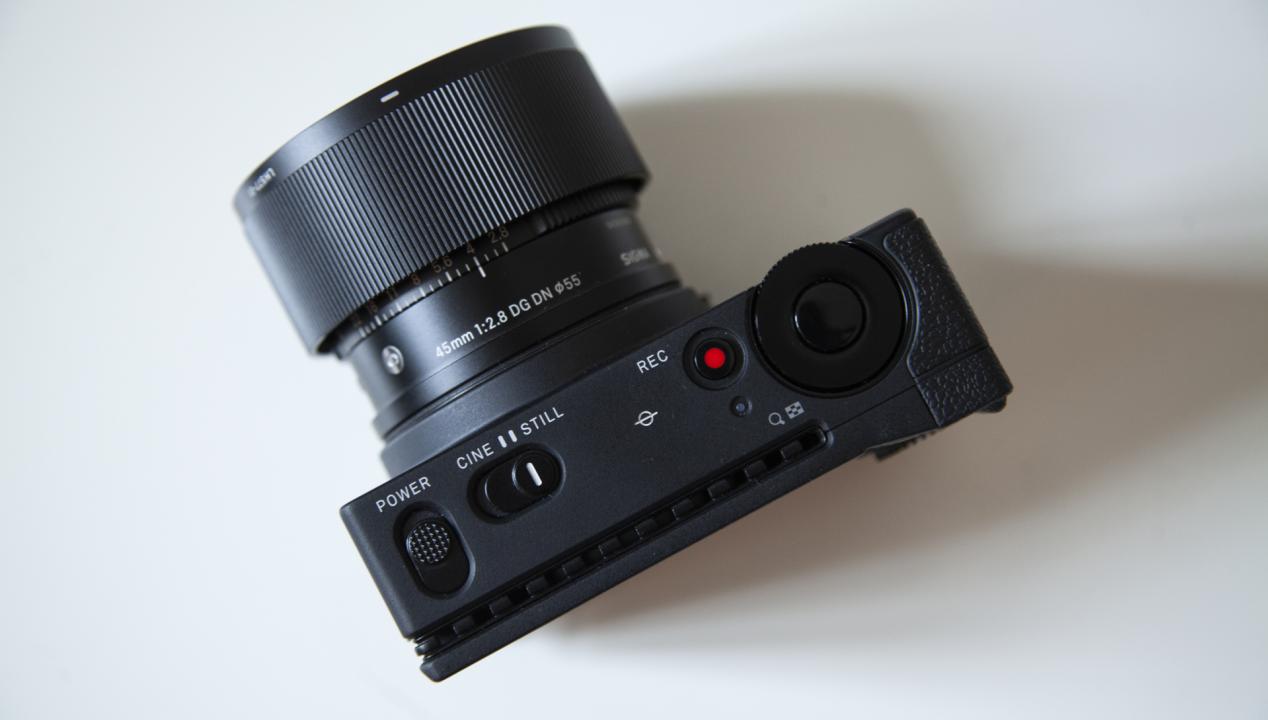
What makes the fp L unique is that this sensor is housed in a body roughly the size of a deck of cards. Sigma achieved this by omitting a mechanical shutter entirely, relying instead on a high-speed electronic shutter. This choice allows for a completely silent shooting experience, which is a major advantage for candid street photography and quiet event coverage. When considering how to pair such a high-resolution sensor with the right optics, many enthusiasts start by checking the camera lenses price in pakistan to identify the high-resolving primes necessary to take full advantage of those 61 megapixels.
Modular Design: The Camera That Grows With You
The fp L is not a "finished" camera in the traditional sense; it is a core module around which you build your ideal system. It features a heat-sink design that allows for long recording times and 1/4-inch tripod threads on both sides and the bottom, allowing it to be rigged in various orientations. You can attach the optional EVF-11 electronic viewfinder for a more traditional shooting experience, or strip it down to the bare essentials for a minimalist setup.
This modularity is particularly appealing to the modern hybrid creator. One day, the fp L can be a high-resolution stills camera for a fashion shoot; the next, it can be the heart of a professional cinema rig with external SSD recording and a PL-mount adapter. This flexibility ensures that the camera doesn't become obsolete as your needs change. Brands like sigma have leaned into this ecosystem by providing a range of "I series" lenses that match the compact aesthetic and high-performance requirements of the fp L body, creating a kit that is as beautiful as it is functional.
Hybrid Excellence: Cinema Features and Color Science
While the 61MP sensor is a stills headline, the fp L is equally famous for its "Director’s Viewfinder" mode and its ability to record 12-bit CinemaDNG RAW externally. This makes it an invaluable tool for cinematographers who need to scout locations or use a small, high-quality "crash cam" on set. The inclusion of the "Teal and Orange" color mode—inspired by Hollywood color grading—has also made it a favorite for creators who want a stylized look straight out of camera.
The fp L also supports Crop Zoom, which utilizes the high pixel count to allow for up to 5x zoom in Full HD without any loss in image quality. This effectively turns a prime lens into a versatile zoom, a feature that is incredibly useful for documentary filmmakers who need to stay light. In Pakistan, professional support for this specialized equipment is vital, and Hope Enterprises serves as the official distributor and camera shop in Lahore, providing the expertise required to rig and maintain these modular systems for the local film industry.
Phase Detection Autofocus and User Experience
One of the major upgrades the fp L brought over the original fp was the inclusion of Phase Detection Autofocus (PDAF). In 2026, while it may not match the AI-driven tracking of the latest flagship sports cameras, it remains fast and reliable for portraits, landscapes, and travel photography. The contrast-detection and phase-detection hybrid system ensures that the camera locks onto subjects accurately, even in challenging lighting.
The user interface of the fp L is also worth noting. It features a dedicated "Still/Cine" switch on the top plate, which completely changes the menu system and UI depending on the mode. This prevents the clutter often found in hybrid cameras where video settings and photo settings are mixed together. The buttons are tactile and well-placed, and the rear dial provides quick access to essential exposure controls.
The Aesthetic and Cultural Impact of the fp L
Beyond the specs, the Sigma fp L has developed a cult following because of its aesthetic. It is a beautiful object that encourages you to take it everywhere. Its "industrial-chic" design is a breath of fresh air in a market filled with identical-looking plastic bodies. It feels like a precision instrument, carved from a single block of aluminum.
For many photographers, the fp L is an antidote to the "overspecified" nature of modern cameras. It doesn't have an articulating screen, and it doesn't have a built-in grip. It forces the user to be more intentional about their gear and their process. This intentionality often leads to better photography, as the user is more engaged with the camera and the environment.
Conclusion: Still Relevant in 2026?
Revisiting the Sigma fp L in 2026 reveals a camera that has aged remarkably well. Its high-resolution sensor remains competitive, its modular design is still unique, and its image quality is undeniably professional. While it is not a camera for everyone—it requires a bit more thought and "rigging" than a standard mirrorless body—it is precisely this character that keeps it relevant.
- 61MP full-frame sensor offers world-class resolution for landscapes and studio work.
- Modular ecosystem allows for a truly customizable shooting experience.
- CinemaDNG RAW and Director’s Viewfinder modes appeal to professional filmmakers.
- Compact, silent, and beautifully designed for the discerning enthusiast.
The Sigma fp L remains a testament to what happens when a company chooses a unique path. It is a camera for those who value resolution, modularity, and a minimalist aesthetic. In a world of convergence, the fp L stays true to its identity as the world's smallest and most versatile high-resolution full-frame camera.