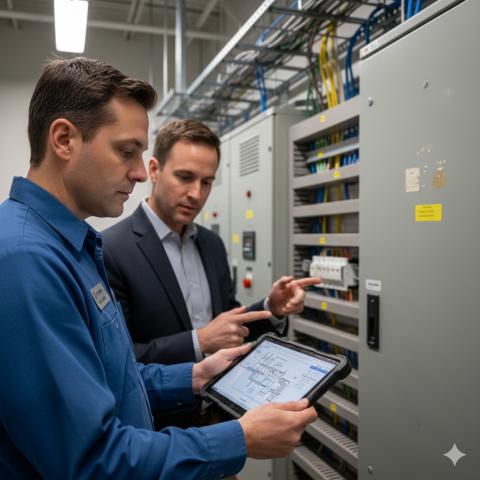
You Don’t Have a Power Issue — You Have a Planning Issue
When breakers trip, lights flicker, or equipment fails, most people immediately blame “power problems.”
After more than a decade in commercial electrical work, I can tell you: what looks like a power problem is almost always a planning problem.
In commercial buildings, power rarely fails because of bad luck. It fails because someone didn’t plan for reality.
Why Power Issues Are Usually Misdiagnosed
People assume electrical failures are random:
“The system just can’t handle it.”
“The building’s old.”
“We must have too many devices.”
These assumptions are misleading. The system isn’t magically weak — it’s been set up to operate close to its limits. Every new load, every added desk, every upgrade pushes it further. Eventually, it trips, flickers, or shuts down.
That’s not a failure of power. That’s a failure of planning.
How Planning Fails in Commercial Buildings
From experience, planning problems usually start at the design stage:
Underestimating load: assuming minimal usage or growth
Sharing circuits: putting critical systems and general loads together
No spare capacity: leaving no room for additional equipment
Ignoring future upgrades: temporary solutions left permanent
Poor coordination: lighting, HVAC, and IT designed separately
Every shortcut may “work” on day one, but it quietly stacks risk until it’s too late.
Silent Problems Reveal Themselves Slowly
Planning failures often hide behind minor issues at first:
Flickering lights only during peak load
Breakers tripping occasionally
Servers or equipment restarting unexpectedly
Maintenance teams troubleshooting “mystery” outages
Because these problems aren’t constant, they get ignored. But they are symptoms of poor planning, not random faults.
Why Experienced Electricians Push Back
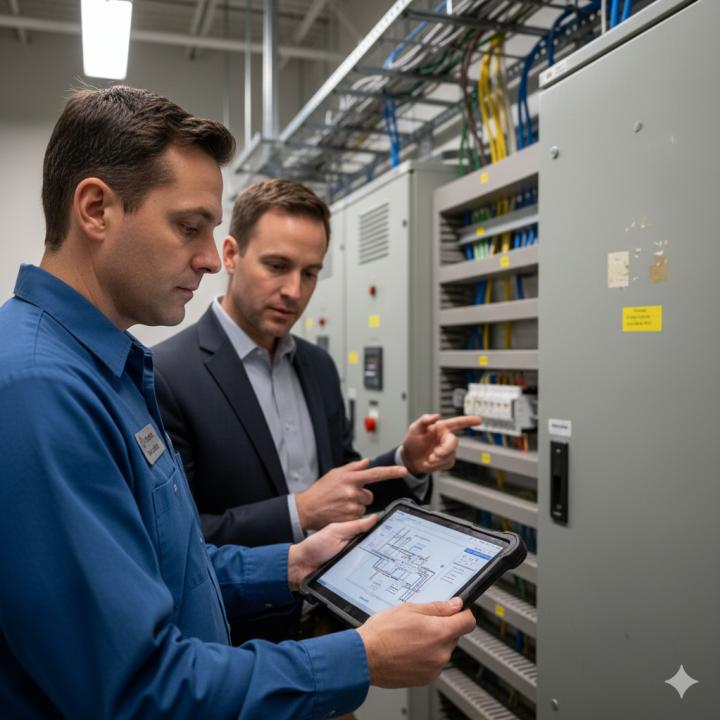
A skilled Commercial Electrician Sydney knows that planning is everything. They don’t just install circuits:
They calculate realistic load, including growth
They separate critical systems from general loads
They design for peak usage, redundancy, and maintenance
They anticipate upgrades before they’re requested
Pushback isn’t being difficult — it’s foresight. Planning prevents small issues from becoming expensive failures.
Real Cost of Bad Planning
When planning is ignored, “power issues” become expensive:
Emergency call-outs during business hours
Downtime affecting staff and tenants
Equipment damage or shortened lifespan
Unexpected upgrades
Lost productivity
Every dollar spent fixing symptoms could’ve been prevented with proper planning.
Red Flags Your Building Is Suffering Planning Failures
Power issues only appear under load
New equipment causes trips or flickering
Boards are full with no spare capacity
Maintenance is constantly reactive
Temporary fixes have become permanent
If these exist, the problem isn’t the power — it’s how the system was planned and designed.
The Takeaway
In commercial electrical work, blaming “power” is like blaming the hammer for a crooked nail.
The truth is simple: you don’t have a power issue — you have a planning issue.
And the best way to prevent future failures is to involve electricians who think beyond today, design for tomorrow, and respect that commercial buildings demand foresight, not just installation.
Because in commercial buildings, planning always determines performance — not luck.