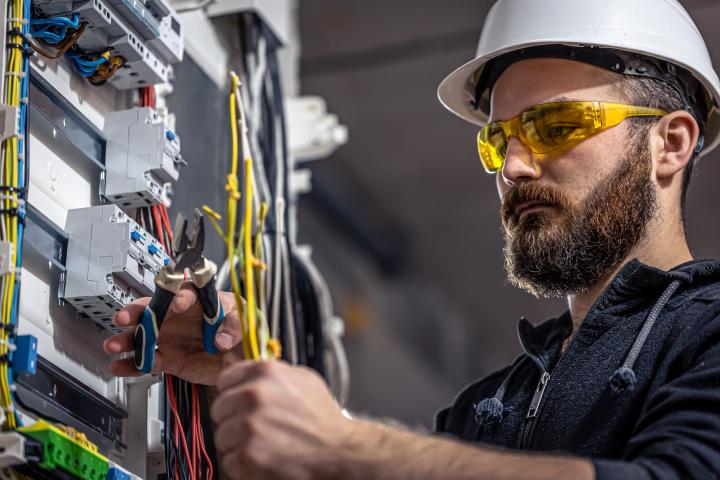
Operating a high-stakes industrial facility in Sydney is a relentless challenge where the electrical infrastructure is the single point of failure. From the manufacturing plants in Smithfield to the massive distribution hubs in Western Sydney, the demand for stable, high-voltage power is the constant heartbeat of the operation. As a contractor and owner, I’ve seen that the biggest threat to your profitability isn't the cost of raw materials—it is the catastrophic cost of unplanned downtime caused by a failure in your electrical backbone.
Industrial work is not simply "commercial work but larger." It is a specialized technical discipline that demands a superior level of engineering, safety awareness, and strategic planning. You need a dedicated
The Engineering Divide: Why Industrial Load Management is Unique
The biggest misconception in the trade is that electricity is a "one size fits all" utility. In the industrial world, the physics of power change completely. You aren't just powering lights and computers; you are driving massive inductive loads and sensitive automation logic that creates significant electrical noise and demand spikes.
Mastering Three-Phase Power and Inductive Loads
Almost every piece of heavy machinery in a Sydney plant operates on three-phase power. While this system is highly efficient for torque and heavy lifting, it is notoriously sensitive to phase imbalance. If your phases are even slightly out of alignment, your motors will hum, vibrate, and run significantly hotter than their design specifications. This excess heat is the silent killer of winding insulation.
Automation Integrity and PLC Troubleshooting
Modern industry is driven by Programmable Logic Controllers (PLCs).
Compliance as a Business Safeguard in New South Wales
In an industrial setting, electrical safety isn’t a suggestion; it’s a legal mandate governed by the AS/NZS 3000 standards. For a Sydney plant manager, compliance is the primary defense against workplace accidents and the resulting legal or insurance nightmares that can bankrupt a business.
Thermal Imaging: Finding the Hot Spots Before They Fail
Industrial switchboards operate under immense thermal stress.
Hazardous Area Classification and Site Safety
If your facility handles chemicals, fine dust, or flammable liquids—common in Sydney's chemical and food processing sectors—standard electrical gear is a major liability. Specialized industrial work requires "intrinsically safe" wiring and explosion-proof enclosures.
Slashing Industrial Overheads Through Power Quality
Energy is a massive overhead for any Sydney manufacturer. You can’t control the utility rates, but you can control how much power your facility wastes through poor power quality and inefficient infrastructure.
Power Factor Correction (PFC) and Harmonic Filters
Large motors and variable speed drives (VSDs) create "reactive power" that clogs up your system. Essentially, you end up paying for power that your machines aren't even using effectively. We install Power Factor Correction units that act like a buffer for your electrical system. This ensures you only draw the active power you actually use, often leading to a significant drop in your monthly utility bill. It is one of the fastest returns on investment an industrial business can make.
Industrial LED Retrofitting and Lighting Control
Lighting a massive warehouse 24/7 is a drain on your bottom line. Retrofitting old metal-halide lamps with high-output LEDs isn't just about saving energy; it's about better visibility and workplace safety. By integrating motion sensors and daylight harvesting, we can slash your lighting costs by up to 70%.
Choosing a Technical Partner for the Long Haul
An industrial contractor should be more than a service provider; they should be a strategic partner who understands your production goals. We know that in the Sydney market, you are competing on efficiency and reliability. Our focus is on building redundant, robust, and efficient electrical systems that allow you to focus on your output while we handle the power behind it. Your facility is a massive investment—make sure the person working on its most critical system understands the weight of your operations.