fortrabbit Review 2026 — Professional PHP Cloud Hosting Explained
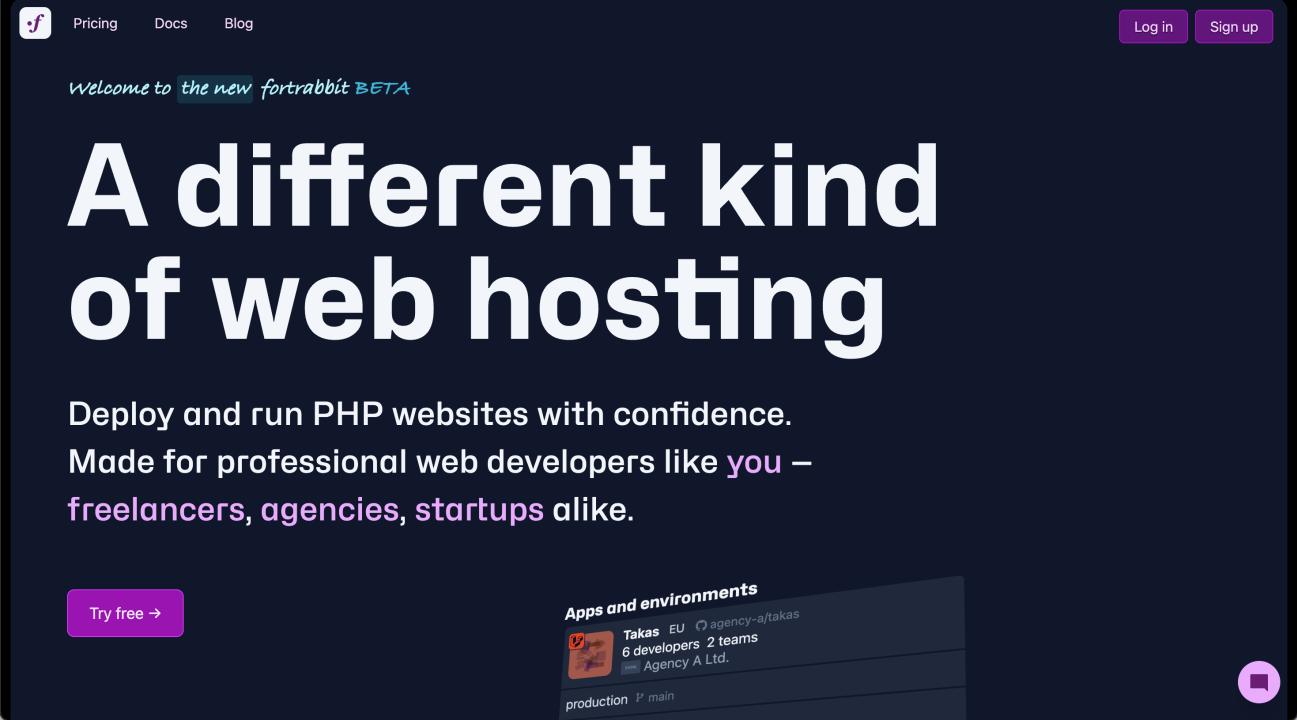
fortrabbit is a managed PHP cloud hosting platform that provides developers and businesses with a modern alternative to traditional shared hosting and self-managed servers. The service focuses on app-centric hosting, scalable infrastructure, and developer-friendly deployment workflows.
Overview: What Is fortrabbit?
fortrabbit is designed primarily for PHP applications, including websites built on Laravel, Symfony, Craft CMS, WordPress, Kirby, Statamic, and other PHP-based frameworks and content management systems. The platform runs on cloud infrastructure (AWS) and abstracts away server management tasks so developers can concentrate on code and performance.
Unlike traditional hosting with cPanel or VPS services where you manage your own environment, fortrabbit provides Platform as a Service (PaaS)->
Key Features and Technical Capabilities
Modern Developer Workflows
fortrabbit supports Git deployments (push to deploy), Composer integration, and automated build processes, which are essential for professional PHP development workflows. This enables rapid iteration and continuous deployment without manual server configuration.
Each project lives in its own isolated App environment, making staging, testing, and production workflows easier to manage. Apps include built-in collaboration tools, meaning developers and clients can work securely without sharing sensitive credentials.
Managed Infrastructure
The platform takes care of traditional infrastructure tasks such as operating system management, security updates, automatic HTTPS certificates, and performance metrics. This reduces the DevOps burden for developers and teams that do not want to manage raw servers.
Developers have access to SSH and SFTP, and environments can be configured with MySQL databases, scheduled jobs (cron), backups, and monitoring tools — features that support production-ready deployments.
Scalable Component-Based Pricing
fortrabbit pricing is component-based and usage-driven, meaning you pay for the specific resources you allocate (PHP memory, MySQL, traffic, storage, backups, workers). Every App starts with a free trial and is then billed in arrears on actual usage.
This flexible model allows very small projects to be hosted affordably (e.g., basic PHP setups around a few euros per month) while also scaling to larger environments as traffic and complexity grow.
Pricing Structure
fortrabbit pricing is post-paid and prorated daily, so you pay only for the resources you consume during the billing period. There is no fixed monthly tier that bundles unlimited resources — instead, you choose how much memory, database capacity, storage, backup frequency, and traffic you need for each environment.
Examples of component pricing:
- PHP environments start from low tiers around a few euros per month.
- MySQL database tiers scale with storage and redundancy.
- Additional components such as Jobs (background workers), backups, and traffic scale individually.
This gives developers fine-grain control over costs and resource usage, making it possible to tailor hosting budgets to project requirements.
Pros and Strengths
Developer-focused Hosting
fortrabbit is optimized for PHP developers with workflows like Git deployments, Composer integration, and automated SSH/SFTP access. These features align with modern development practices rather than legacy shared hosting paradigms.
Cloud Scalability Without DevOps
The platform abstracts infrastructure management and operational tasks such as scaling, security, backups, and certificate management. Developers can host production applications without managing low-level server configurations.
Flexible Pricing Model
Post-paid, prorated billing and component-level pricing allow teams to scale resources up or down without committing to fixed hosting plans or dealing with overprovisioning.
Multiple Environments per App
Production, staging, and preview environments are supportable within the same workflow, helping teams to roll out updates confidently.
Cons and Considerations
PHP-Only Support
Because fortrabbit is dedicated to PHP hosting, developers working with Node.js, Python, Ruby, or other technology stacks must look elsewhere. This limits versatility for full-stack teams.
Learning Curve for Beginners
The developer-centric approach means there is a learning curve for users accustomed to cPanel or traditional shared hosting environments. Some initial setup steps require familiarity with Git and deployment pipelines.
No Domain Registration or Email Hosting
fortrabbit focuses on application hosting, not domain registration or bundled email services. These must be managed via third-party providers.
Support Availability
Support is available during business hours and users sometimes note response times vary. For teams needing 24/7 dedicated support, this could be a factor.
Use Cases — Who Should Consider fortrabbit?
- Freelance PHP developers looking for efficient deployment workflows and modern tooling.
- Agencies hosting multiple client projects with isolated environments.
- Startups requiring scalable hosting that grows with product demand.
- Projects built with Laravel, Symfony, Craft CMS, WordPress, or other PHP frameworks.
fortrabbit is less suited to users who want turnkey shared hosting, domain-email bundles, or general purpose webhosting with non-PHP stacks.
SEO and Keyword Optimization
This article includes keywords and phrases that align with developer and technical hosting search intent, such as:
- PHP cloud hosting
- Managed PHP hosting
- Git deployment hosting
- Scalable PHP application hosting
- PHP PaaS provider
- Laravel and Symfony hosting
- Cloud hosting for developers
- Post-paid hosting billing
These terms help capture organic search demand from developers, CTOs, and technical decision-makers researching hosting platforms.
Conclusion
fortrabbit stands out in 2026 as a developer-centric, scalable PHP hosting platform with modern deployment workflows, transparent component-based pricing, and managed infrastructure. It is best suited for professional PHP projects where control, scalability, and workflow efficiency matter more than traditional shared hosting conveniences.