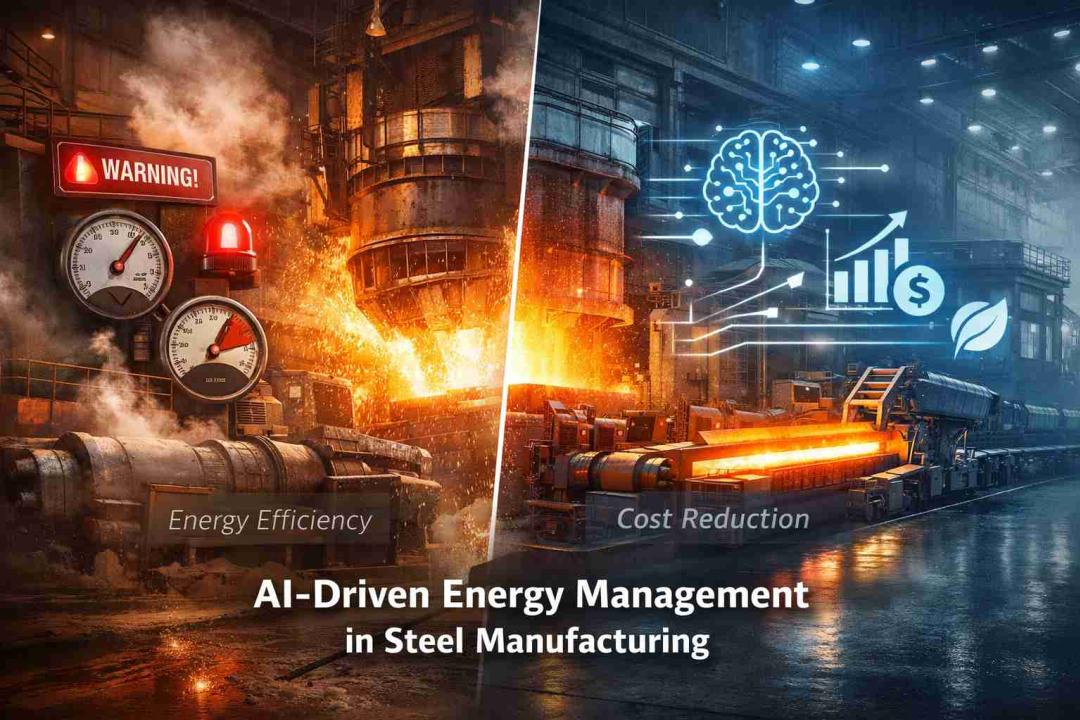
Steel manufacturing is one of the most energy-intensive industrial processes in the world. From blast furnaces and rolling mills to compressors, reheating furnaces, and utilities, energy consumption directly impacts production cost, margins, and sustainability goals. This is why many steel plants today are actively searching for practical ways to improve energy efficiency without disturbing production stability.
This is
where Greenovative AI-driven energy
management systems are creating real impact in steel manufacturing.
The
Energy Challenge in Steel Plants
Steel
plants deal with complex and continuous operations. Energy is consumed across
multiple processes such as melting, casting, rolling, cooling, compressed air,
steam, water, and auxiliary systems. Traditionally, energy monitoring in steel
plants relies on dashboards, reports, and monthly reviews. While this provides
visibility, it does not always translate into actionable savings.
Common
challenges faced by steel manufacturers include:
- Difficulty linking energy
consumption with production output
- Hidden energy losses during
idle running and shift changes
- Inconsistent operating
practices across furnaces and mills
- Reactive actions after energy
bills or alarms
- Limited clarity on where
energy waste actually occurs
These
issues result in higher operating costs, unstable Specific Energy Consumption (SEC),
and difficulty in meeting sustainability targets.
How AI
Transforms Energy Management in Steel Manufacturing
AI changes
the role of energy management from monitoring to decision support and
optimisation.
An
AI-based energy management system continuously analyses real-time data from
meters, process systems, and utilities. Instead of only showing what happened,
it explains why it happened and what to do next.
Key
benefits of AI-driven energy management in steel plants include:
1.
Real-time Energy Intelligence
AI monitors energy consumption across furnaces, rolling mills, compressors, and
utilities every minute. It learns normal operating patterns and instantly
detects abnormal behaviour before losses grow.
2.
Production-Linked Energy Optimisation
Unlike static reports, AI correlates energy usage with production volume,
product mix, and operating conditions. This helps plants identify whether
energy increase is justified or avoidable.
3.
Prescriptive Recommendations
AI does not stop at alerts. It prescribes clear actions such as load
optimisation, scheduling changes, setpoint corrections, or equipment shutdowns,
prioritised by cost and impact.
4.
Standardisation Across Plants and Shifts
In steel manufacturing, different shifts often operate the same equipment
differently. AI ensures best practices are consistently followed, reducing
dependency on individual expertise.
5.
Improved Sustainability and Emissions Control
By reducing energy waste, AI directly lowers carbon emissions. It also supports
better tracking of energy intensity and sustainability performance for
reporting and audits.
Real-World
Impact in the Steel Industry
Steel
manufacturers using AI-driven energy management have reported:
- Reduction in overall energy
consumption
- Improved Specific Energy Consumption
(SEC)
- Lower peak demand charges
- Better utilisation of furnaces
and utilities
- Faster identification of
energy losses
In one
real scenario, rising energy consumption was initially attributed to increased
production. AI analysis revealed the actual cause: higher idle running of
auxiliary equipment during non-production hours. Corrective actions led to
measurable energy savings without any capital investment.
Why AI
Matters for Long-Term Steel Industry Growth
Energy
costs are no longer just an operational issue. They are a strategic factor
influencing competitiveness, sustainability commitments, and profitability. As
steel plants scale operations, manual energy control becomes difficult to
sustain.
AI
provides a scalable way to:
- Maintain energy discipline
across large operations
- Support decarbonisation and
sustainability goals
- Improve cost predictability
and operational stability
- Enable smarter, data-driven
decisions at every level
For steel
manufacturers aiming to balance production excellence with energy efficiency,
AI is no longer optional. It is becoming a core part of modern steel
operations.
Explorehow AI can improve energy efficiency in steel manufacturing