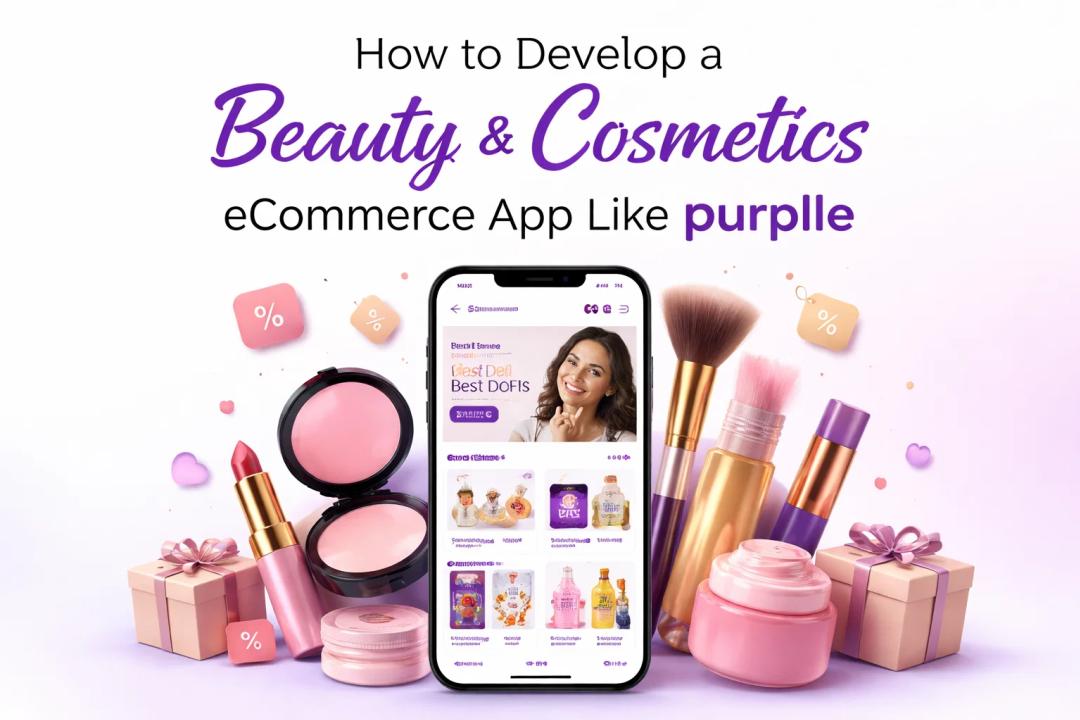
The beauty and cosmetics industry has witnessed massive digital transformation in recent years. Consumers now prefer discovering, comparing, and purchasing skincare, makeup, and wellness products through mobile apps rather than physical stores.
If you’re planning to develop a beauty & cosmetics eCommerce app like Purplle, you need more than just product listings. You need personalization, influencer-driven engagement, AI recommendations, and seamless checkout experiences.
This guide explains everything you need to know — from features and technology to cost and monetization strategy.
Step-by-Step Process to Develop a Beauty eCommerce App
1. Market Research & Target Audience
Before starting cosmetic shopping app development, define:
- Your target segment (luxury, affordable, organic, vegan, dermatologist-backed, etc.)
- D2C brand or multi-vendor marketplace?
- Popular product categories (skincare, haircare, makeup, fragrance)
- Competitive differentiation (discount-driven, premium, influencer-led, etc.)
Clear positioning helps define features and monetization.
2. Choose the Business Model
You can select from:
Inventory-Based Model
You sell your own beauty products.
Marketplace Model
Multiple brands sell through your platform, and you earn commission.
Hybrid Model
Private label + third-party brands.
Most beauty platforms adopt hybrid models to scale faster.
3. Essential Features for Beauty & Cosmetics App
Beauty shoppers expect discovery, trust, and personalization.
User Panel Features
- Easy registration/login
- Advanced search & filters (skin type, concern, brand, price)
- AI-based personalized recommendations
- Product videos & tutorials
- Detailed ingredient information
- Reviews & ratings
- Wishlist & save for later
- Secure checkout & multiple payment options
- Order tracking
- Easy returns
- Push notifications for offers
- Subscription or auto-replenishment option
Advanced Features (Competitive Edge)
- Virtual Try-On (AR for lipstick, foundation, etc.)
- AI Skin Analysis Tool
- Beauty Quiz for personalized suggestions
- Influencer & creator storefronts
- Live shopping integration
These features significantly improve engagement and conversion rates.
Admin Panel Features
- Product & brand management
- Inventory management
- Discount & campaign management
- Banner & promotion control
- Customer analytics dashboard
- Return & refund management
Vendor Panel (If Marketplace)
- Seller onboarding
- Product upload & management
- Inventory tracking
- Commission calculation
- Sales performance reports
4. UI/UX Design Strategy
Beauty apps must feel elegant and trendy.
Focus on:
- Soft color palettes
- Clean product display
- High-resolution product images
- Video content integration
- Personalized homepage
- Smooth checkout experience
A visually appealing design improves retention.
Cost to Develop a Beauty eCommerce App
Ecommerce app development cost depends on features and complexity.
Basic MVP
Product listing + checkout + admin panel
Estimated Cost: $5,000 – $8,000
Mid-Level App
Vendor panel + analytics + personalized recommendations
Estimated Cost: $10,000 – $15,000
Advanced App (Like Purplle)
AI skin analysis + AR try-on + influencer integration
Estimated Cost: $15,000+
The final cost depends on customization and integrations.
Future Trends in Beauty eCommerce
- AI-powered virtual beauty advisors
- Personalized skincare subscriptions
- Live commerce integration
- Clean & sustainable beauty focus
- Community-based shopping
- Voice search & smart assistants
Adopting these trends early can differentiate your platform.
Final Thoughts
Developing a beauty & cosmetics eCommerce app like Purplle requires:
- Clear niche positioning
- Advanced personalization features
- Strong UI/UX design
- Scalable backend architecture
- Smart monetization strategy
With proper planning and execution, a beauty eCommerce app development services can build a high-retention, repeat-purchase digital brand.