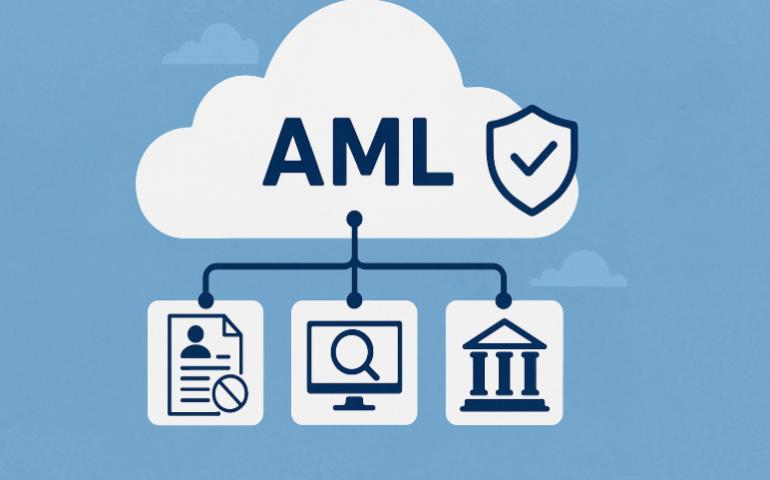

In today’s rapidly evolving financial landscape, businesses face increasing pressure to comply with stringent regulations and combat financial crimes. Anti-Money Laundering (AML) solutions have become critical tools for organizations looking to protect themselves from risks associated with money laundering, fraud, and terrorist financing. A robust AML strategy not only ensures regulatory compliance but also strengthens customer trust and business integrity.
What is an AML Solution?
An AML solution is a comprehensive system designed to detect, prevent, and report suspicious financial activities. It integrates various processes, tools, and technologies to monitor transactions, verify customer identities, and maintain regulatory compliance. Organizations across banking, fintech, insurance, and other financial sectors rely on AML solutions to mitigate risks and maintain operational transparency.
These solutions typically include modules for AML verification, transaction monitoring, sanctions screening, and case management. By automating these processes, businesses can efficiently detect potential risks while minimizing manual intervention and human error.
The Importance of AML Verification
At the core of any AML solution is AML verification, a process that ensures all clients and transactions meet regulatory standards. AML verification involves confirming the identity of customers through KYC (Know Your Customer) checks, screening against sanction lists, and ongoing monitoring of their financial activities.
By implementing AML verification, businesses can:
Prevent onboarding high-risk individuals or entities.
Detect suspicious activities before they escalate into legal or financial issues.
Comply with local and international regulations, avoiding hefty fines.
Build customer confidence by demonstrating a commitment to secure and compliant operations.
AML verification is particularly essential in industries like banking and cryptocurrency, where regulatory scrutiny is high and the potential for financial crime is significant.
Key Components of an Effective AML Solution
A well-rounded AML solution incorporates several core components that work together to ensure comprehensive risk management:
1. Customer Identity Verification
This module focuses on validating the identity of customers during onboarding. By leveraging government-issued IDs, biometric verification, and document checks, organizations can ensure that only legitimate clients gain access to their services. AML verification plays a critical role here, enabling real-time checks against global watchlists and sanction databases.
2. Transaction Monitoring
Transaction monitoring systems track financial transactions for patterns indicative of money laundering. These systems use rules-based engines or advanced AI algorithms to detect anomalies, such as unusual transaction amounts, high-risk jurisdictions, or suspicious account behavior. Timely alerts enable compliance teams to investigate and act before issues escalate.
3. Sanctions and PEP Screening
AML solutions incorporate sanctions and Politically Exposed Persons (PEP) screening to identify high-risk individuals or organizations. This ensures that businesses do not inadvertently engage with sanctioned entities or politically exposed individuals, which could result in reputational damage or legal penalties.
4. Case Management
Once a suspicious activity is detected, case management tools help compliance teams investigate, document, and report findings efficiently. This module ensures that all regulatory reporting requirements are met and that audits can be conducted seamlessly.
5. Regulatory Compliance Reporting
AML solutions provide reporting tools that generate required filings for regulatory authorities. Automated reports reduce administrative burden, enhance accuracy, and demonstrate a business’s commitment to maintaining a compliant operation.
Benefits of Implementing an AML Solution
Adopting a robust AML solution offers several advantages:
Regulatory Compliance: Ensures adherence to local and international AML laws, avoiding fines and legal complications.
Risk Mitigation: Detects and prevents financial crimes, reducing operational and reputational risks.
Operational Efficiency: Automates manual compliance processes, saving time and resources.
Enhanced Customer Trust: Demonstrates a commitment to secure financial practices, attracting and retaining clients.
Data-Driven Insights: Advanced AML systems provide analytics and insights to improve decision-making and risk assessment.
Trends in AML Solutions for 2026
The AML landscape is evolving rapidly, with emerging technologies shaping how businesses approach compliance:
Artificial Intelligence and Machine Learning: AI-powered AML solutions can analyze vast datasets, identify patterns, and detect sophisticated money laundering schemes that traditional rule-based systems might miss.
Blockchain Integration: Blockchain technology provides transparency and traceability in financial transactions, enabling more effective AML verification and risk management.
Real-Time Monitoring: Real-time AML verification and transaction monitoring help organizations respond instantly to suspicious activities, improving efficiency and security.
RegTech Solutions: Regulatory technology (RegTech) platforms are being integrated into AML systems to simplify compliance management and reduce regulatory burden.
Choosing the Right AML Solution
Selecting the right AML solution requires a careful evaluation of business needs, regulatory requirements, and technological capabilities. Organizations should consider:
Scalability: Can the solution handle growing transaction volumes and customer bases?
Accuracy: How precise are the AML verification and transaction monitoring tools?
Integration: Does the solution seamlessly integrate with existing banking, fintech, or business systems?
Compliance Coverage: Does it support local and international regulatory requirements?
Reporting Capabilities: Are automated reports accurate, comprehensive, and audit-ready?
Conclusion
In an era where financial crimes are increasingly sophisticated, investing in an AML solution is no longer optional but a necessity. From AML verification to transaction monitoring and regulatory reporting, these solutions empower organizations to protect their operations, maintain compliance, and build trust with clients.
As technology continues to advance, businesses that adopt modern, AI-driven AML solutions will not only mitigate risks effectively but also gain a competitive advantage in the financial sector. Ensuring robust AML practices today safeguards financial integrity and prepares organizations for the challenges of tomorrow.