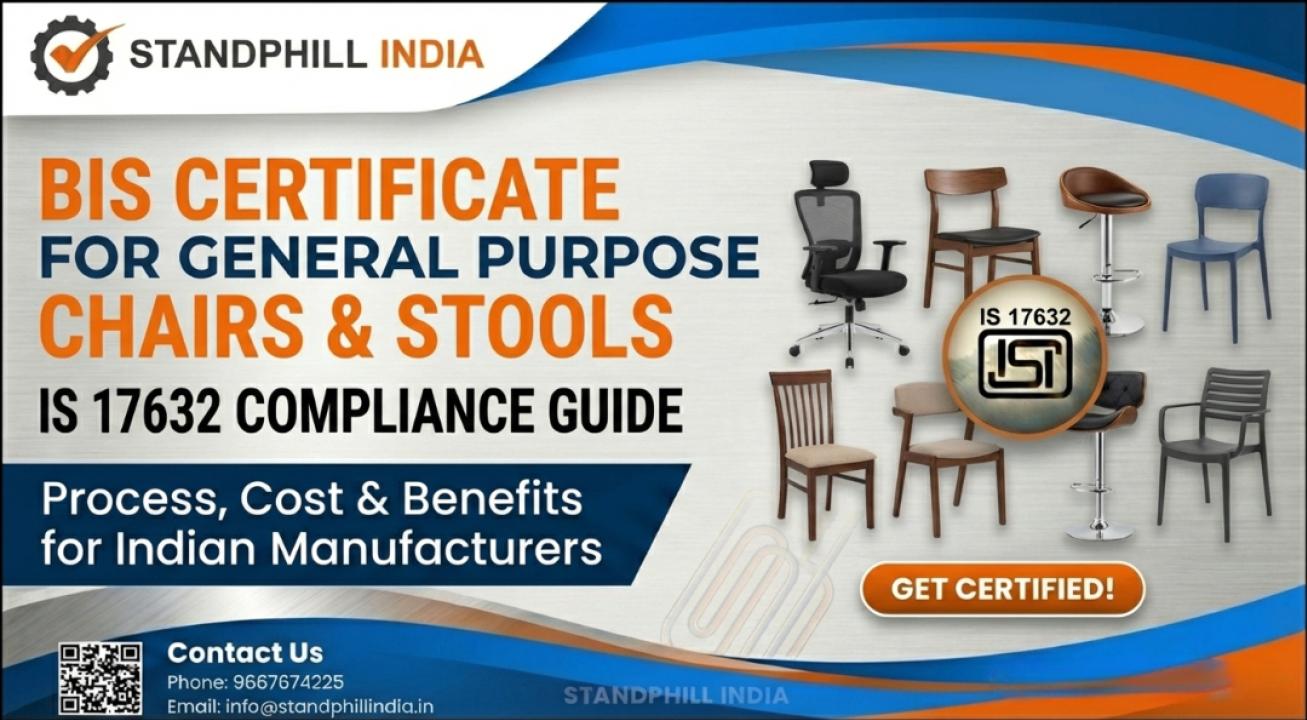
The Indian furniture industry is rapidly growing, driven by rising consumer demand, real estate expansion, and increasing quality awareness. To ensure product safety and standardization, the Government of India has made compliance with Bureau of Indian Standards (BIS) regulations mandatory for specific furniture categories. Obtaining bis certificate approval is now a crucial requirement for manufacturers and importers who want to legally sell furniture products in India.
This complete guide explains everything you need to know about BIS certification for furniture, including its importance, applicable standards, process, and benefits.
What is BIS Certification?
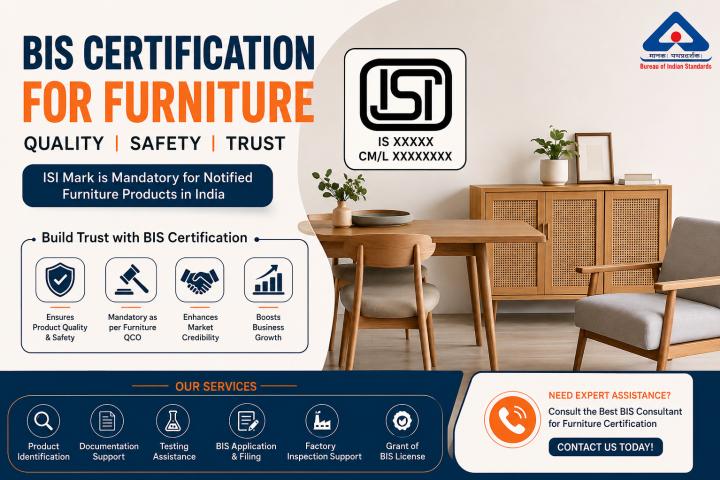
The Bureau of Indian Standards (BIS) is the national standards body of India responsible for ensuring product quality, safety, and reliability. Products covered under mandatory Quality Control Orders (QCOs) must comply with specific Indian Standards and bear the ISI Mark before being sold in the Indian market.
For furniture products, BIS certification confirms that items meet prescribed standards related to strength, stability, durability, and safety.
Why is BIS Certification for Furniture Mandatory?
The Indian government introduced mandatory certification for certain furniture products to:
- Ensure consumer safety
- Maintain structural durability and performance standards
- Prevent the sale of substandard or low-quality products
- Promote fair trade practices
- Strengthen domestic manufacturing quality
Without BIS approval, manufacturers and importers may face penalties, product seizures, or restrictions on market access.
Furniture Products Covered Under BIS
Depending on government notifications and applicable Indian Standards, certification may apply to:
- Office chairs
- Tables and desks
- Storage units
- Beds and bunk beds
- Domestic and institutional furniture
Each product category must comply with its respective Indian Standard (IS code).
BIS Certification Process for Furniture
The certification process generally includes the following steps:
1. Identify Applicable Indian Standard
Determine the relevant IS code applicable to your specific furniture product.
2. Documentation Preparation
Prepare required documents such as:
- Business license
- Manufacturing details
- Factory layout
- Quality control procedures
- Product specifications
3. Product Testing
Furniture samples must be tested in a BIS-recognized laboratory to verify compliance with prescribed standards.
4. Factory Inspection
BIS officials may conduct a factory inspection to assess manufacturing capability and quality control systems.
5. Grant of License
Upon successful verification and compliance, BIS grants the license to use the ISI Mark.
Key Benefits of BIS Certification for Furniture
Legal Market Access
Certification ensures compliance with Indian regulations, allowing smooth sales and distribution.
Enhanced Brand Credibility
Consumers prefer certified products that guarantee safety and durability.
Competitive Advantage
Certified manufacturers gain preference in government tenders and large institutional orders.
Reduced Legal Risks
Avoid penalties, customs delays, and product rejections.
Improved Product Quality
Compliance improves internal quality control and production standards.
Consequences of Non-Compliance
Failure to obtain mandatory certification can result in:
- Heavy penalties
- Product recalls
- Import restrictions
- Legal action under the BIS Act
- Damage to brand reputation
Compliance is not just a legal obligation—it is a strategic business necessity.
How Professional Assistance Helps
The BIS certification process involves technical documentation, coordination with laboratories, regulatory understanding, and inspection preparation. Professional consultancy support helps businesses:
- Identify correct standards
- Prepare accurate documentation
- Avoid application errors
- Reduce approval timelines
- Ensure smooth communication with BIS authorities
Conclusion
BIS certification for furniture is a mandatory and essential requirement for manufacturers and importers operating in India. It ensures that products meet national quality benchmarks and enhances consumer trust in the brand.
By securing a <a href="https://standphillindia.in/">bis certificate</a>, businesses can confidently enter the Indian market, expand distribution networks, and establish long-term credibility in the competitive furniture industry.
If you are planning to manufacture or import furniture in India, starting the certification process early will help you avoid delays and stay compliant with regulatory requirements.