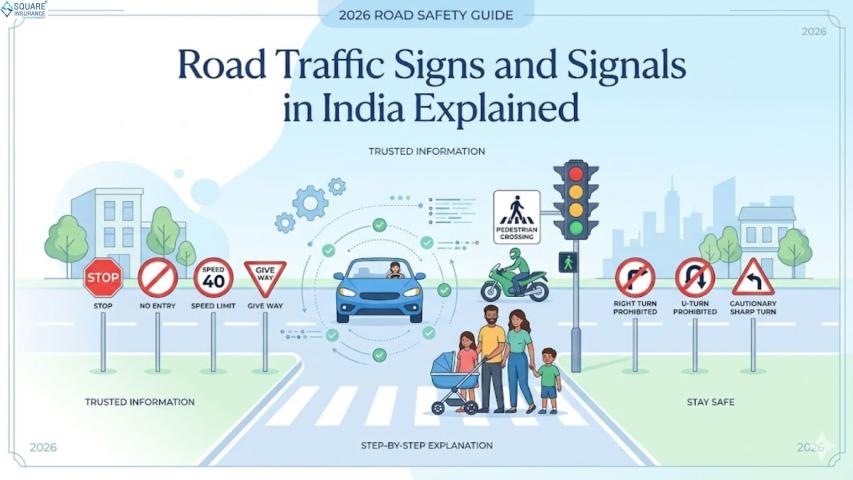
In India, traffic signs and signals are
standardized by the Ministry of Road Transport and Highways (MoRTH)
and follow the guidelines mentioned in the Motor Vehicles Act, 1988. These
signs help reduce accidents, improve traffic flow, and ensure safety for everyone
on the road.
This guide explains the important traffic signs and signals in India, their meanings, and
why every road user must understand them.
What Are Traffic Signs and Signals?
Traffic signs and signals are visual indicators
placed along roads to regulate, warn, or
guide road users. They help drivers make quick decisions and maintain
discipline while driving.
These signs are usually placed at
intersections, highways, city roads, and pedestrian crossings. Their colors,
shapes, and symbols are standardized so that drivers can recognize them
instantly.
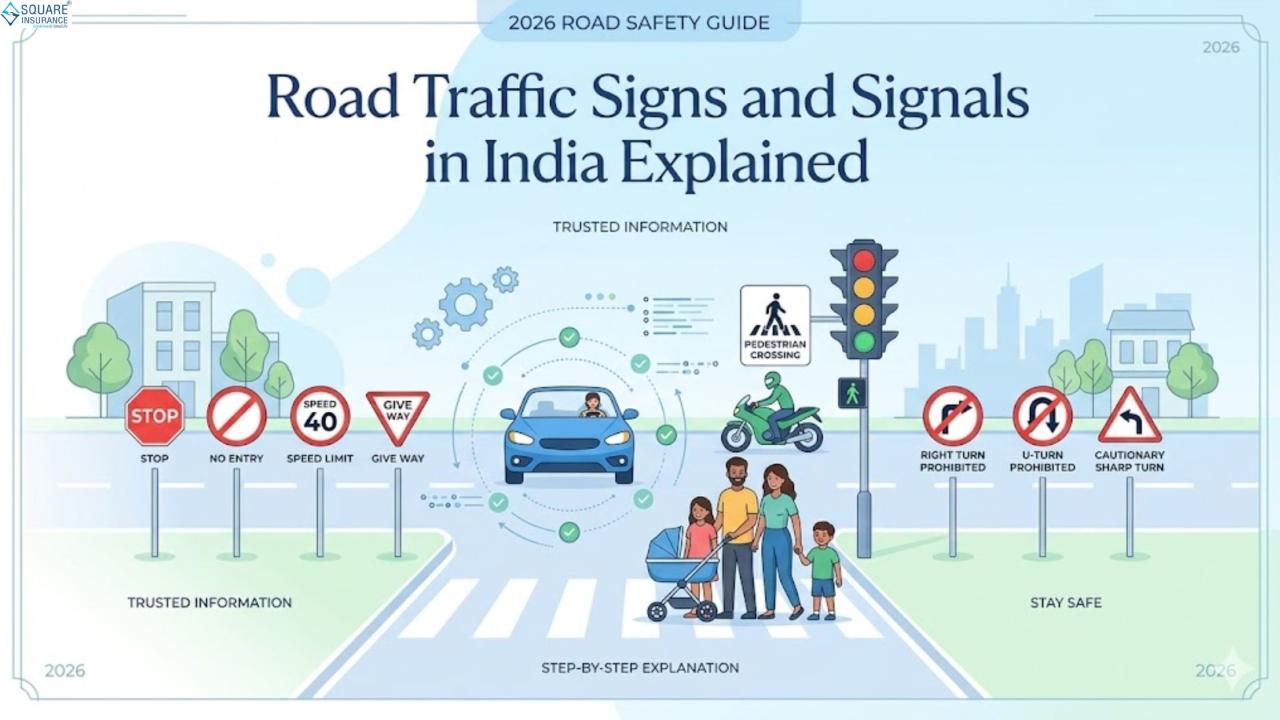
Traffic signs in India are broadly divided
into three main categories:
1.
Mandatory Signs (Regulatory Signs)
2.
Cautionary Signs (Warning Signs)
3.
Informatory Signs (Guide Signs)
Understanding these categories helps drivers
follow traffic laws correctly and avoid penalties.
1. Mandatory Traffic
Signs in India
Mandatory signs are also known as regulatory signs. These signs indicate
rules that drivers must follow. Ignoring these signs can result in traffic
fines or legal action.
Mandatory signs are usually circular in shape with a red border.
Some common mandatory traffic signs include:
Stop Sign
The Stop
sign requires drivers to bring their vehicle to a complete halt before
proceeding. It is commonly placed at intersections where visibility is limited.
No Entry
This sign indicates that vehicles are not
allowed to enter a particular road from that direction.
Speed Limit
Speed limit signs specify the maximum speed allowed on a particular
road. These limits are set to ensure road safety.
No Overtaking
This sign indicates that drivers must not
overtake other vehicles on that stretch of road.
Horn Prohibited
In silent zones such as hospitals, schools, or
residential areas, this sign restricts the use of vehicle horns.
Mandatory signs ensure that drivers follow legal traffic rules, which ultimately
helps reduce accidents and maintain road discipline.
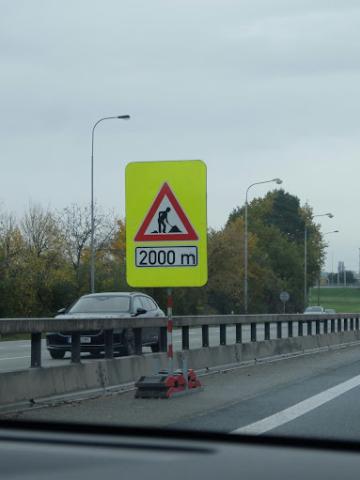
2. Cautionary Traffic
Signs in India
Cautionary signs warn drivers about potential hazards or road conditions ahead.
These signs allow drivers to slow down and take necessary precautions.
These signs are generally triangular with a red border.
Some important cautionary signs include:
Right-Hand Curve
This sign indicates that the road ahead bends
sharply to the right, requiring drivers to slow down.
Narrow Road Ahead
Drivers are warned that the road width will
decrease ahead, which requires careful driving.
Slippery Road
This sign warns that the road surface may be
slippery, especially during rain.
Pedestrian Crossing
Drivers should slow down and watch for
pedestrians crossing the road.
School Ahead
This sign alerts drivers that a school zone is
nearby, requiring reduced speed and extra caution.
Cautionary signs are extremely important
because they help prevent accidents by
informing drivers about upcoming dangers.
3. Informatory Traffic Signs in India
Informatory signs provide useful information
to drivers about services, facilities,
and directions.
These signs are usually rectangular with a blue background.
Common informatory signs include:
Parking Sign
Indicates that parking is allowed in the
designated area.
Hospital Sign
This sign informs drivers that a hospital is
nearby and encourages them to avoid unnecessary honking.
Petrol Pump Sign
Indicates the presence of a fuel station nearby.
Bus Stop Sign
Shows the designated stopping area for buses.
Direction Signs
These signs guide drivers toward cities,
highways, or important destinations.
Informatory signs improve the overall driving experience by providing helpful guidance
to road users.
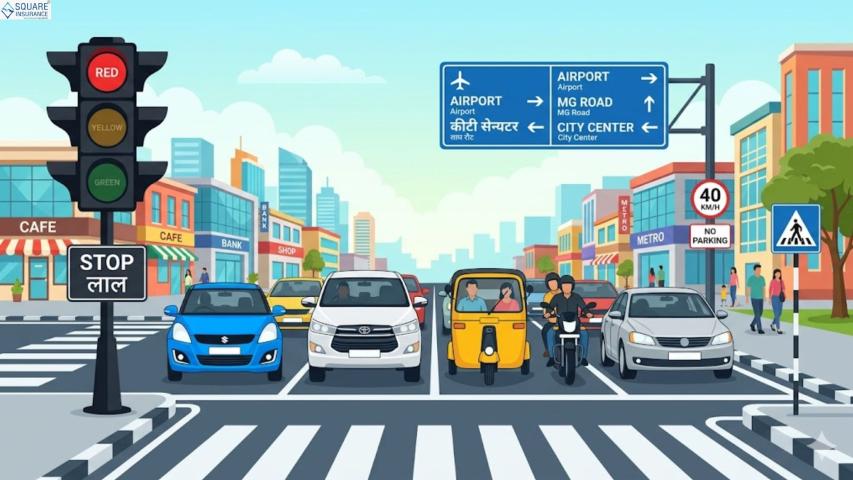
Understanding Traffic Signals in India
Traffic signals are electronic light systems
used at intersections to control the movement of vehicles and pedestrians.
These signals operate using three main colors: red, yellow, and green.
Each signal has a specific meaning that
drivers must follow.
Red Signal
A red light means stop immediately. Vehicles must remain stationary until
the signal changes.
Yellow Signal
The yellow light indicates that the signal is
about to change. Drivers should prepare to stop and avoid accelerating.
Green Signal
A green light means go, but drivers should proceed only if the intersection
is clear.
Traffic signals help regulate traffic flow and
prevent collisions at busy intersections.
Why Traffic Signs and Signals Are Important
Traffic signs and signals are essential for
maintaining road safety and ensuring smooth traffic movement. Their importance
can be understood through several key points.
Improve Road Safety
Traffic signs warn drivers about dangerous
situations such as curves, slopes, or pedestrian crossings, reducing the
chances of accidents.
Maintain Traffic
Discipline
Mandatory signs ensure that drivers follow
rules such as speed limits, no-entry zones, and stopping requirements.
Help New Drivers
For beginner drivers, traffic signs act as
quick guides to understand road conditions and rules.
Support Traffic
Management
Traffic signals manage vehicle flow at busy
intersections and reduce congestion.
Protect Pedestrians
Pedestrian crossings and warning signs help
ensure the safety of people walking on roads.
Penalties for Ignoring Traffic Signs in India
Failing to follow traffic signs and signals
can result in penalties under the Motor
Vehicles (Amendment) Act, 2019.
Some common penalties include:
·
Jumping a red light – Fine up to ₹1,000 or more
·
Overspeeding – ₹1,000 to ₹2,000 depending on the
vehicle type
·
Dangerous driving – Higher penalties and
possible licence suspension
Strict enforcement of these rules encourages
safer driving habits across the country.
Tips for Following Traffic Signs Properly
Drivers should always stay alert and follow
traffic signs carefully. Here are a few helpful tips:
·
Always slow down when approaching intersections
or cautionary signs
·
Pay attention to road markings and signals while
driving
·
Avoid distractions such as mobile phones
·
Maintain safe driving speeds in city and highway
areas
·
Respect pedestrian crossings and school zones
Practicing these habits can significantly
reduce the risk of road accidents.
Frequently Asked Questions (FAQs)
1. What are the main
types of traffic signs in India?
Traffic signs in India are divided into three
main categories: mandatory signs, cautionary signs, and informatory signs.
2. Who regulates
traffic signs in India?
Traffic signs and road safety rules are
regulated by the Ministry of Road Transport
and Highways.
3. What does a yellow
traffic signal mean?
A yellow signal indicates that the light is
about to turn red, and drivers should slow down and prepare to stop.
4. Why are traffic
signs important for drivers?
Traffic signs help drivers understand road
conditions, follow rules, and avoid accidents.
5. What happens if
someone ignores traffic signals?
Ignoring traffic signals can lead to fines,
penalties, or even suspension of the driving licence depending on the
violation.
Conclusion
Understanding road traffic signs and signals in India is essential for
every driver, pedestrian, and road user. These signs provide important
instructions, warnings, and guidance that help maintain safety and discipline
on roads. By following traffic signals and respecting road signs, drivers can
prevent accidents, reduce traffic congestion, and contribute to safer roads for
everyone.
Road
safety is also closely connected with responsible vehicle ownership, which
includes having proper insurance coverage. Reliable insurers such as Square Insurance help vehicle owners
choose suitable motor insurance policies that provide financial protection
against accidents, damages, and unexpected road risks. Choosing the right
coverage along with responsible driving practices ensures a safer and more
secure journey on Indian roads.