When purchasing a vehicle in
Haryana, one of the most important financial obligations apart from
registration and insurance is paying road tax. This tax contributes to the
development and maintenance of roads and transportation infrastructure across
the state. Whether you own a private car, a motorcycle, or a commercial
vehicle, understanding the difference between lifetime and annual road tax can
help you make informed decisions and stay compliant with legal requirements.
Many vehicle owners are confused
about when lifetime road tax applies and when annual tax is payable. This guide
explains the concept of road
tax in Haryana, the differences between lifetime and annual tax, the
factors affecting tax calculations, payment procedures, and why timely payment
is essential for every vehicle owner.
What
is Road Tax in Haryana?
Road tax is a mandatory fee imposed
by the Haryana government on vehicles using public roads within the state. The
collected revenue is used for road construction, maintenance, traffic
management, and transport infrastructure improvements.
Every registered vehicle must pay
road tax according to applicable state regulations. The amount varies depending
on factors such as vehicle type, cost, usage, fuel category, and registration
details.
Failure to pay road tax may lead to
penalties, legal action, or difficulties during vehicle registration and
ownership transfers.
What
is Lifetime Road Tax?
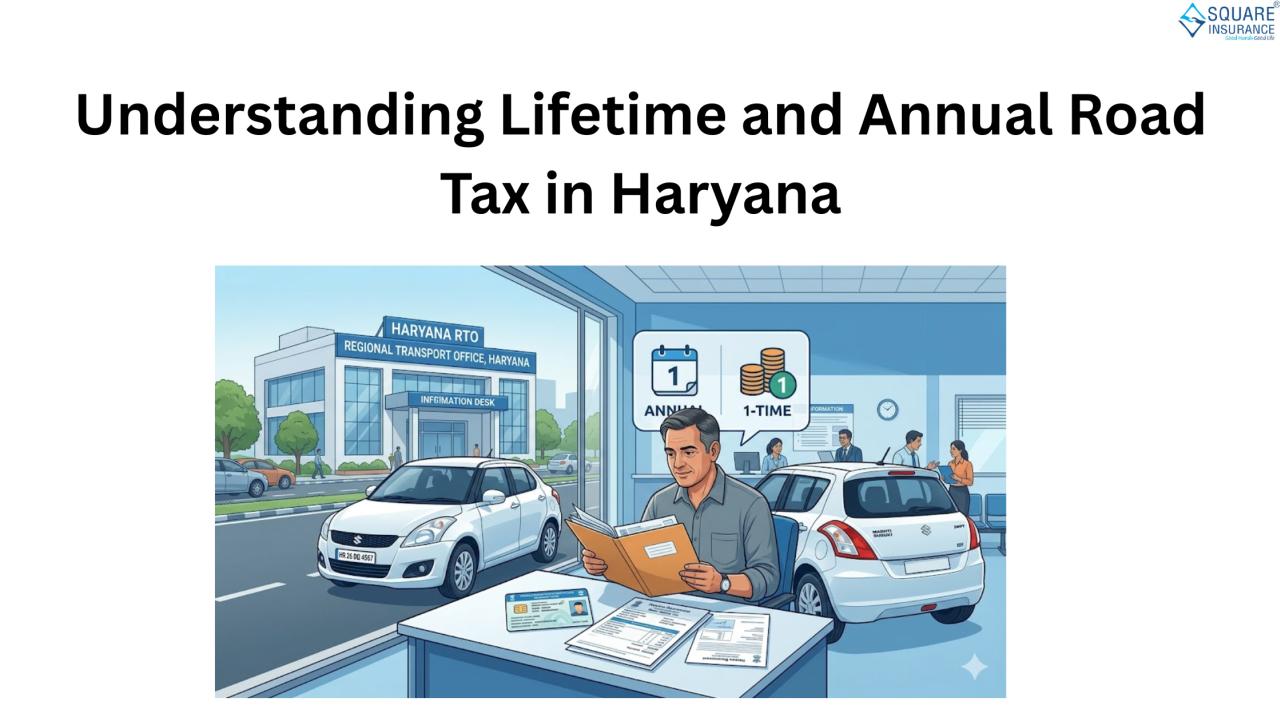
Lifetime road tax is a one-time
payment collected at the time of vehicle registration. Instead of making yearly
payments, the owner pays the prescribed amount once, covering the entire period
specified under state transport rules.
Private vehicle owners commonly pay
lifetime road tax during the purchase and registration process.
Key
Features of Lifetime Road Tax
- Paid only once during registration.
- Mostly applicable to private vehicles.
- Eliminates the need for annual tax renewals.
- Simplifies long-term compliance.
- Reduces administrative formalities for vehicle owners.
For many individuals, lifetime tax
provides convenience by avoiding recurring payment obligations.
What
is Annual Road Tax?
Annual road tax requires vehicle
owners to pay tax every year for continued legal operation of their vehicles.
This structure is generally
applicable to certain commercial vehicles, transport vehicles, and categories
where periodic taxation is prescribed by state authorities.
The amount payable may vary
depending on vehicle capacity, seating arrangement, load-carrying capability,
and usage category.
Key
Features of Annual Road Tax
- Paid every financial year or specified period.
- Commonly applicable to commercial and transport
vehicles.
- Subject to periodic renewal.
- Helps authorities update compliance records regularly.
- May change according to revised government policies.
Owners should ensure timely payment
to avoid penalties and operational restrictions.
How
is Road Tax Calculated in Haryana?
Road tax is not calculated using a
single standard formula for every vehicle. Instead, transport authorities
consider several parameters while determining the payable amount.
Some important factors include:
Vehicle
Cost
Higher-value vehicles generally attract
higher road tax.
Vehicle
Category
Private cars, motorcycles, buses,
taxis, and goods vehicles may have different tax structures.
Fuel
Type
Petrol, diesel, CNG, hybrid, and
electric vehicles may fall under separate taxation policies depending on prevailing
government guidelines.
Seating
Capacity
Commercial passenger vehicles often
have taxes linked to seating capacity.
Gross
Vehicle Weight
Heavy commercial vehicles may be
taxed according to load-carrying capacity.
Government
Notifications
Tax rates may be revised
periodically through state notifications and policy updates.
Vehicle owners should always verify
applicable rates before making payments.
Why
Paying Road Tax is Important
Road tax compliance offers several
benefits beyond fulfilling a legal obligation.
Legal
Authorization
It allows vehicles to operate
lawfully on public roads.
Smooth
Registration Process
Road tax payment is often required
during vehicle registration.
Easier
Ownership Transfer
Vehicles with updated tax records
experience fewer complications during resale or RC transfer.
Avoidance
of Penalties
Timely payment helps avoid fines,
interest charges, or enforcement actions.
Contribution
to Infrastructure
Collected taxes help improve
highways, urban roads, and transport facilities benefiting all road users.
Documents
Commonly Required for Road Tax Payment
While requirements may vary,
applicants generally need:
- Vehicle Registration Certificate (RC)
- Identity proof
- Address proof
- Vehicle invoice (for new vehicles)
- Insurance certificate
- Payment receipts where applicable
- Previous tax records for renewals
- Applicable application forms
Keeping documentation organized
speeds up processing and verification.
When
Should You Pay Road Tax?
For newly purchased private
vehicles, lifetime road tax is generally paid during registration.
For vehicles under annual taxation,
payment should be completed before the due date specified by the transport
authorities.
Owners purchasing used vehicles
should also verify whether outstanding road tax liabilities exist before
completing the transaction.
Can
Road Tax Affect Vehicle Insurance?
Although road tax and motor
insurance are separate legal requirements, both play an important role in
vehicle ownership.
Insurance companies generally expect
vehicles to comply with applicable legal requirements, including registration
obligations.
Maintaining valid insurance
alongside updated tax records demonstrates responsible ownership and helps
avoid unnecessary complications during documentation reviews.
Tips
to Stay Compliant with Haryana Road Tax Rules
Vehicle owners can avoid common
issues by following these practical suggestions:
- Verify tax applicability before vehicle purchase.
- Preserve all payment receipts safely.
- Complete annual payments before deadlines.
- Check vehicle classification carefully.
- Ensure registration records remain updated.
- Keep insurance policies active.
- Review tax obligations before buying second-hand
vehicles.
- Maintain copies of previous payment acknowledgments.
These practices simplify future
registration, renewal, and ownership transfer procedures.
Conclusion
Understanding the difference between
lifetime and annual road tax in Haryana is essential for every vehicle owner.
While lifetime road tax offers the convenience of a one-time payment, annual
road tax requires regular compliance depending on the vehicle category. Knowing
which tax structure applies to your vehicle can help you avoid penalties,
simplify registration-related procedures, and maintain legal compliance.
Alongside fulfilling road tax
obligations, maintaining valid motor insurance is equally important for
financial protection. Square Insurance helps vehicle
owners compare suitable insurance plans and make informed coverage decisions,
ensuring that their vehicles remain protected while meeting essential legal
requirements.
Frequently
Asked Questions (FAQs)
1.
What is lifetime road tax in Haryana?
Lifetime road tax is a one-time
payment generally collected during vehicle registration for eligible private
vehicles.
2.
Which vehicles usually pay annual road tax?
Annual road tax commonly applies to
various commercial and transport vehicles, depending on applicable state
regulations.
3.
Is road tax mandatory for every registered vehicle?
Yes. Paying the applicable road tax
is generally a legal requirement for operating a vehicle on public roads.
4.
Does road tax differ for cars and motorcycles?
Yes. The amount may vary based on
vehicle type, value, engine specifications, and applicable government policies.
5.
Can road tax rates change over time?
Yes. State governments may revise
road tax structures through official notifications and policy updates.