Marketing has changed dramatically over the last decade. Businesses that once depended entirely on newspaper ads, television commercials, billboards, cold calls, and manual campaigns are now shifting toward AI-powered digital marketing systems.
In 2026, companies are competing in a fast-moving digital environment where customer attention is limited and consumer expectations are higher than ever. Modern customers expect personalized experiences, instant communication, and highly relevant content.
This transformation has created a major debate among businesses:
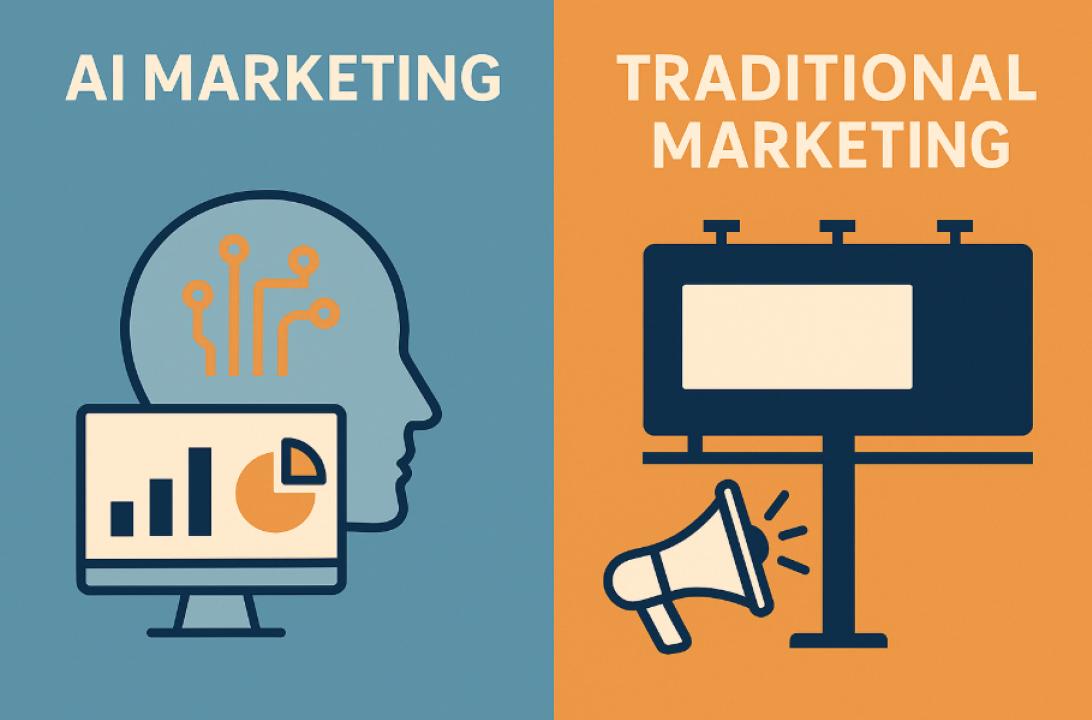
Should companies continue relying on traditional marketing methods, or is AI-driven marketing the better option for future growth?
The answer depends on business goals, target audiences, and scalability requirements. However, one thing is clear — artificial intelligence is rapidly reshaping the marketing industry, especially for growing startups, agencies, and even IT companies in Hebbal Bangalore that want to improve lead generation and customer engagement.
Understanding Traditional Marketing
Traditional marketing refers to conventional promotional methods that businesses have used for decades.
These include:
1 Television advertisements
2 Newspaper and magazine ads
3 Radio promotions
4 Billboards
5 Flyers and brochures
6 Cold calling
7 Physical events and trade shows
Traditional marketing focuses heavily on mass communication. Businesses promote their products or services to large audiences with the hope of reaching potential customers.
For many years, this approach worked effectively because digital platforms were limited.
Even today, traditional marketing still plays an important role for certain industries and local businesses.
The Rise of AI-Powered Marketing
AI marketing uses artificial intelligence, machine learning, automation, and data analytics to optimize campaigns and improve customer targeting.
Unlike traditional marketing, AI-driven systems can:
Analyze customer behavior
Personalize content
Predict customer intent
Automate campaigns
Optimize advertisements
Improve lead generation
Track performance in real time
AI allows businesses to create highly targeted marketing strategies instead of using generalized mass advertising.
This shift is making marketing more efficient, measurable, and scalable.
Many modern startups and IT companies in Hebbal Bangalore are now investing heavily in automation-driven marketing systems to improve customer acquisition and digital visibility.
Personalization: AI’s Biggest Advantage
One of the biggest reasons businesses are adopting AI marketing is personalization.
Traditional marketing typically delivers the same message to everyone. AI marketing, however, can create customized experiences for individual users based on:
1 Browsing behavior
2 Purchase history
3 Search intent
4 Demographics
5 Interests
6 Engagement patterns
For example:
1 E-commerce platforms recommend products based on previous purchases.
2 Streaming services suggest personalized content.
3 Email campaigns automatically adapt to customer behavior.
This level of personalization significantly improves engagement and conversion rates.
Customers today are more likely to interact with brands that understand their preferences and deliver relevant experiences.
Speed and Efficiency
Traditional marketing campaigns often require:
1 Long planning cycles
2 Manual execution
3 Printing and distribution
4 Large advertising budgets
5 Extensive coordination
AI-powered marketing systems operate much faster.
Businesses can launch automated campaigns within minutes and monitor results in real time.
AI tools can also automatically:
1 Adjust ad targeting
2 Optimize budgets
3 Schedule content
4 Analyze performance
5 Generate reports
6 Improve campaign effectiveness
This speed allows businesses to react quickly to market trends and customer behavior.
Companies operating in competitive markets like Bangalore’s growing tech ecosystem are increasingly adopting AI marketing tools to stay ahead of competitors.
Cost Comparison
Traditional marketing can be expensive.
Television commercials, print advertising, and billboard campaigns often require large investments, making them difficult for startups and small businesses to afford.
AI-driven digital marketing is generally more cost-effective because businesses can:
1 Target specific audiences
2 Reduce wasted advertising spend
3 Automate repetitive tasks
4 Track ROI accurately
Small businesses now have access to advanced marketing capabilities that were once available only to large corporations.
This has created a more competitive digital marketplace.
Many IT companies in Hebbal Bangalore are using digital automation strategies to improve marketing performance without significantly increasing operational costs.
Data and Analytics
One of the major limitations of traditional marketing is the lack of precise performance tracking.
Businesses often struggle to measure:
Customer engagement
Conversion rates
Campaign effectiveness
Return on investment
AI marketing provides detailed analytics and real-time insights.
Businesses can track:
Click-through rates
Customer journeys
User behavior
Sales performance
Ad engagement
Audience demographics
These insights help companies make smarter, data-driven decisions.
Instead of relying on assumptions, businesses can optimize campaigns based on actual performance data.
Human Creativity Still Matters
Although AI offers significant advantages, traditional marketing and human creativity still remain valuable.
AI can automate processes and analyze data, but emotional storytelling, brand identity, and creative strategy still require human input.
Many successful businesses are combining AI technology with human creativity to build stronger marketing campaigns.
For example:
AI may identify customer trends.
Human marketers create emotional brand messaging.
Automation distributes campaigns efficiently.
Creative teams build unique experiences.
This hybrid approach is becoming increasingly popular in 2026.
What Works Better in 2026?
In 2026, AI marketing is generally more effective for businesses focused on:
1 Scalability
2 Personalization
3 Lead generation
4 Customer targeting
5 Automation
6 Performance tracking
Traditional marketing still has value, but AI-powered systems offer greater flexibility, efficiency, and measurable results.
Businesses that rely entirely on outdated marketing methods may struggle to compete in increasingly digital markets.
The most successful companies are now integrating AI-powered marketing tools with creative branding strategies to build smarter and more personalized customer experiences.
Final Thoughts
The debate between AI and traditional marketing is not about completely replacing one with the other. Instead, it is about understanding how modern technology can improve marketing performance.
AI is helping businesses automate processes, improve targeting, reduce costs, and create highly personalized customer experiences.
At the same time, human creativity and strategic thinking continue to play an essential role in building emotional brand connections.
Businesses investing in AI-powered marketing systems, digital transformation strategies, and smart automation platforms are positioning themselves for stronger growth, better customer engagement, and long-term success in 2026 and beyond.