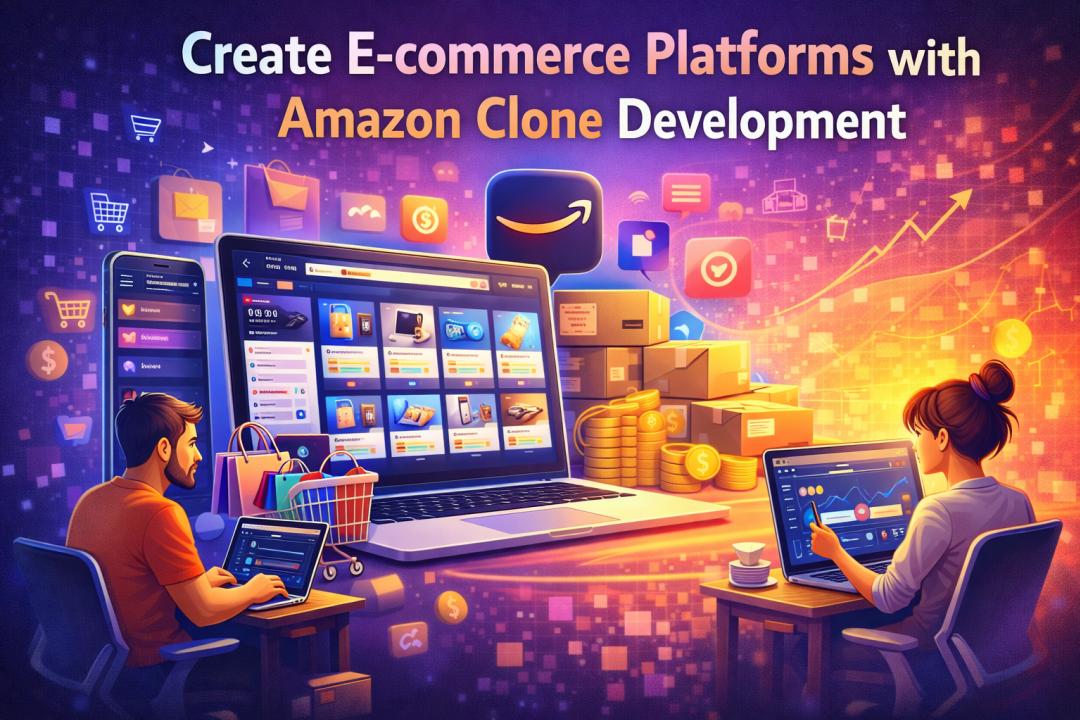
The e-commerce industry has witnessed explosive growth over the past decade,
transforming the way people shop and businesses operate. Online marketplaces
have become essential for companies aiming to reach a global audience,
streamline operations, and increase revenue. Inspired by the success of giants
like Amazon, many businesses are now turning to Amazon clone development to build powerful and
scalable e-commerce platforms.
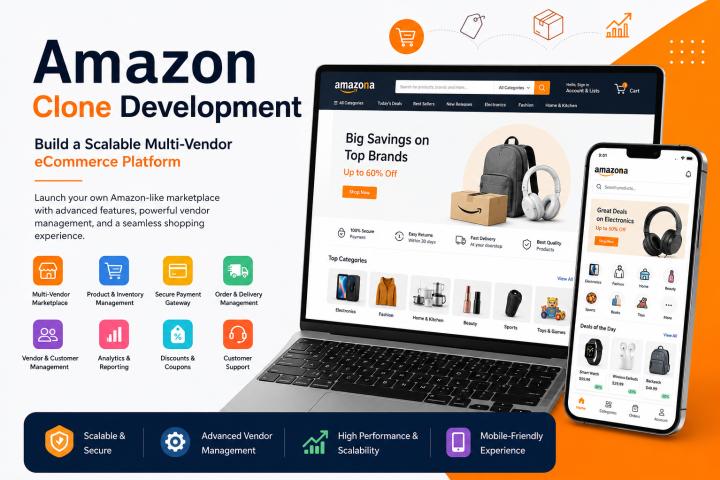
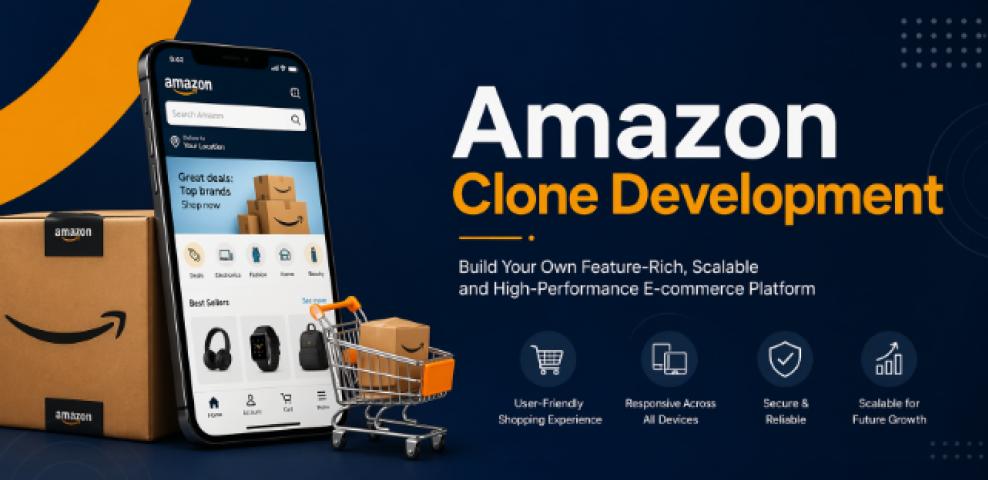
Amazon clone development allows startups and
enterprises to create feature-rich online marketplaces with functionalities
similar to Amazon while offering complete customization. Whether you want to
build a multi-vendor marketplace or a niche e-commerce store, an Amazon clone
provides the perfect foundation.
In this blog, we will explore how to create e-commerce platforms using Amazon clone development, including features, benefits, development steps, cost, and future trends.
What is Amazon Clone Development?
Amazon clone development refers to the process
of building an e-commerce platform that replicates the core features and
functionalities of Amazon. However, it is not just about copying an existing
platform—it’s about creating a customizable and scalable solution tailored to
your business needs.
With an Amazon clone, businesses can:
·
Launch online marketplaces quickly
·
Customize features and design
·
Integrate advanced tools and technologies
· Scale as the business grows
Why Choose Amazon Clone Development?
1. Proven Business
Model
Amazon’s success demonstrates the
effectiveness of its marketplace model, making it a reliable blueprint.
2. Faster Time to
Market
Using a clone solution significantly reduces
development time.
3. Cost Efficiency
Pre-built modules lower development costs compared
to building from scratch.
4. Customization
Businesses can tailor features, UI/UX, and
functionalities.
5. Scalability
Amazon clone apps are designed to handle large user bases and transactions.
Key Features of an Amazon Clone Platform
1. User Registration
and Profiles
·
Easy sign-up and login
·
User account management
2. Product Listings
·
Add, edit, and manage products
·
Categories and filters
3. Advanced Search
·
Keyword-based search
·
Smart suggestions
4. Shopping Cart and
Wishlist
·
Add/remove products
·
Save items for later
5. Secure Payment
Gateway
·
Multiple payment options
·
Safe transactions
6. Order Management
·
Track orders
·
Manage returns and refunds
7. Multi-Vendor
Support
·
Allow multiple sellers
·
Vendor dashboards
8. Ratings and Reviews
·
Customer feedback system
9. Notifications
·
Alerts for orders and offers
10. Admin Panel
· Manage users, products, and analytics
Advanced Features for Competitive Edge
To stand out in the competitive market,
consider adding:
·
AI-powered product recommendations
·
Voice search functionality
·
Chatbots for customer support
·
AR-based product previews
·
Subscription services
·
Loyalty programs
· Real-time analytics
Technology Stack for Development
Frontend
·
React.js
·
Angular
·
Vue.js
Backend
·
Node.js
·
Django
·
Laravel
Database
·
MongoDB
·
MySQL
·
PostgreSQL
Cloud Services
·
AWS
·
Google Cloud
·
Microsoft Azure
Payment Integration
·
Stripe
·
PayPal
· Razorpay
Step-by-Step Development Process
Step 1: Define Your
Business Model
Decide whether you want to create:
·
Single-vendor store
·
Multi-vendor marketplace
· Niche e-commerce platform
Step 2: Conduct Market Research
Understand your target audience, competitors, and market trends.
Step 3: Plan Features and Design
Create a roadmap and design user-friendly interfaces.
Step 4: Develop the Backend
Build server-side logic, database, and APIs.
Step 5: Develop the Frontend
Create responsive and interactive user interfaces.
Step 6: Integrate Payment and Shipping
Add secure payment gateways and logistics solutions.
Step 7: Testing
Perform:
·
Functional testing
·
Security testing
· Performance testing
Step 8: Deployment
Launch your platform on web and mobile platforms.
Step 9: Maintenance and Updates
Continuously improve features and performance.
Cost of Amazon Clone Development
The cost depends on complexity, features, and
development team.
Estimated Cost
·
Basic Platform: $15,000 – $30,000
·
Medium Platform: $30,000 – $80,000
· Advanced Platform: $80,000 – $200,000+
Benefits of Amazon Clone Development
1. High Revenue
Potential
E-commerce platforms generate consistent income.
2. Global Reach
Sell products worldwide.
3. Custom Branding
Build a unique identity.
4. Scalability
Expand as your business grows.
5. Better Customer
Experience
Offer personalized shopping experiences.
Use Cases Across Industries
Retail
Sell fashion, electronics, and more.
Grocery
Online grocery delivery platforms.
Electronics
Specialized gadget stores.
B2B Marketplaces
Wholesale trading platforms.
Handmade Products
Support artisans and creators.
Challenges in Development
1. High Competition
E-commerce is highly competitive.
2. Security Issues
Protecting user data and transactions.
3. Logistics
Management
Handling shipping and delivery.
4. User Retention
Keeping customers engaged.
Future Trends in E-commerce Platforms
1. AI and Machine
Learning
Personalized shopping experiences.
2. Voice Commerce
Shopping via voice assistants.
3. AR/VR Integration
Virtual product experiences.
4. Blockchain
Technology
Secure transactions and transparency.
5. Mobile Commerce
Growth
Increasing mobile-based shopping.
Tips for Building a Successful Platform
·
Start with an MVP
·
Focus on user experience
·
Offer competitive pricing
·
Ensure fast loading speed
· Invest in marketing
How to Choose the Right Development Partner
·
Check portfolio and experience
·
Evaluate technical skills
·
Read client reviews
· Ensure post-launch support
Conclusion
Amazon clone development is a powerful
solution for businesses looking to enter the e-commerce market quickly and
efficiently. With its proven business model, scalability, and customization
options, it provides a strong foundation for building successful online
platforms.
By focusing on user experience, leveraging
advanced technologies, and continuously improving your platform, you can create
a competitive and profitable e-commerce business.
Whether you are a startup or an established enterprise, investing in Amazon clone development can help you unlock new opportunities and achieve long-term growth in the digital marketplace.