Marble tiles are very popular for homes, offices, and buildings because they look great and last a long time. It makes floors, walls, countertops, and stairs look special, which is why many people choose it for their projects.
Buyers often notice that prices differ because several factors influence the final value, even when two pieces look almost similar. Things like marble type, sources, size, and quality all help determine the cost.
Understanding these points helps buyers compare options more clearly and make better decisions based on both appearance and practical value.
Marble Type and Price
1. Natural Stone Variety
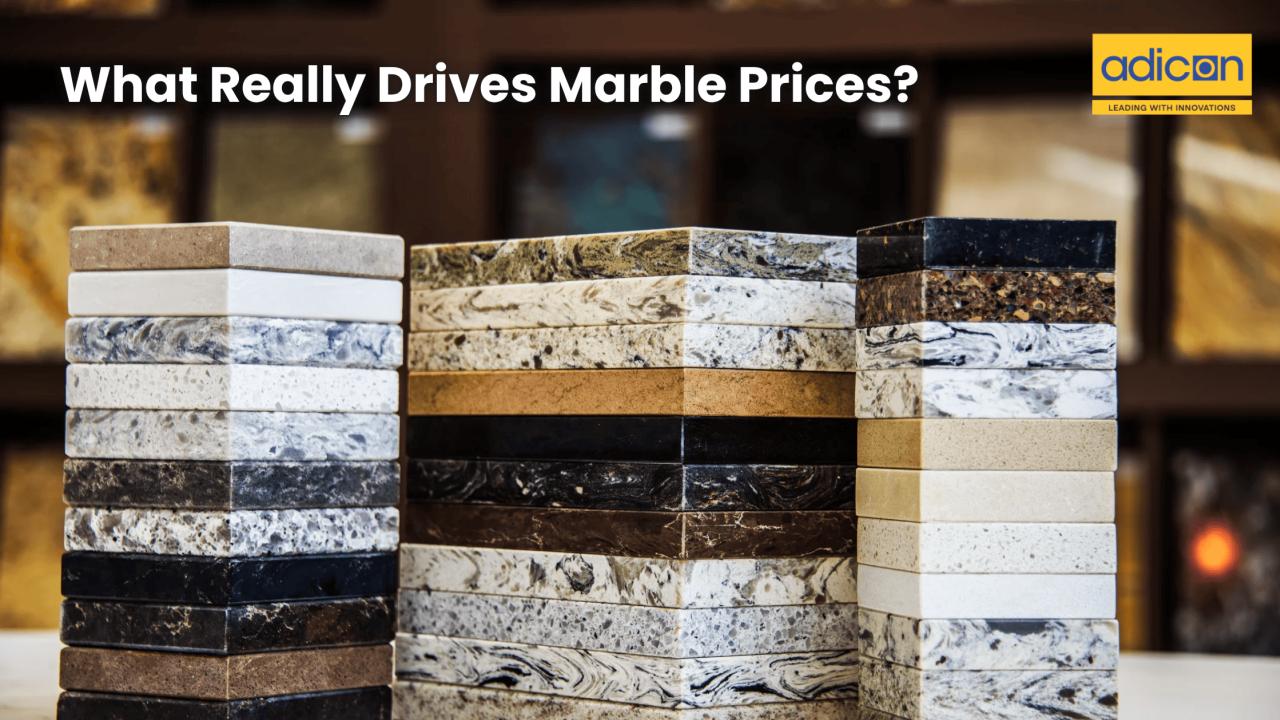
Marble comes in many natural types, each with its own look, feel, and mineral makeup. Some slabs feature bold veins and sharp colors, while others appear softer and more consistent. These natural traits play a big role in determining how much the stone costs.
Some kinds of marble are easy to find in large quantities, which usually keeps prices steady. Others are quite rare and highly sought after for their one-of-a-kind patterns, which can drive both demand and prices.
2. Local and Imported Options
Marble sourced from different countries has different pricing due to shipping, handling, customs clearance, distance to the supplier, and more.
Since domestic materials come from nearby, they have shorter turnaround times, shorter distances traveled, and lower overall costs. These materials are therefore less costly to import, resulting in lower prices.
The people who bring it in also have to be very careful when they move it around so it does not break. All these extra steps make the marble more expensive by the time it reaches the purchaser.
How Origin Affects Cost
1. Quarry Location
The place where marble is quarried directly affects cost because extraction conditions differ from one region to another. Some quarries are easy to operate because of their terrain and steady production. Others are harder to extract from.
Marble from quarries located far away or from smaller producing quarries can cost more, as extracting the stone is more involved. The marble source's location usually dictates how often that marble is available in the market.
2. Transportation Distance
After extraction, marble slabs must be carefully transported to processing units and suppliers. Because marble is heavy and naturally brittle, it must be transported carefully to reduce the risk of cracks or breakage.
When you have to move marble a long way, it costs a lot of money for fuel, labour, and packaging.
Transport planning is included in the total cost even before cutting or finishing begins.
Marble Quality and Grade
1. Surface Consistency
Marble is graded based on natural appearance and consistency. Slabs with even color, fewer marks, and minimal natural irregularities are often graded higher.
When covering big floors or walls, people usually look for slabs that flow together nicely. Getting that consistent look takes extra time to sort through the pieces, which is why those matching sets tend to cost more.
2. Veining and Strength
Attractive veining often adds visual value, but deep fissures or unstable lines may affect grading if extra treatment is needed. Beautiful natural movement often adds visual appeal, yet the slab must also remain structurally stable.
This changes how it is priced compared with stronger, cleaner pieces.
Slab Size and Thickness
1. Thickness Matters
Thicker marble slabs cost more because they need more raw stone to cut. A thick slab also weighs more, making it harder to handle and move.
Different applications require different thicknesses, depending on how strong the stone needs to be. Flooring, Countertops, and Staircases all use thickness levels.
2. Larger Slabs and Pricing
Large slabs are often preferred because they create fewer joints, giving surfaces a cleaner appearance. This is especially good for rooms where appearance is important.
Slabs of stone or whatever material we use are heavier, so they are harder to move and install.
They can also break easily, so we have to be extra careful when moving and installing large slabs.
Surface Finish and Pricing
1. Polished and Honed Finishes
The finish on marble affects its appearance and cost. A polished finish takes work to make it shiny and to get some depth to the surface, which can make it more expensive.
A honed finish makes marble look softer and smoother, which does not reflect much light. Marble, with a matte finish, looks more like it does in nature; it has a natural look.
2. Extra Surface Treatments
Some projects need surface textures or custom finishes for design or practical reasons. These treatments require work and labor. The more steps needed to finish a project, the higher the total cost will be.
Rarity and Availability
1. Limited Supply
Some types of marble are hard to find because they only come from quarries that don't produce much. When there's not enough marble to go around, and many people want it, the price goes up because there aren't many slabs available.
2. Changing Availability
Sometimes marble production changes due to factors such as quarry work, weather, or transportation issues. This can make marble scarce for a while and temporarily raise prices.
Cutting and Fabrication Cost
1. Custom Cutting Work
Once you pick your marble, it’s cut to fit your project. Simple straight lines are easy, but fancy edges or curved corners take a lot more skill and effort. This extra craftsmanship is what adds to the final labor bill.
2. Wasted Material During Cutting
Some layouts leave behind more leftover scraps, especially if you’re trying to line up the natural veins perfectly across different slabs. More waste means you have to buy extra material to cover the same amount of space.
Comparing Alternative Surfaces
In some projects, buyers compare natural stone with alternatives such as marble-look tiles when planning interiors. This usually happens when installation time, maintenance, or budget are factored into the decision.
While both options can look very similar, natural marble is special because no two slabs are ever the same; each one has its own unique history and pattern.
Market Demand and Price Changes
1. Design Trends
Marble prices fluctuate with construction activity and demand for marble in interiors. If people like a particular color or veining pattern, demand for that color increases, and prices go up.
2. Import and Supply Factors
Marble from other countries is significantly affected by the cost of bringing it here and the exchange rate. Even small changes in the market can cause the price of marble to rise or fall over time.
Understanding What Shapes Marble Prices
Marble prices vary because many factors affect the cost, not the marble's appearance. The type of marble, where it comes from, its quality, the thickness of the finish, how it's made, and how much is available all play a role in determining the final price.
Understanding these factors helps buyers compare materials and choose those that suit their design. For many projects, knowing these things is also helpful when deciding between stone and premium marble tiles, or exploring alternatives offered by a porcelain tiles company, because you have to consider how they will look and how well they will perform.