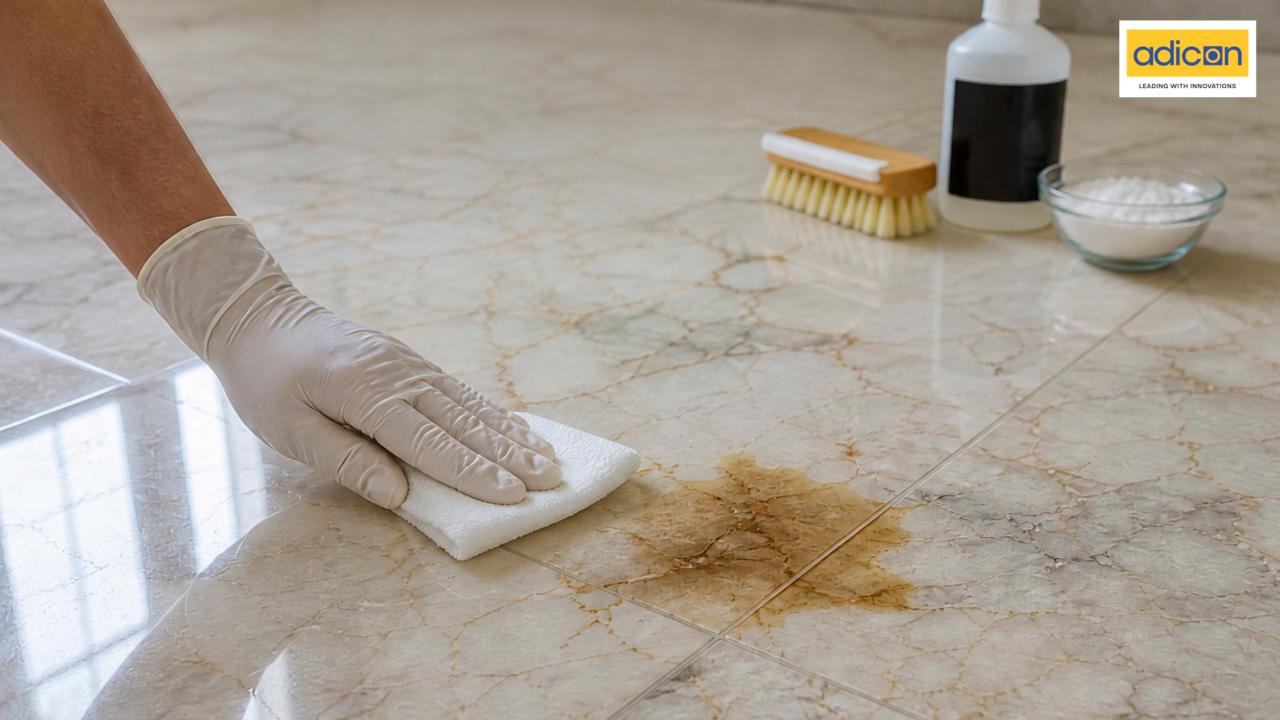
Marble has a classic and sophisticated aesthetic. However, it can lose its appeal without routine upkeep. Marble is naturally porous, and without preventative measures, it can develop stains. Because of this, people want ways to remove stains from marble tiles without damaging the floor.
Once you understand it, caring for marble tiles can become a simple task. Typical stains can be managed with appropriate preventive measures to keep the floor smooth and shiny. Good marble care starts with understanding what causes stains and how to treat them properly.
Types of Marble Stains
Not all marble stains are the same. Different types of stains require different cleaning methods, and using the wrong solution can sometimes make the situation worse.
Here are the most common types:
1. Oil-Based Stains
Oil stains come from cooking oil, grease, and even cosmetics. As the name suggests, these stains are dark marble splotches.
How to remove:
To remove oil, make a cleansing and poultice combination using baking soda and water. This helps to draw the stain out slowly.
2. Water Marks
The minerals in hard water usually cause water stains. These stains may also appear as dull patches or rings.
How to remove:
To remove water stains, gently buff the area using a damp microfiber cloth. Light polishing usually restores the marble's shine.
3. Organic Stains
Organic stains often come from spills. Typically, these stains are brown or yellow and are caused by tea, coffee, or wine.
How to remove:
Milder hydrogen peroxide solutions can remove some stains without damaging stone surfaces when applied carefully.
4. Rust Stains
Leaving metal objects on marble can cause rust stains.
How to remove:
Use a marble-safe rust remover designed for natural stone. Scrubbing will damage the final layer and finish.
Knowing the type of stain on the marble helps you determine the best approach to stain removal, minimizing damage.
Safe Marble Cleaning Methods
When dealing with marble, the type of cleaner used is very important. Harsh chemicals can react with the stone, causing dullness or etching.
To keep your cleaner safe, you will want to make sure you:
- Use only pH-neutral cleaners
- Do not use acidic substances, including your vinegars and lemons
- Avoid bleach and abrasive cleaning products
Using a specialized marble stain remover ensures the cleaning process supports marble care and maintenance rather than damaging the surface.
This is especially important when handling natural stone stain removal, as marble reacts differently compared to ceramic or porcelain surfaces.
How to Apply Remover
Using a marble stain remover correctly is just as important as choosing the right product.
Step-by-step method:
Step 1. Clean the surface first: Remove dust and dirt with a soft cloth.
Step 2. Apply the stain remover: Apply a thin and even layer to the stained area; don't put on too much.
Step 3. Let it sit: Different stains will require the product to sit on the stain for varying lengths of time. Refer to the product's label for more info.
Step 4: Wipe gently: Once the stain is broken down, gently wipe it off with a cloth or sponge.
Step 5: Rinse and dry: Clean the area with water and dry it completely to avoid water marks.
This method works well for most home marble tile cleaning while preserving the surface.
Effective Home Cleaning Remedies
For light stains, simple home remedies can often be enough.
1. Baking Soda Paste
To create a thick paste, mix baking soda and water. Then, apply the mixture to the stain. Cover it and leave it there for a few hours. Finally, remove it, and the stain should be gone.
2. Hydrogen Peroxide
It will help with organic stains. Be careful and rinse it after use.
3. Mild Soap Solution
Adding a small amount of gentle soap to warm water will help with small stains. This won't damage the stone.
These methods are helpful for basic marble floor cleaning tips, but they should always be used gently. Overuse or harsh scrubbing can still damage the surface.
Mistakes to Avoid Cleaning
Many marble surfaces lose their shine not because of stains, but because of incorrect cleaning methods. Here are things to avoid.
- Using acid cleaners
- Scrubbing with hard brushes
- Ignoring spills
- Using too much water
- Neglecting sealing
Many long-term issues also come from poor installation practices, which is why understanding topics like installing marble tiles and common mistakes to avoid can help prevent future damage.
Daily Marble Care Tips
Take care of marble by developing a few good habits:
- Spills are to be wiped immediately.
- Marble surfaces should be cleaned frequently with a soft cloth.
- Keep entryways covered with doormats to reduce the amount of dirt that enters.
- Heavy objects should be picked up rather than dragged.
In most homes, quick cleaning right after a spill makes the biggest difference in preventing stains and maintaining shine.
When to Seek Professional Help
Some stains can be pretty old and have settled so much that they may not budge when you try to tackle them with a "do-it-yourself" approach. In this case, you may need to consider:
- hiring a polished professional
- getting a surface seal
- using more advanced cleaning tools.
When there is little to no improvement, it is probably wise to contact professionals to avoid further damage to the marble.
Final Marble Care Tips
Marble surfaces can crack, but they don't have to be a struggle to manage. All it takes is knowledge of the different types of stains, the appropriate cleaners, and prevention and response tactics.
Instead of letting marble dull, just a little regular cleaning and maintenance can help keep its beauty. In place of real marble, many modern designs opt for marble >. These can give the same look, but can be cheaper and easier to care for.
Care and cleaning can help marble stay looking classy and preserved for decades to come.