Introduction
Prediction markets are becoming an important part of modern fintech innovation. These platforms allow people to trade contracts based on the outcomes of real-world events, turning forecasts into measurable market signals. By combining insights from many participants, prediction markets help estimate the probability of future outcomes.
Interest in these platforms has grown steadily as digital trading technologies advance. Event-based trading platforms handle billions of dollars in global trading volume, which peaks during major events that include elections and economic announcements. The platform enables users to trade contracts that are linked to economic indicators and public policy events, according to its well-known example of Kalshi. The platform demonstrates how structured prediction markets can operate within a transparent and regulated framework.
Understanding Prediction Markets
What Is a Prediction Market?
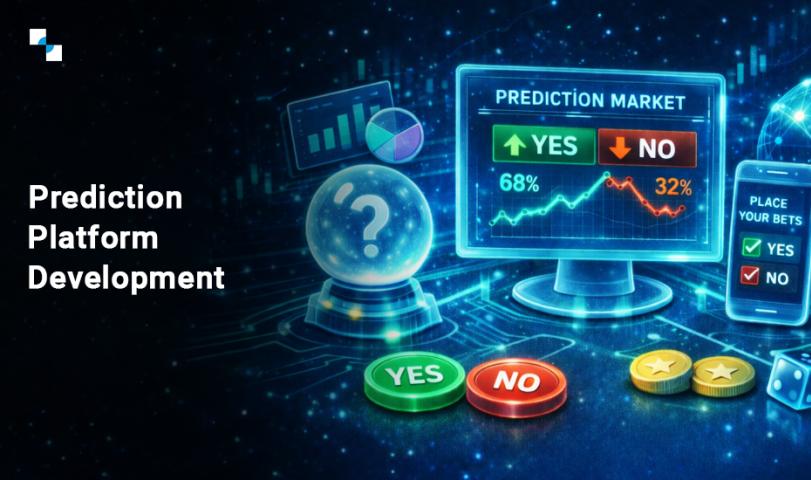
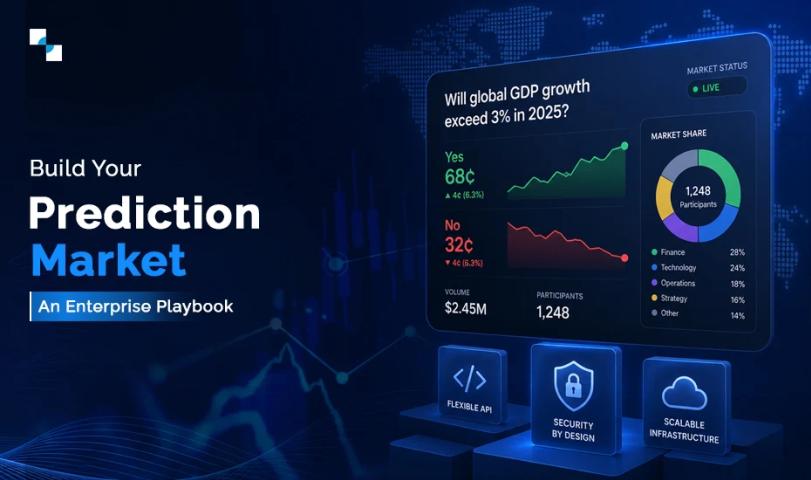
A prediction market operates as a platform where users engage in buying and selling contracts that depend on upcoming event results. The contract functions as a specific prediction whose price shows market users believe will happen at that particular likelihood.
Ex: A contract might ask whether inflation will exceed a certain percentage by the end of the year. The market shows a 60 percent probability for the event because the contract trades at $0.60.
These markets operate like financial exchanges because market prices change based on the combined impact of buyer and seller activity. New information leads participants to change their trading activities, which results in contract price movements.
Why Prediction Markets Are Valuable
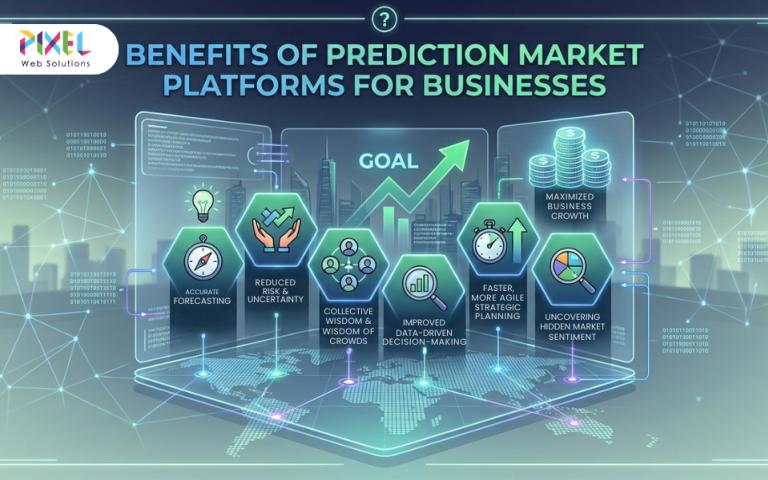
Prediction markets create value through their ability to combine diverse participant insights. The platforms function by collecting information from traders who possess distinct knowledge and perspectives instead of using a single forecasting model.
Researchers have found that, in certain scenarios, prediction markets can produce highly accurate forecasts. Their applications cover a variety of fields, including:
Economic forecasting
Policy analysis
Sports predictions
Corporate decision-making
Market research
By combining incentives with collective intelligence, prediction markets create an environment where information is continuously reflected in market prices.
Key Components of a Prediction Market Platform
Understanding the core structure of prediction markets helps explain how these platforms operate. Most prediction market platforms rely on several technical components working together.
Event Creation System
The event creation module allows administrators to define markets based on real-world events. Each event includes:
- A clearly defined question
- Possible outcomes
- Trading duration
- Settlement rules
For instance, a market may be created around whether a specific economic indicator will rise above a certain value within a defined timeframe.
Trading Engine
The trading engine processes buy and sell orders placed by users. Many prediction market platforms use an order-book model where traders submit bids and offers for contracts.
The engine automatically matches compatible orders and executes trades in real time. This system ensures that prices reflect market activity and user expectations.
Market Data and Analytics
Prediction markets generate significant amounts of trading data. Platforms typically include analytics dashboards that allow users to monitor:
- Price trends
- Market probabilities
- Trading volumes
- Historical data
These insights help participants evaluate markets and make informed trading decisions.
Growth of Prediction Markets
Prediction markets have gradually evolved as digital platforms have improved access to financial trading tools and data analysis systems.
The following table highlights key stages in the development of prediction markets:
Period | Key Developments | Impact |
Early 2000s | Academic forecasting experiments | Demonstrated potential of crowd-based predictions |
2010–2018 | Online prediction platforms emerge | Increased accessibility for analysts and researchers |
2019–2023 | Growth of fintech trading tools | Broader participation from retail users |
2024–2026 | Advanced digital trading infrastructure | Expansion into new forecasting applications |
This progression shows how prediction markets have transitioned from experimental models into structured online trading environments.
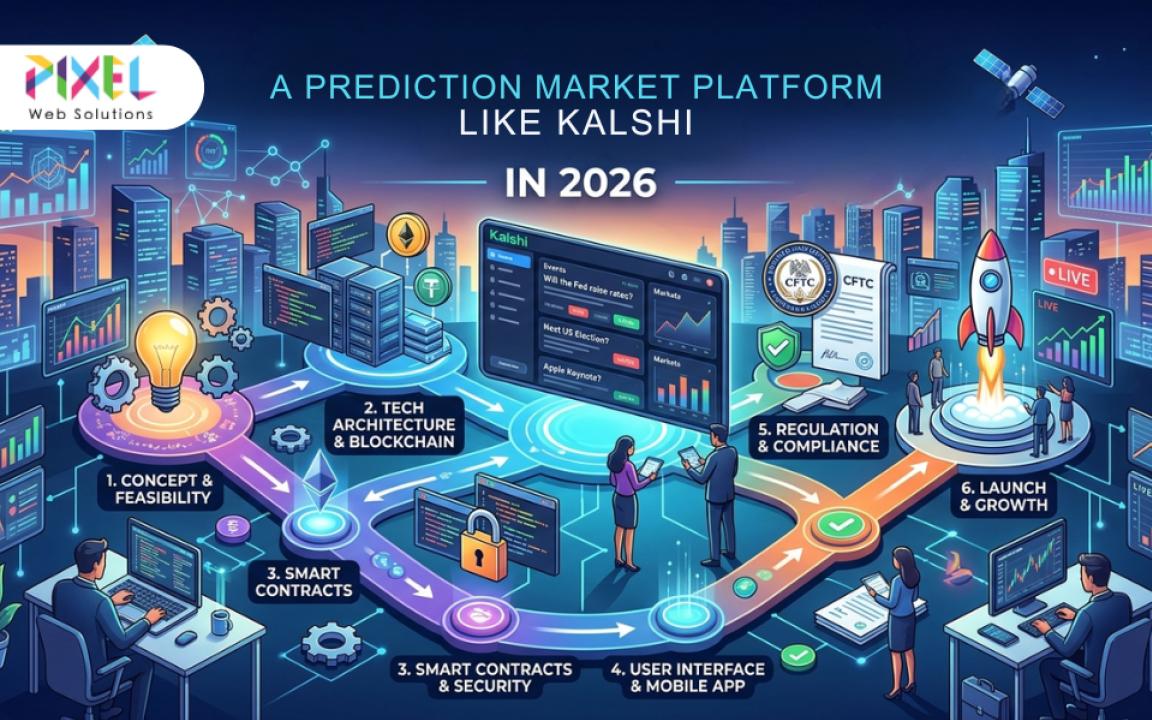
Steps to Build a Prediction Market Platform
While the concept of prediction markets is relatively straightforward, building a reliable platform requires thoughtful planning and technical execution.
1. Define the Market Scope
The first step is determining what types of events the platform will support. Some prediction markets focus on financial indicators. Other prediction markets focus on sports, politics, entertainment, and global events.
Defining a clear niche helps shape the platform’s design and target audience.
2. Plan the Technical Architecture
Prediction market platforms rely on a stable backend system capable of handling real-time trading activity. Typical architecture includes:
- User authentication and account management
- Trading engines for order processing
- Event management modules
- Market analytics dashboards
- Administrative monitoring tools
A scalable infrastructure ensures the platform can handle increasing user participation and trading volumes.
3. Develop the Contract Framework
Each event contract must clearly define how outcomes will be determined and how settlements will occur. These rules ensure transparency and fairness for participants.
Many platforms use external data sources or verification systems to confirm event outcomes and trigger contract settlements automatically.
4. Integrate Financial Transactions
Because prediction markets involve trading, the platform must support secure financial transactions. Users should be able to deposit funds, participate in markets, and withdraw balances safely.
Transaction systems typically include digital wallets or payment processing mechanisms depending on the platform’s structure.
5. Design the Trading Interface
User experience is an important factor in trading platforms. A simple interface allows users to easily explore markets and place trades.
Common interface features include:
- Real-time price charts
- Event listings and probability indicators
- Order placement tools
- Portfolio and transaction history dashboards
A clear interface helps users understand market behavior and participate more effectively.
6. Testing and Deployment
Before launching a platform publicly, developers must conduct extensive testing. This includes performance testing, security checks, and usability reviews to ensure the system operates smoothly.
For those researching how to create a prediction market platform like Kalshi, examining these development steps can provide a practical understanding of the technical and operational requirements involved.
Conclusion
Prediction markets function as an exceptional combination of three different fields, which include finance and technology, and forecasting. The platforms enable users to trade future event probabilities, which generate market signals that constantly change between different states.
The process of creating a prediction market platform requires essential components, which include event management systems and trading engines, analytics tools, and secure transaction infrastructure. The development of digital trading systems will establish prediction markets as essential tools for organizations to utilize data analysis in their forecasting and decision-making processes.
Organizations that want to create these platforms benefit from learning about Kalshi system structure and technology, which provides them with essential information. The company Pixel Web Solutions works with organizations that want to create new financial platforms for upcoming markets, which include prediction trading, because they have expertise in both fintech and blockchain development.