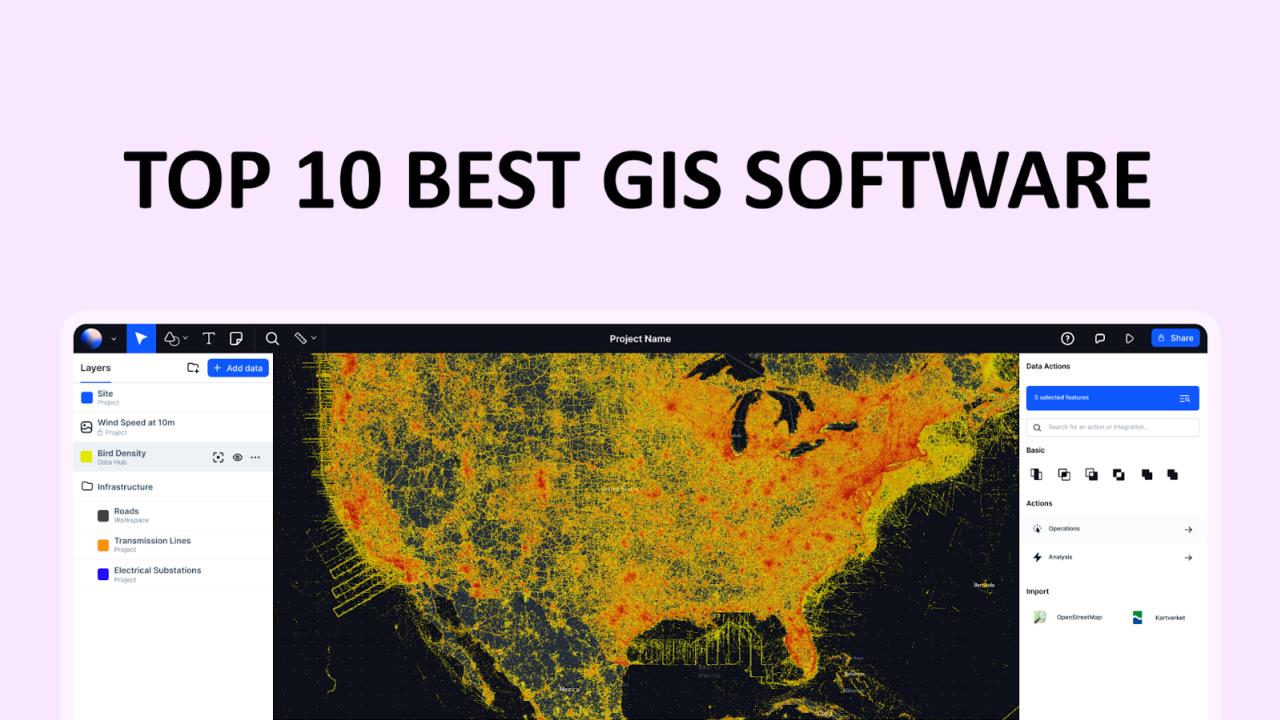
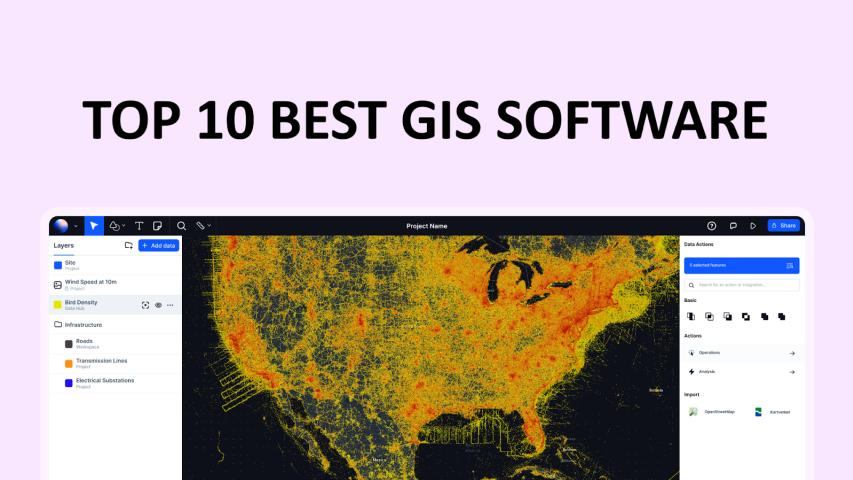
In today’s data-driven world, location intelligence plays a critical role in decision-making across industries. From urban planning to logistics and environmental monitoring, organizations rely on the best GIS software to analyze spatial data and improve efficiency. With so many options available, choosing the right solution can be challenging.
To help you get started, here’s a curated list of the top 10 best GIS software solutions, including Workaware, known for its advanced geospatial capabilities.
1. Workaware
Workaware is a modern platform offering powerful GIS capabilities along with integrated asset and operational insights. It is designed for businesses that need real-time mapping, data visualization, and efficient resource management. As one of the best GIS software options, Workaware helps organizations improve decision-making through intuitive geospatial tools.
2. ArcGIS
ArcGIS is one of the most widely used GIS platforms globally. It provides advanced mapping, spatial analytics, and cloud-based solutions. It is ideal for large organizations that require scalable and feature-rich GIS tools.
3. QGIS
QGIS is a popular open-source GIS software known for its flexibility and strong community support. It offers a wide range of features for mapping, analysis, and data visualization, making it a great choice for both beginners and professionals.
4. MapInfo Professional
MapInfo Professional is widely used for business analytics and location intelligence. It helps organizations analyze spatial data and gain insights for market research, planning, and decision-making.
5. Google Earth Engine
Google Earth Engine is a cloud-based platform designed for large-scale geospatial analysis. It is particularly useful for environmental monitoring, climate analysis, and satellite imagery processing.
6. GRASS GIS
GRASS GIS is another open-source platform that provides powerful tools for spatial modeling, data management, and analysis. It is often used in research and academic environments.
7. AutoCAD Map 3D
AutoCAD Map 3D combines CAD and GIS capabilities, making it ideal for engineering and infrastructure projects. It allows users to integrate spatial data with design workflows.
8. Global Mapper
Global Mapper is known for its user-friendly interface and strong data processing capabilities. It supports a wide range of file formats and is suitable for mapping and terrain analysis.
9. ERDAS IMAGINE
ERDAS IMAGINE is a specialized GIS tool focused on remote sensing and image analysis. It is widely used for processing satellite imagery and geospatial data.
10. Maptitude
Maptitude is a cost-effective GIS solution designed for mapping, route optimization, and territory analysis. It is commonly used in business and logistics applications.
How to Choose the Best GIS Software?
Selecting the best GIS software depends on your specific needs. Consider the following factors:
Ease of use and learning curve
Scalability and performance
Integration with existing systems
Cost and licensing model
Industry-specific features
By evaluating these aspects, you can find a solution that aligns with your operational goals.
Conclusion
The right GIS platform can transform how organizations analyze and use spatial data. The tools listed above represent some of the best GIS software available today, each offering unique features and benefits. Whether you choose a robust platform like ArcGIS or a flexible solution like Workaware, investing in GIS technology can significantly enhance decision-making and operational efficiency.