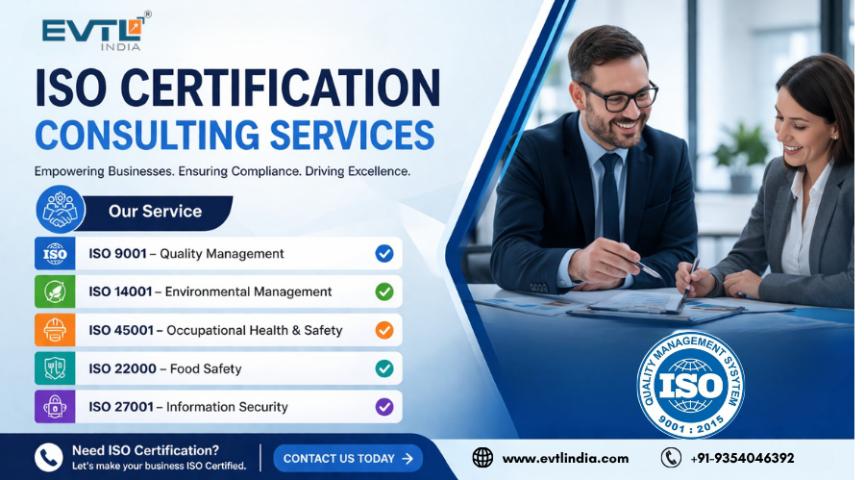
In today’s competitive business environment, quality, credibility, and compliance are essential for long-term success. This is where ISO Certification plays a vital role. Whether you are a startup, manufacturer, or service provider, obtaining ISO certification enhances trust, improves processes, and opens doors to global markets. In this detailed guide, we will cover everything about ISO Registration, ISO Full Form, ISO 9001 Standard, and the role of an ISO Certified Consultant.
What is ISO? (ISO Full Form)
The ISO Full Form is the International Organization for Standardization. It is an independent, non-governmental international body that develops standards to ensure the quality, safety, efficiency, and interoperability of products and services.
ISO standards are recognized worldwide and are applicable across industries—from manufacturing and healthcare to IT and logistics.
What is ISO Certification?
ISO Certification is an official recognition that a company complies with a specific ISO standard. It is issued by accredited certification bodies after evaluating your organization’s processes, systems, and documentation.
Having an ISO certificate proves that your business follows internationally accepted best practices and maintains consistent quality standards.
Popular ISO Standards
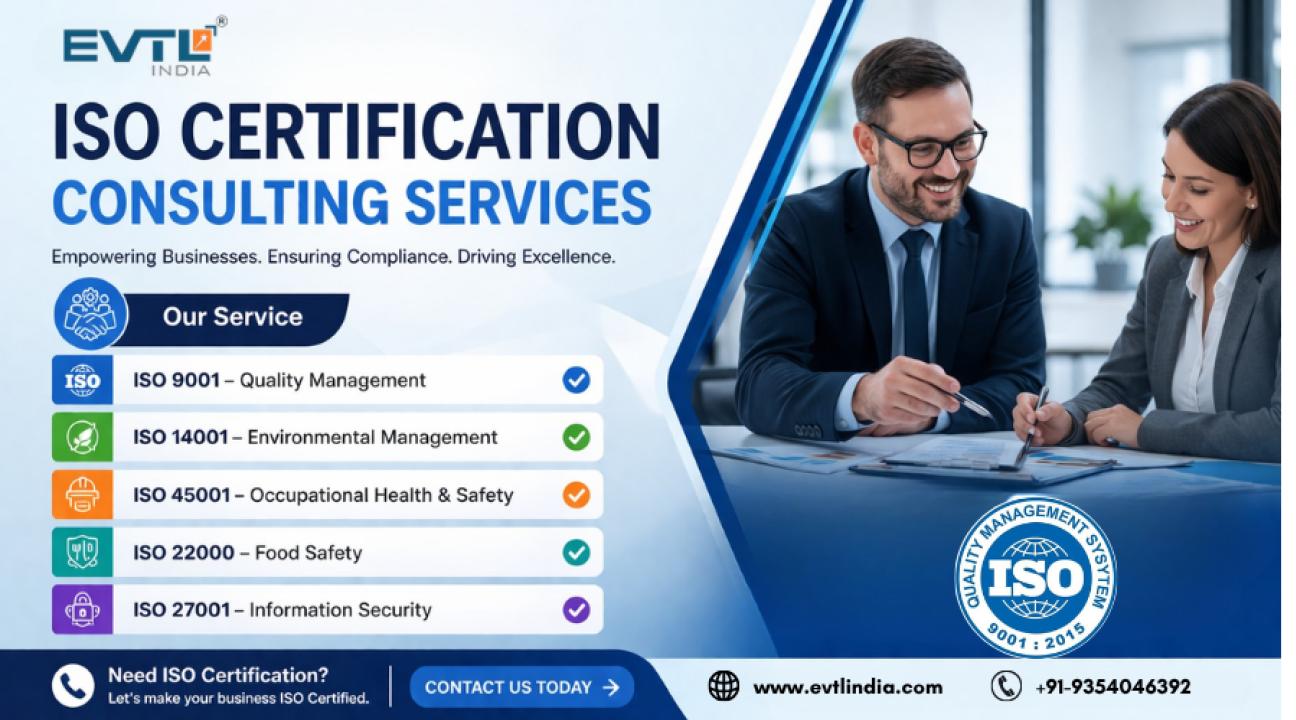
There are several ISO standards designed for different business needs. Some of the most widely used ISO Standards include:
- ISO 9001 Standard – Quality Management System (QMS)
- ISO 14001 – Environmental Management
- ISO 45001 – Occupational Health & Safety
- ISO 27001 – Information Security Management
- ISO 22000 – Food Safety Management
Among these, the ISO 9001 Standard is the most popular and widely adopted certification globally.
ISO 9001 Standard Explained
The ISO 9001 Standard focuses on quality management systems. It helps organizations ensure that their products and services consistently meet customer and regulatory requirements.
Key Principles of ISO 9001:
- Customer focus
- Leadership involvement
- Process approach
- Continuous improvement
- Evidence-based decision making
By implementing ISO 9001, businesses can improve efficiency, reduce errors, and enhance customer satisfaction.
Benefits of ISO Certification
Getting an ISO Certification offers multiple advantages:
1. Improved Business Credibility
ISO certification builds trust among customers, partners, and stakeholders.
2. Better Process Efficiency
Standardized procedures reduce waste, errors, and operational inefficiencies.
3. Global Market Access
ISO certification is recognized internationally, making it easier to expand globally.
4. Customer Satisfaction
Consistent quality leads to higher customer satisfaction and retention.
5. Regulatory Compliance
Helps meet legal and industry-specific compliance requirements.
ISO Registration Process
The ISO Registration or ISO Certificate Registration process involves several steps:
Step 1: Choose the Right ISO Standard
Identify which ISO standard suits your business (e.g., ISO 9001 for quality management).
Step 2: Gap Analysis
Evaluate your current processes against ISO requirements.
Step 3: Documentation
Prepare necessary documents such as quality manuals, policies, and procedures.
Step 4: Implementation
Implement the required systems and train employees.
Step 5: Internal Audit
Conduct internal audits to ensure compliance.
Step 6: Certification Audit
An accredited certification body audits your organization.
Step 7: Certification Issuance
Once approved, you receive your ISO certificate.
Role of an ISO Certified Consultant
An ISO Consultant plays a crucial role in simplifying the certification process. They provide expert guidance, reduce errors, and ensure faster approval.
Key Responsibilities:
- Understanding your business requirements
- Selecting the appropriate ISO standard
- Documentation support
- Training and implementation guidance
- Audit preparation
- Liaising with certification bodies
Hiring a professional consultant significantly increases the chances of smooth and successful ISO certificate registration.
ISO Certificate Registration: Common Challenges
While applying for ISO certification, businesses often face challenges such as:
- Lack of proper documentation
- Limited knowledge of ISO standards
- Employee resistance to new processes
- Time-consuming audits
- Compliance gaps
These challenges can be effectively managed with proper planning and expert consultation.
Who Needs ISO Certification?
ISO certification is beneficial for:
- Manufacturers
- Service providers
- Startups and SMEs
- Exporters and importers
- IT companies
- Healthcare organizations
Regardless of industry, ISO certification helps in building a strong foundation for quality and growth.
How Long Does ISO Certification Take?
The duration of ISO Registration depends on the size and complexity of the organization. Typically, it may take:
- Small businesses: 7–15 days
- Medium organizations: 15–30 days
- Large enterprises: 30–60 days
With expert support, the process can be completed faster and more efficiently.
Conclusion
EVTL India is one of the leading BIS Consultant in India , helping manufacturers obtain their BIS licences hassle-free.In conclusion, ISO Certification is a powerful tool for enhancing business credibility, improving operational efficiency, and gaining a competitive edge. From understanding the ISO Full Form to implementing the ISO 9001 Standard, every step plays a crucial role in building a quality-driven organization. Proper ISO Certificate Registration ensures that your business aligns with global standards and achieves long-term success.
If you are looking for a reliable partner to simplify the certification journey, EVTL India is a trusted name offering expert consultancy for ISO Registration and compliance services. With professional guidance, fast processing, and end-to-end support, EVTL India helps businesses achieve ISO certification smoothly and efficiently, ensuring higher approval chances and hassle-free experience.