NLP has ceased being an experiment to become a fundamental aspect of companies. It drives search, automates processes and allows improved customer engagements. Although most organizations consider initial development costs, the actual investment is achieved after NLP systems enter production.
Knowledge on the overall cost of ownership (TCO) of Natural Language Processing Services contributes to effective planning by the decision-maker, preventing unrealistic planning and avoiding unseen costs, and providing long-term ROI.
Why TCO Matters in NLP Projects
NLP projects tend to begin with a proof of concept that seems cost-effective. Early development is quicker with pre-trained models and APIs. But the cost of production environments is an ongoing cost that is far beyond deployment.
TCO incorporates infrastructure, integration, monitoring and continuous improvement. In the absence of a clear perspective on these factors, organizations are likely to underestimate budgets and timelines.
A cost-structured approach to investing in Natural Language Processing Services is guaranteed to be scalable and stable in terms of performance.
Core Components of NLP Total Cost of Ownership
1. Data Acquisition and Preparation
One of the most resource intensive phases in NLP is data preparation.
Key cost drivers include:
- Collecting relevant datasets
- Organizing and cleaning up disordered text.
- Labeling data to learn under supervision.
- Field and multilingual inputs.
According to industry standards, data preparation may take up to 40 percent of the overall AI project costs.
Regulation in industries also adds more effort and expense to compliance.
2. Model Development and Customization
A professional NLP development company is oriented at the adaptation of models to the needs of business instead of applying the generic solutions only.
This involves:
- Fine-tuning pre-trained models
- Constructing pipelines of NLP.
- Training domain-specific models
Higher investment in Advanced NLP Development Services might be needed, but generally, it lessens inefficiencies in production.
3. Infrastructure and Cloud Costs
Production NLP systems are based on scalable and reliable infrastructure.
Major cost factors include:
- High-performance computing resources
- Data pipelines and cloud storage.
- API usage at scale
- Real-time processing capabilities
These costs are ongoing. Increased usage makes infrastructure one of the highest costs of total ownership.
4. Integration with Existing Systems
NLP solutions should operate in the wider enterprise ecosystem.
Integration costs include:
- Integrating with CRM and ERP systems.
- Development of API and middleware.
- Workflow automation
- Authentication and security levels.
In the case of an enterprise that has a legacy system, there is a high level of complexity on integration. This is where the services of experienced Natural Language Processing development services providers assist in streamlining implementation.
5. Model Deployment and Monitoring
The last stage is not deployment. To sustain production performance, it is necessary to undertake constant supervision.
Organizations must invest in:
- Accuracy and latency monitoring systems.
- Audit structures and logging.
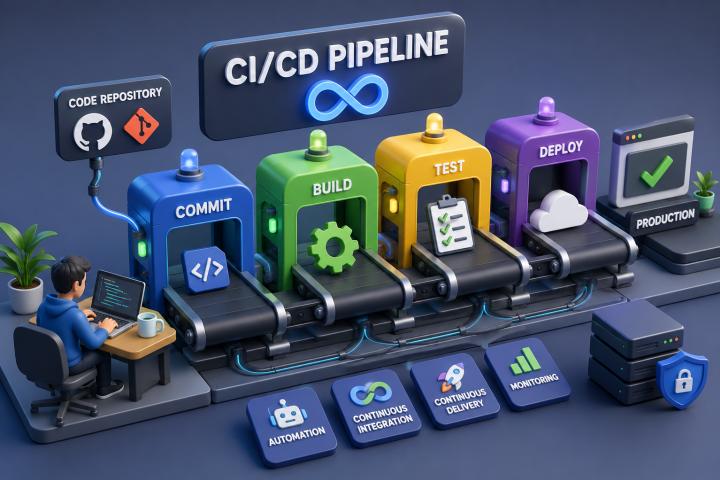
- CI/CD pipelines for model updates.
- Redundancy and failover systems.
Patterns in language evolve with time causing model drift. Monitoring makes systems accurate and reliable.
6. Maintenance and Continuous Improvement
To be effective, NLP systems must be updated continuously.
Maintenance includes:
- Re-training models using new datasets.
- Enhancing precision and addressing border cases.
- Fitting the new business needs.
Companies usually set aside 15 to 25 percent of the original project cost each year as maintenance.
An appropriate choice of Natural Language Processing Company might help to save the costs of work considerably in the long run.
7. Compliance, Security, and Governance
Production NLP systems, particularly international activities, need security and compliance.
Cost considerations include:
- Data encryption and protection.
- Regulatory compliance requirements
- Access control systems
- Audit and reporting systems.
The inability to cover these areas may result in significant financial and reputational risks.
8. Talent and Operational Costs
Internal participation is necessary despite an outsourced NLP software development.
The operational roles tend to be:
- ML engineers and data scientists.
- DevOps specialists
- Stakeholders of products and business.
With the growth of NLP systems, the costs of operation rise as they are constantly optimized and scaled.
Estimated Cost Breakdown
A standard NLP production system can cost the following:
- Data preparation: 25 to 40 percent
- Model development: 15 to 25 percent
- Infrastructure: 20 to 30 percent
- Integration: 10 to 20 percent
- Maintenance: 15 to 25 percent annually
These values indicate that development is just one component of investment.
How to Optimize NLP TCO
Choose the Right Development Approach
Fully custom solutions are not needed in all use cases. It is possible to decrease costs and preserve performance by combining ready-to-use models with specific customization.
Invest in Scalable Architecture Early
Building scalable systems from the start prevents costly redesigns. Cloud-native infrastructure and modular pipelines improve long-term efficiency.
Focus on High-Impact Use Cases
Prioritize applications that deliver measurable value:
- Customer support automation
- Document processing
- Enterprise search
This will make sure that the investment is consistent with business results.
Automate Operational Workflows
The data processing, retraining and monitoring are automated to decrease the amount of manual work and operational overhead.
Work with Experienced Teams
A skilled NLP development firm assists in cutting down inefficiencies, speeds up deployment and provides a higher level of cost control throughout the lifecycle.
Final Thoughts
The overall cost of ownership of NLP development services is much more than the basic development. It encompasses infrastructure, integration, compliance and continuous optimization.
In the case of enterprises and startups that are already in the growth stage, the aim is not to reduce expenditure but to make sure that all investment is made to bring about some sort of quantifiable business value.
Proper knowledge of TCO enables organizations to have scalable, reliable NLP systems that work well in real-life settings.