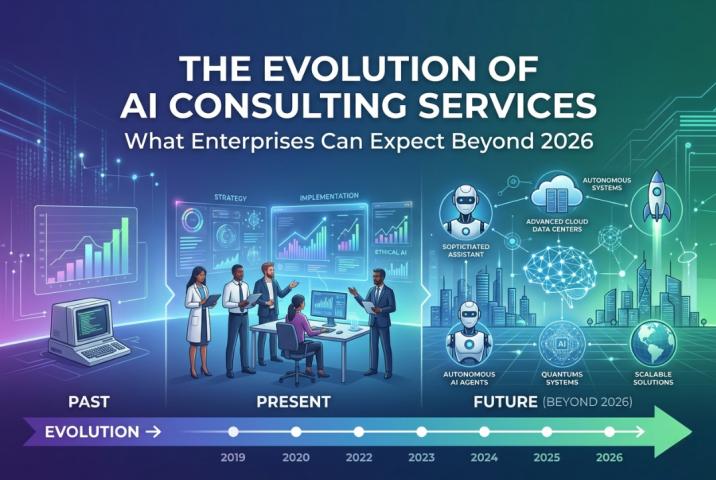
Artificial intelligence has moved well past experimentation. Enterprises and growth-stage startups are no longer asking whether to adopt AI. The focus now is on how to implement it in ways that deliver measurable business outcomes. This shift is reshaping the role of every AI Consulting Company and redefining what AI Consulting Services must offer in the years ahead.
As organizations prepare for a post-2026 landscape, AI consulting is becoming more strategic, more integrated, and far more accountable to ROI. The next phase will demand a deeper alignment between business objectives, data ecosystems, and scalable AI systems.
The Shift from Advisory to Execution Ownership
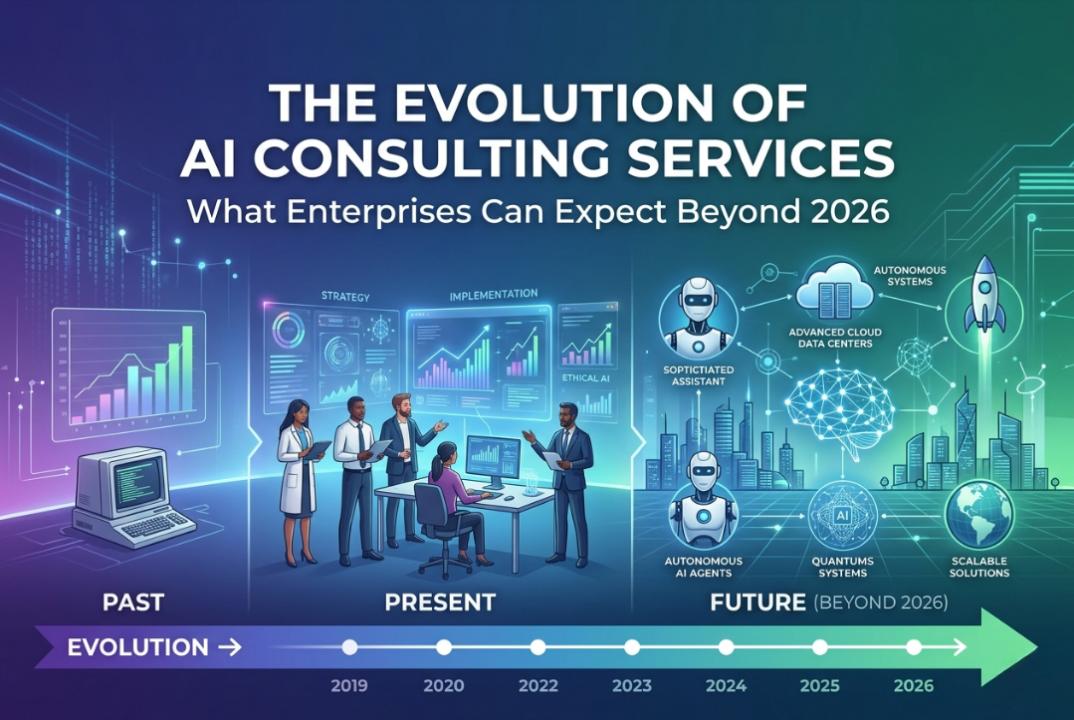
In earlier phases, AI consulting was largely advisory. Firms provided strategy decks, proofs-of-concept, and technology recommendations. That model is quickly losing relevance.
Enterprises now expect AI Consulting Services to take ownership of execution. This includes model development, system integration, deployment, and long-term optimization. Consulting partners are becoming embedded in business operations rather than acting as external advisors.
Custom AI and machine learning consulting services are now expected to deliver production-ready solutions, not just prototypes. Decision-makers are prioritizing partners who can demonstrate real deployment experience across industries.
This evolution is also driving closer collaboration between consulting teams and internal engineering units. Instead of working in silos, AI consultants are co-building systems alongside enterprise teams, ensuring faster adoption and smoother scaling.
Industry-Specific AI Consulting Becomes the Standard
Generic AI strategies are no longer sufficient. Enterprises are demanding domain expertise that aligns with their specific industry challenges.
For example, financial services require AI models that meet strict regulatory standards, while healthcare organizations need solutions that align with compliance frameworks and patient data privacy. Retail and eCommerce businesses are focused on personalization and demand forecasting.
This is where advanced AI Development Services intersect with consulting. AI consultants must now understand industry workflows, compliance requirements, and operational constraints before recommending solutions.
As a result, the most competitive AI Consulting Companies are building specialized vertical teams. These teams combine data scientists, domain experts, and solution architects to deliver highly relevant AI applications.
The Rise of Outcome-Based Consulting Models
Another major shift is the move toward outcome-based engagement models. Enterprises are increasingly reluctant to invest in open-ended consulting contracts without clear performance metrics.
AI Consulting Services are now expected to define success upfront. This includes measurable KPIs such as cost reduction, revenue growth, operational efficiency, or customer retention improvements.
According to industry reports, organizations that adopt outcome-driven AI strategies are significantly more likely to achieve positive ROI within the first 12 to 18 months.
This trend is pushing AI Consulting Companies to align their pricing and delivery models with business outcomes. It also increases accountability, which is critical for enterprise stakeholders managing large-scale AI investments.
Integration with Enterprise Data Ecosystems
AI cannot function in isolation. Its success depends on how well it integrates with existing data infrastructure.
Beyond 2026, AI consulting will focus heavily on data readiness. This includes data governance, data quality management, and real-time data processing capabilities. Enterprises are realizing that without a strong data foundation, even the most advanced AI models fail to deliver value.
Custom AI and machine learning consulting services will increasingly include data architecture design as a core offering. Consultants will work closely with CIOs and data leaders to ensure that AI systems are built on scalable and reliable data pipelines.
This also includes integration with cloud platforms, ERP systems, and customer data platforms. The ability to connect AI models with enterprise systems in real-time will become a key differentiator.
AI Governance, Ethics, and Compliance Take Center Stage
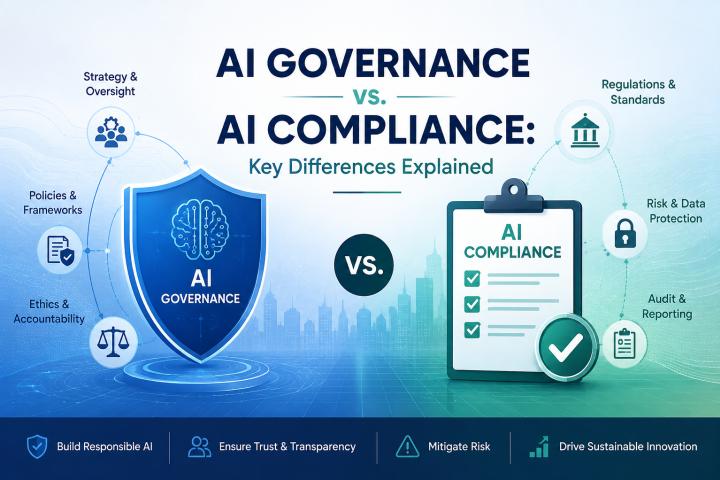
As AI adoption grows, so do concerns around governance, transparency, and ethical use. Enterprises are under pressure to ensure that their AI systems are explainable, fair, and compliant with evolving regulations.
AI Consulting Services are expanding to include governance frameworks that address these concerns. This involves model auditing, bias detection, and documentation of decision-making processes.
Regulatory environments across regions are becoming stricter, which means enterprises must proactively manage compliance risks. AI consultants are now expected to guide organizations through these complexities.
This shift is particularly important for industries such as finance, healthcare, and insurance, where regulatory scrutiny is high.
Continuous Optimization and AI Lifecycle Management
AI is not a one-time implementation. Models require continuous monitoring, retraining, and optimization to remain effective.
Beyond 2026, AI consulting will extend into full lifecycle management. This includes performance monitoring, model updates, and adaptation to changing business conditions.
AI Consulting Companies are investing in MLOps capabilities to support this shift. These frameworks enable automated model deployment, version control, and performance tracking.
For enterprises, this means AI systems that evolve alongside their business. It also reduces the risk of model degradation, which can impact decision-making accuracy over time.
Convergence of AI Consulting and Product Engineering
Another notable trend is the convergence of AI consulting with product engineering. Enterprises are no longer looking for isolated AI solutions. They want AI embedded into their digital products and platforms.
This is where AI Development Services play a crucial role. Consulting firms are expanding their capabilities to include end-to-end product development, from ideation to deployment.
For example, AI-powered SaaS platforms, intelligent automation tools, and predictive analytics dashboards are becoming standard deliverables. Consulting partners are expected to build these solutions as part of broader digital transformation initiatives.
This convergence also enables faster time-to-market, which is critical for startups and enterprises competing in dynamic markets.
Increased Focus on Business Value and ROI
Ultimately, the future of AI consulting is driven by business value. Enterprises are moving away from technology-first approaches and focusing on outcomes that impact their bottom line.
AI Consulting Services must now demonstrate clear value across key areas such as:
- Revenue growth through intelligent automation and personalization
- Cost reduction via process optimization
- Improved decision-making through predictive analytics
- Enhanced customer experiences
Decision-makers are prioritizing consulting partners who can connect AI initiatives directly to business metrics. This requires a deep understanding of both technology and business strategy.
Organizations that align AI investments with measurable outcomes are better positioned to scale their initiatives successfully.
What Enterprises Should Look for in an AI Consulting Partner
As the market evolves, selecting the right AI Consulting Company becomes increasingly important. Enterprises should evaluate potential partners based on several factors:
- Proven experience in delivering production-grade AI solutions
- Strong capabilities in Custom AI and machine learning consulting services
- Industry-specific expertise
- Ability to integrate with existing data and technology ecosystems
- Focus on governance, compliance, and ethical AI
- Commitment to long-term support and optimization
A reliable consulting partner should act as both a strategic advisor and an execution partner. This dual capability is essential for navigating the complexities of modern AI adoption.
For organizations exploring AI initiatives, working with an experienced provider of AI Consulting Services can help bridge the gap between strategy and execution.
Looking Ahead
The evolution of AI consulting is shaping a more mature and results-driven industry. Beyond 2026, enterprises can expect consulting engagements that are deeply integrated, outcome-focused, and aligned with long-term business goals.
AI will continue to influence every aspect of enterprise operations, from decision-making to customer engagement. Consulting services will play a central role in ensuring that these technologies are implemented effectively and responsibly.
For enterprises and ambitious startups, the opportunity lies in choosing partners who understand both the technical and strategic dimensions of AI. Those who get this right will not only adopt AI successfully but will also build a sustainable competitive advantage in the years ahead.