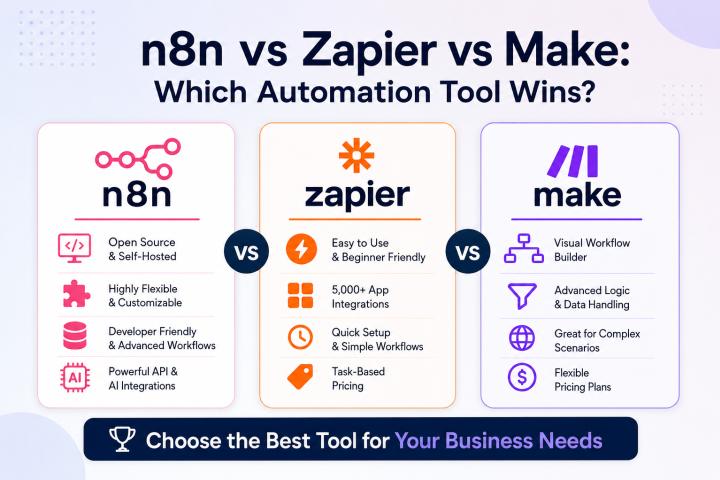
Automation has moved far beyond simple task scheduling. Today, businesses are building complex, event-driven workflows that connect dozens of tools, process real-time data, and even integrate AI-driven decision-making. Platforms like n8n have become central to this shift, offering flexibility, open-source control, and the ability to orchestrate powerful workflows without being locked into rigid ecosystems.
But here’s the challenge: n8n is only as effective as the person designing and managing it. A poorly built workflow can create bottlenecks, introduce data inconsistencies, or even break critical business processes. On the other hand, a skilled developer can transform n8n into a powerful automation engine that reduces costs, improves efficiency, and unlocks entirely new capabilities.
This is why knowing how to hire N8N developer talent strategically is becoming a key competitive advantage. It’s not just about technical proficiency, it’s about finding someone who understands systems thinking, integration logic, and scalable architecture.
In this blog, we’ll break down the essential skills you should look for in an n8n developer, from core technical capabilities to strategic thinking and real-world problem-solving. Whether you’re building internal automations or scaling enterprise workflows, this guide will help you make smarter hiring decisions.
Core Technical Expertise Every n8n Developer Must Have
At its core, n8n is a workflow automation platform, but working with it effectively requires a strong technical foundation. A skilled developer doesn’t just drag and drop nodes; they understand what’s happening behind the scenes.
First and foremost, proficiency in JavaScript is non-negotiable. While n8n offers a visual interface, many workflows rely on custom code for data transformation, API handling, and logic building. A developer who can write clean, efficient JavaScript can significantly extend the platform’s capabilities.
Equally important is a deep understanding of APIs. Most n8n workflows revolve around connecting services, CRMs, payment gateways, marketing tools, databases and this requires working with REST APIs, authentication methods, and data formats like JSON. Without this knowledge, integrations become fragile and difficult to scale.
Understanding Workflow Logic and Data Handling
Beyond coding, an n8n developer must think in terms of workflows and logic. This includes designing conditional paths, handling errors gracefully, and ensuring data flows seamlessly between nodes.
For example, consider eCommerce automation where orders trigger inventory updates, customer notifications, and analytics tracking. A skilled developer ensures that:
Failures in one step don’t break the entire workflow
Data is validated before being passed forward
Retry mechanisms are in place for reliability
This level of thinking separates a basic user from a true automation specialist.
Integration and System Architecture Skills
n8n doesn’t operate in isolation, it sits at the center of your tech stack. This makes integration and architectural thinking one of the most critical skills to evaluate.
A strong developer understands how different systems interact and how to design workflows that are both scalable and maintainable. They can map out dependencies, avoid unnecessary complexity, and ensure that workflows remain efficient even as the business grows.
For instance, instead of creating multiple redundant workflows, an experienced developer might design a centralized system that handles multiple triggers and routes them intelligently. This reduces maintenance overhead and improves performance.
Designing Scalable Automation Systems
Scalability is often overlooked in early-stage automation projects. What works for 100 events per day may fail at 10,000. A capable developer anticipates this and builds workflows that can handle increased load.
Key considerations include:
Efficient data processing to avoid bottlenecks
Use of queues and asynchronous execution where needed
Proper logging and monitoring for troubleshooting
When businesses look to hire N8N developers, this architectural mindset is often what differentiates top-tier talent from average candidates.
Problem-Solving and Analytical Thinking
Automation is rarely straightforward. Every business has unique processes, edge cases, and constraints. This is where problem-solving becomes a defining skill.
An effective n8n developer approaches challenges methodically. They break down complex requirements into manageable components, test different approaches, and iterate until the solution is both functional and efficient.
For example, imagine a workflow that aggregates data from multiple sources with inconsistent formats. A less experienced developer might struggle to normalize the data, leading to errors. A skilled professional, however, will implement transformation layers, validation checks, and fallback mechanisms to ensure consistency.
Handling Edge Cases and Failures
Real-world workflows are messy. APIs fail, data is incomplete, and unexpected scenarios occur. A strong developer plans for these situations rather than reacting to them.
This includes:
Implementing error-handling nodes
Creating fallback workflows
Logging issues for quick diagnosis
These practices not only improve reliability but also reduce downtime and operational risk.
Familiarity with AI and Advanced Automation Use Cases
As automation evolves, the line between workflow orchestration and intelligent systems is becoming increasingly blurred. Modern n8n developers are expected to go beyond basic integrations and explore AI-driven capabilities.
This includes integrating machine learning APIs, natural language processing tools, and decision-making models into workflows. For example, an n8n workflow might analyze customer queries using AI, categorize them, and route them to the appropriate team—all automatically.
Developers who understand these advanced use cases bring significantly more value to the table. They can help businesses move from simple automation to intelligent automation.
Bridging n8n with AI Systems
The ability to connect n8n with AI platforms is becoming a highly sought-after skill. This is particularly relevant for businesses working with an AI agent development company, where workflows often involve dynamic decision-making and real-time data processing.
A developer with this expertise can:
Integrate AI APIs for predictive analytics
Automate decision-making processes
Build workflows that adapt based on data inputs
This transforms n8n from a task automation tool into a strategic asset.
Communication, Documentation, and Collaboration Skills
Technical skills alone are not enough. n8n developers often work closely with stakeholders across departments, marketing, operations, IT and must translate business requirements into functional workflows.
Clear communication is essential. A developer should be able to explain how a workflow works, why certain decisions were made, and how changes can be implemented. This ensures alignment and reduces misunderstandings.
Documentation is equally important. Well-documented workflows make it easier for teams to maintain and update systems over time. Without proper documentation, even simple changes can become risky.
Working in Cross-Functional Teams
In many organizations, automation projects involve multiple stakeholders. A developer must be comfortable collaborating with non-technical teams, gathering requirements, and iterating based on feedback.
When you hire N8N experts, look for individuals who can:
Translate business needs into technical solutions
Provide clear and actionable updates
Collaborate effectively across teams
These soft skills often determine the long-term success of automation initiatives.
How to Evaluate and Hire the Right n8n Developer
Finding the right developer requires more than reviewing resumes. You need a structured approach to evaluate both technical and strategic capabilities.
Start by assessing real-world experience. Look for candidates who have built complex workflows, integrated multiple systems, and handled scalability challenges. Practical experience often outweighs theoretical knowledge.
Next, consider conducting a hands-on test. This could involve designing a sample workflow or solving a real business problem. This approach provides insights into how the candidate thinks and works under realistic conditions.
Key Evaluation Criteria
When evaluating candidates, focus on:
Technical depth: Strong knowledge of JavaScript, APIs, and workflow logic
System thinking: Ability to design scalable and maintainable architectures
Problem-solving: Proven track record of handling complex scenarios
Adaptability: Willingness to learn and work with new tools and technologies
Communication: Clear and effective collaboration skills
These factors will help you identify developers who can deliver long-term value.
Conclusion: Building Smarter Automation with the Right Talent
n8n has emerged as a powerful platform for building flexible, scalable automation systems. But its true potential is unlocked only when it’s in the hands of a skilled developer who understands both technology and business needs.
From technical expertise and integration skills to problem-solving and AI readiness, the qualities outlined in this guide provide a comprehensive framework for evaluating talent. The goal is not just to build workflows, but to create systems that drive efficiency, innovation, and growth.
As automation continues to evolve, businesses that invest in the right talent will be better positioned to adapt and thrive. Whether you’re starting your automation journey or scaling existing workflows, choosing the right developer is a decision that will shape your success.