Introduction
As global pressure to meet climate targets intensifies, enterprises are under increasing scrutiny to demonstrate transparent, verifiable ESG performance. Carbon credits have emerged as a key mechanism to offset emissions—but traditional carbon markets are fragmented, opaque, and prone to inefficiencies.
Enter carbon credit tokenization—a blockchain-powered approach that transforms how carbon credits are issued, tracked, traded, and retired.
In this guide, we break down what carbon credit tokenization is, how it works, and why enterprises are rapidly adopting it as part of their ESG and sustainability strategies.
What is Carbon Credit Tokenization?
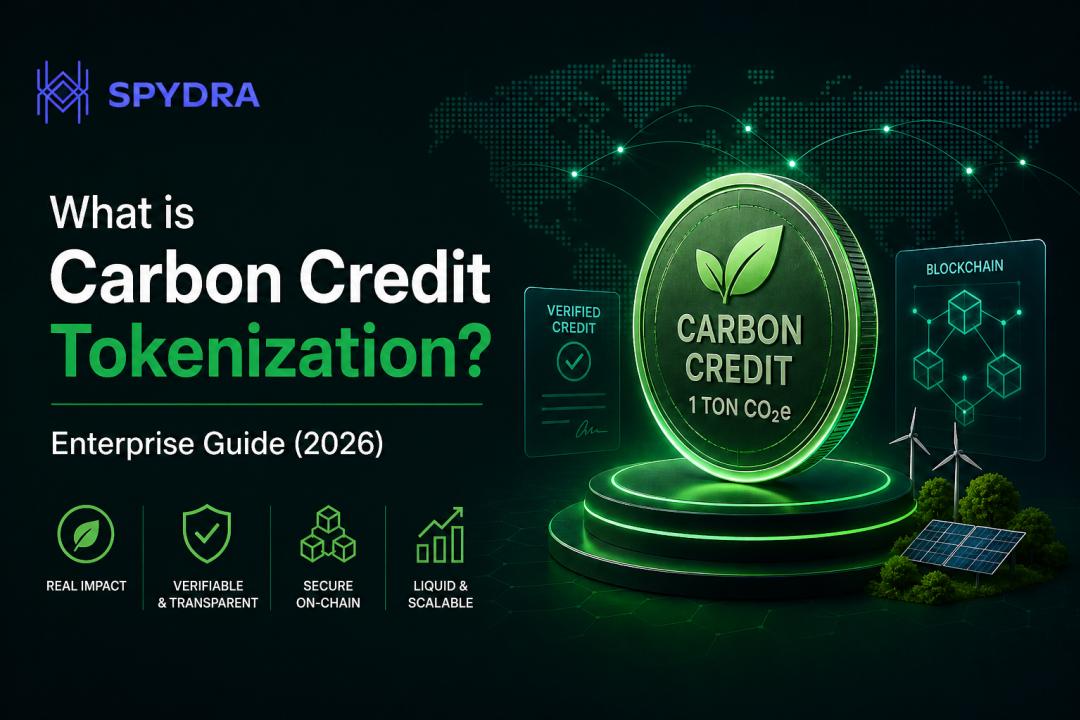
Carbon credit tokenization is the process of converting carbon credits into digital tokens on a blockchain. Each token represents a verified unit of carbon offset—typically one metric ton of CO₂ reduced or removed.
These tokenized credits are:
- Immutable (tamper-proof records)
- Traceable (full lifecycle visibility)
- Programmable (automated via smart contracts)
- Tradable (on digital marketplaces)
In essence, tokenization brings transparency, efficiency, and trust to carbon markets.
Why Traditional Carbon Markets Fall Short
Before understanding the value of tokenization, it's important to recognize the limitations of current systems:
1. Lack of Transparency
Carbon credit registries operate in silos, making it difficult to verify authenticity and ownership.
2. Double Counting Risks
The same credit can be sold or claimed multiple times due to poor tracking mechanisms.
3. Manual Processes
Issuance, validation, and retirement often involve paperwork and intermediaries.
4. Limited Liquidity
Carbon markets are fragmented, reducing accessibility and trading efficiency.
How Carbon Credit Tokenization Works
Step 1: Verification of Carbon Credits
Credits are issued by certified bodies after validating emission reductions from projects (e.g., renewable energy, reforestation).
Step 2: Token Creation
Each verified carbon credit is converted into a digital token on blockchain infrastructure.
Step 3: Smart Contract Integration
Rules for transfer, trading, and retirement are embedded into smart contracts.
Step 4: Marketplace Trading
Tokenized credits can be traded securely on digital platforms with full audit trails.
Step 5: Retirement & Reporting
When a credit is used, it is “retired” on-chain—ensuring it cannot be reused.
Key Benefits for Enterprises
1. Enhanced Transparency
Blockchain provides a single source of truth, ensuring every credit’s origin and lifecycle is verifiable.
2. Fraud Prevention
Immutable records eliminate risks like double counting or fraudulent claims.
3. Real-Time ESG Reporting
Enterprises can track emissions and offsets in real time, improving compliance and reporting accuracy.
4. Improved Liquidity
Tokenization enables fractional ownership and easier trading, unlocking new market participants.
5. Automation Through Smart Contracts
Reduces manual overhead in verification, transfer, and retirement processes.
Enterprise Use Cases
🌱 Corporate Sustainability Programs
Companies can directly purchase and retire tokenized credits to meet net-zero targets.
🏭 Supply Chain Emissions Tracking
Track and offset emissions across suppliers using transparent, shared ledgers.
💼 Carbon Trading Platforms
Financial institutions can build marketplaces for tokenized carbon assets.
📊 ESG Reporting & Compliance
Automate reporting aligned with global standards and regulatory frameworks.
Carbon Credit Tokenization vs Traditional Systems
| Feature | Traditional Carbon Credits | Tokenized Carbon Credits |
|---|---|---|
| Transparency | Limited | Full on-chain visibility |
| Fraud Risk | High | Minimal |
| Settlement Time | Days/Weeks | Near real-time |
| Accessibility | Restricted | Global participation |
| Automation | Manual | Smart contracts |
Challenges to Consider
While promising, tokenization is not without challenges:
- Regulatory Uncertainty: Carbon and digital asset regulations are still evolving
- Standardization Issues: Lack of universal frameworks across markets
- Integration Complexity: Legacy systems need to connect with blockchain infrastructure
However, enterprise-grade platforms are addressing these barriers with compliant, scalable solutions.
Why Enterprises Are Adopting Tokenization in 2026
Several macro trends are accelerating adoption:
- Stricter ESG disclosure regulations
- Rising demand for credible carbon offsets
- Growth of digital asset infrastructure
- Increased focus on supply chain sustainability
Tokenization is no longer experimental—it is becoming core ESG infrastructure.
How Spydra Enables Carbon Credit Tokenization
Spydra provides a low-code, enterprise-ready platform to design, deploy, and scale tokenized ESG solutions.
With Spydra, enterprises can:
- Tokenize carbon credits on permissioned or public blockchains
- Automate lifecycle management using smart contracts
- Integrate with existing ESG and reporting systems
- Launch secure, compliant carbon marketplaces
This allows organizations to move from concept to production in weeks—not years.
Getting Started: Enterprise Roadmap
- Assess ESG Goals – Define carbon offset requirements
- Select Blockchain Infrastructure – Choose based on scalability and compliance
- Tokenization Design – Define token standards and lifecycle logic
- Integration – Connect with registries and internal systems
- Launch & Scale – Enable trading, reporting, and automation
Conclusion
Carbon credit tokenization represents a fundamental shift in how carbon markets operate. By combining blockchain transparency with ESG accountability, enterprises can unlock:
- Greater trust in carbon offsets
- Faster, more efficient markets
- Scalable sustainability strategies
As ESG moves from reporting to real impact, tokenized carbon credits will play a central role in building the next generation of sustainable finance infrastructure.