In the vast landscape of the internet, simply having a website is not enough. With millions of websites competing for attention, Search Engine Optimization (SEO) has become a critical strategy for businesses aiming to stand out. SEO is the art and science of improving a website’s visibility on search engines, helping it reach the right audience organically.
What is SEO?
Search Engine Optimization (SEO) is the process of optimizing a website to rank higher in search engine results pages (SERPs). It involves improving various elements of a website—both on-page and off-page—to make it more attractive to search engines like Google.
The goal of SEO is simple: increase organic (non-paid) traffic by ensuring that your website appears when users search for relevant keywords.
Core Components of SEO
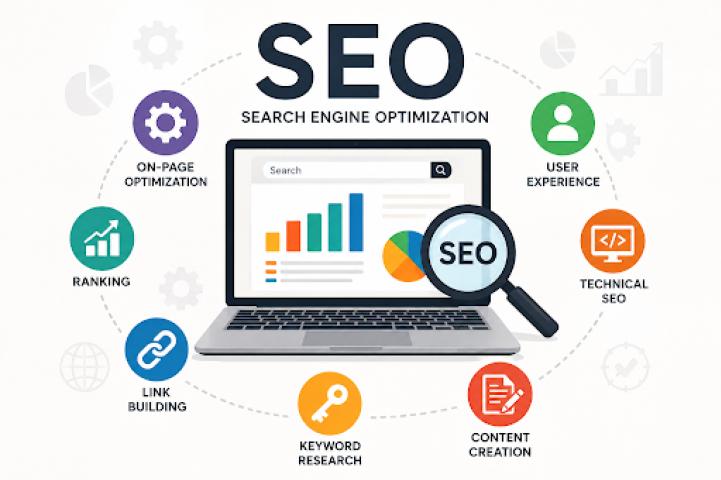
SEO is a multi-faceted strategy that includes several important components:
- On-Page SEO: Optimizing content, meta tags, headings, and images within the website.
- Off-Page SEO: Building backlinks and improving domain authority through external sources.
- Technical SEO: Enhancing website performance, speed, mobile-friendliness, and indexing.
- Keyword Research: Identifying the terms and phrases users search for.
- Content Optimization: Creating high-quality, relevant, and valuable content.
Why SEO is Important
SEO plays a vital role in driving targeted traffic to a website. Unlike paid advertising, organic traffic builds long-term value and credibility. When a website ranks higher on search engines, it gains trust and authority in the eyes of users.
Additionally, SEO helps improve user experience by making websites faster, easier to navigate, and more relevant to user needs.
Benefits of SEO
- Increased Visibility: Appear in top search results.
- Organic Traffic Growth: Attract users without paid ads.
- Higher Credibility: Build trust with your audience.
- Better User Experience: Improve website usability.
- Long-Term Results: Sustainable growth over time.
Best Practices for Effective SEO
To achieve strong SEO performance, consider the following best practices:
- Use relevant keywords naturally within content.
- Optimize page titles and meta descriptions.
- Create high-quality, original content.
- Ensure mobile responsiveness.
- Improve website loading speed.
- Build quality backlinks from trusted sources.
Emerging Trends in SEO
SEO is constantly evolving as search engines become more advanced. Some key trends include:
- Voice Search Optimization: Adapting content for conversational queries.
- AI and Machine Learning: Enhancing search algorithms for better results.
- User Intent Focus: Prioritizing content that matches user needs.
- Core Web Vitals: Emphasizing performance and user experience metrics.
- Local SEO: Targeting location-based searches.
Conclusion
SEO is not just a marketing tactic—it is a long-term investment in your online success. By understanding search engine algorithms, creating valuable content, and continuously optimizing your website, businesses can achieve higher rankings, increased traffic, and sustained growth. In an increasingly competitive digital world, mastering SEO is the key to staying ahead